

A strapless dildo is a double-ended toy with a rounded bulb that anchors inside the wearer and a shaft that penetrates their partner, no harness required. It suits couples who want skin-to-skin closeness and hands-free movement, but the tradeoff is real: you need pelvic floor strength and the right fit to keep it in place. If you’re unsure where to start, pick a smaller, harness-compatible model.
TL;DR:
- A strapless dildo requires strong pelvic floor muscles and proper size fit to prevent slipping during use, especially with longer or softer bulbs.
- Material quality is crucial, with medical-grade silicone offering better safety, sterilization, and resistance to bacteria compared to jelly or TPR options.
- Practicing pelvic engagement and starting with smaller, firmer bulbs before partner involvement significantly improves stability and confidence.
- Using a harness is recommended for more vigorous thrusting, longer shafts, or when extra support or control is desired, but safety checks remain essential.
- Regular maintenance with water-based lubricant and thorough cleaning of non-electronic toys enhances safety, longevity, and hygiene.
Table of Contents
- Strapless Dildo Guide: How This Toy Actually Works
- Choosing the Right Strapless Dildo: Size, Material, and Features
- How to Use a Strapless Dildo: Technique and Positions
- Why Strapless Toys Slip and How to Fix It Fast
- Materials, Cleaning, and Lubricant Compatibility
- When to Add a Harness for Extra Support
- Health Considerations Before You Buy
- Advanced Techniques Once You’ve Got the Basics Down
- What Users and Experts Say About Strapless Play
- Playful Cove’s Perspective on Buying Your First Strapless Toy
- Ready to Shop? Start With the Basics That Make It Work
- Sources
Strapless Dildo Guide: How This Toy Actually Works
A strapless dildo has three working parts: an internal bulb, a connecting neck, and an external shaft. The bulb sits inside the wearer’s vagina or anus, held in place by pelvic floor muscles gripping around it. The neck bridges the bulb to the shaft, and the shaft is what penetrates the receiving partner. There’s no strap, no buckle, no harness holding anything together. Your own body does that job.
This is the key difference from a harnessed strap-on, where a fabric or silicone harness holds the dildo in place regardless of how strong your pelvic floor is. A strapless design relies entirely on internal anchoring, which is why it feels more intimate but also demands more from the wearer physically. Double-ended dildos, by contrast, have no bulb at all. Both ends are meant for insertion into two different partners, with neither end anchored internally.
Within the strapless category, a few design variants change how the toy performs:
- Vibrating vs. non-vibrating: A motor in the bulb or shaft adds stimulation for the wearer, which can also help hold attention (and muscle engagement) during longer sessions.
- Flexible vs. rigid necks: A stiffer neck resists bending and rotation better, though it sacrifices some of the natural curve flexible necks offer.
- Harness-compatible models: Some strapless dildos include a base built to slot into a harness, so you get the strapless experience most of the time with a fallback option when you want extra stability.
Choosing the Right Strapless Dildo: Size, Material, and Features
Material matters more than most first-time buyers expect. Medical-grade or platinum-cured silicone is non-porous, which means it doesn’t trap bacteria the way jelly or TPR materials can, and it can be sterilized more thoroughly between uses. The FDA’s classification guidance on medical-grade materials is a useful reference point for why this distinction matters for anything inserted into the body.
Bulb size is where a lot of first-timers guess wrong. It seems logical to assume smaller and softer is easier to hold. In practice, a firmer, slightly larger bulb often anchors more securely than a tiny, flexible one, because your pelvic floor muscles have something substantial to grip. An ultra-soft bulb can rotate or shift with almost no resistance.
Shaft length is the other place to resist overreaching. Healthline’s guidance on strap-on selection recommends starting with shorter, less girthy options, and that advice holds doubly true for strapless models. A longer shaft creates more leverage against the bulb, which makes the whole toy more likely to twist or pop free during movement.
Before buying, run through this quick checklist:
- Is the material listed as 100% silicone, medical-grade, or platinum-cured?
- Is the bulb firm enough to feel secure when you press it between two fingers?
- Is the shaft on the shorter end for a first purchase (this sizing guide breaks down typical ranges)?
- Does the neck offer some rigidity, not just flexibility?
- Is there a harness-compatible base in case you want backup stability later?
Pro Tip: If two models seem similar, choose the one with the firmer bulb. A little extra rigidity there does more for stability than almost any other spec.
How to Use a Strapless Dildo: Technique and Positions
Start with arousal and warm-up before insertion, not lube. Applying too much lubricant directly to the bulb actually works against you. Save the heavier lube application for the shaft that penetrates your partner, and use only a light amount on the bulb itself, since a slick surface gives your pelvic floor less to grip.
- Test manually first. Insert the bulb with your fingers to find the angle and depth that feel most secure before your partner is involved.
- Position the bulb against the front vaginal wall or pubic bone area, where a slight flange or curve can rest against tissue and resist rotation better than a bulb floating freely.
- Engage your pelvic floor muscles (Kegels) as you insert, gripping gently rather than clenching hard, which tends to push the bulb out instead of holding it steady.
- Choose a stabilizing position to start. Receiver on top, wearer lying on their back with legs together, or a seated position all reduce the gravitational pull that causes slip-outs.
- Progress gradually. Once you’ve built muscle memory over a few sessions, move to positions with more thrusting range, like standing or wearer-on-top variations.
Practicing pelvic floor engagement while wearing the toy alone, before ever involving a partner, is one of the most consistently repeated pieces of advice from sex-education writers covering strapless dildos. It sounds unglamorous, but a few solo practice sessions save a lot of frustration later. This pegging starter guide covers similar pacing advice if you’re building toward partnered play.
Why Strapless Toys Slip and How to Fix It Fast
Slippage almost always comes down to one of five things: too much lube on the bulb, a bulb that’s too small or too soft for your body, an undertrained pelvic floor, an overly flexible neck, or a long shaft creating too much leverage. Most of these are fixable in the moment.
Immediate fixes during play:
- Reposition the bulb rather than pushing through discomfort.
- Wipe excess lube off the bulb if it feels slick.
- Switch to a position that uses your thighs or legs to add support.
- Pause and re-engage your pelvic floor muscles before continuing.
Longer-term fixes:
- Build pelvic floor strength with regular Kegel practice outside of sex.
- Size up to a firmer, slightly larger bulb on your next purchase.
- Keep a harness-compatible model on hand, or add a harness for sessions where control matters more than the strapless feel.
Pro Tip: Struggling with a suction-cup base on a solo mount, too? The same grip principles apply. This troubleshooting guide for suction cup dildos covers stabilizing tricks that overlap with strapless technique.
Stop immediately if you feel sharp pain, numbness, or notice bleeding. Those aren’t signs to push through with a different angle. They’re signs to stop, check in with your partner, and reassess the size or approach entirely.
Materials, Cleaning, and Lubricant Compatibility
Stick to 100% silicone, ideally medical-grade or platinum-cured, and confirm it with the product listing or a certificate of analysis when one is available. Non-porous silicone resists bacterial growth far better than jelly, rubber, or blended materials, which is a meaningful safety consideration for a toy used internally.
Lubricant choice matters just as much as the toy itself. Silicone-based lubricants can degrade silicone toys over time, breaking down the material’s surface. Water-based lubricants are the safer, standard pairing, and they won’t compromise the toy’s integrity or its warranty in most cases.
For cleaning solid silicone toys without electronic components, boiling for three to five minutes is an accepted sanitizing method. Playful Cove’s own guide to cleaning silicone toys walks through the exact steps. For toys with motors or remotes, stick to toy-safe cleansers and the manufacturer’s instructions instead of submerging electronics.
- Boil non-electronic silicone toys for 3 to 5 minutes between uses.
- Use toy-safe cleaner and wipe down for vibrating or motorized models.
- Store dry, away from other toys, ideally in a breathable pouch.
If you’re sharing a toy between anal and vaginal use, or between partners, use a condom on the toy and clean thoroughly between switches. The FDA’s consumer guidance on sex toy safety is clear that this simple step meaningfully cuts cross-contamination risk.
When to Add a Harness for Extra Support
A harness makes sense when you want more vigorous thrusting than your pelvic floor can reliably support, when you’re using a longer or girthier shaft, or when you simply want more control during a session without worrying about slip. There’s no rule that says strapless has to mean harness-free forever. Plenty of couples treat the strapless design as their default and keep a harness on hand for certain nights.
O-ring harnesses and harness briefs both work with compatible strapless models, but fit varies by brand, so it’s worth checking the toy’s base diameter against the harness ring size before buying either separately.
Before any session, regardless of harness use, run through a short safety check:
- Confirm consent and any limits with your partner out loud.
- Have water-based lubricant within reach before you start.
- Agree on a stop word or signal ahead of time.
- Check in periodically for discomfort, not just at the start.
Health Considerations Before You Buy
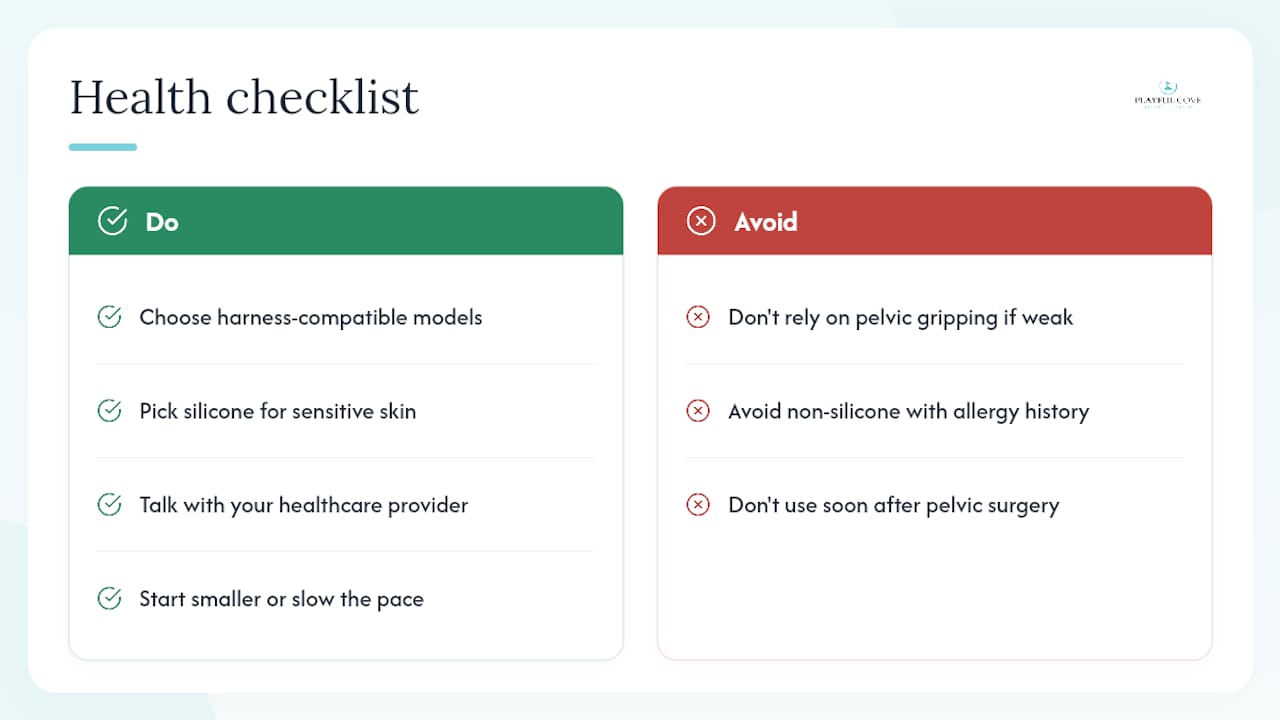
Pelvic floor health affects how well a strapless dildo performs, but it also affects whether one is a comfortable choice at all. People with pelvic floor disorders, including pelvic organ prolapse or significant muscle weakness, may find that gripping an internal bulb for extended periods is uncomfortable or simply not achievable without additional support. That doesn’t rule out strapless play. It usually means a harness-compatible model or a harness from the start is the more comfortable route, rather than fighting a design that depends on muscle strength you don’t currently have.
Material allergies are the other major consideration. Silicone is broadly considered hypoallergenic and is the safer default for anyone with sensitive skin or a history of reactions to rubber or latex products. If you’ve had a reaction to a toy before, check the material listing closely rather than assuming “silicone-like” packaging claims mean actual silicone.
Postpartum recovery, recent pelvic surgery, or ongoing pelvic pain conditions are all reasons to talk with a healthcare provider before introducing internal anchoring toys, since pelvic floor tissue in those situations may need more healing time than a general timeline would suggest. None of this means avoiding strapless toys altogether. It means matching the toy to where your body actually is right now, not where you expect it to be in a few months. Starting smaller, adding a harness, or simply slowing the pace are all reasonable adjustments rather than compromises.
Advanced Techniques Once You’ve Got the Basics Down
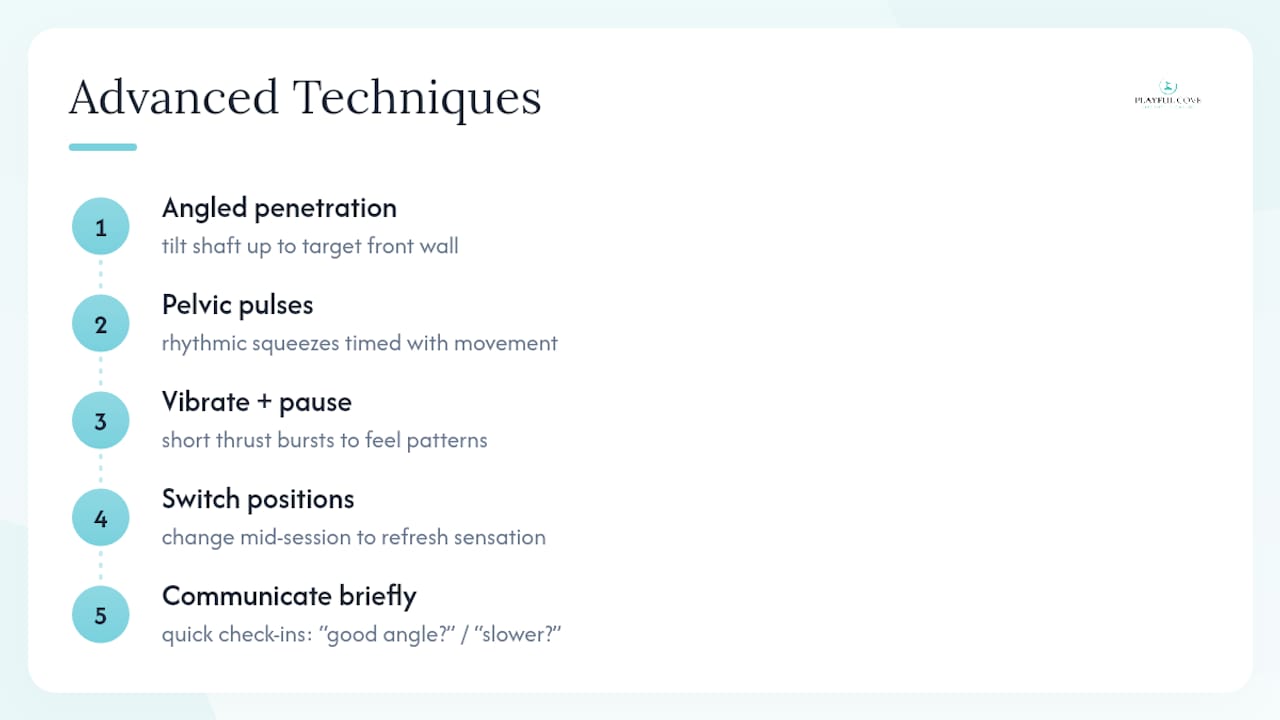
Once insertion and basic positions feel reliable, a few adjustments can meaningfully change the experience for both partners. Angling the shaft slightly upward during penetration targets the front vaginal wall more directly, which many receiving partners find intensifies sensation considerably compared to a straight, flat angle.
Rhythmic pelvic floor squeezing, contracting gently in time with your movement rather than holding one constant grip, adds a subtle pulsing sensation for the wearer and can extend how long the sensation stays interesting rather than fading into background pressure. It also happens to reinforce the same muscle engagement that keeps the bulb anchored, so the technique and the stability benefit reinforce each other.
Combining a vibrating strapless model with intentional pauses, thrusting in short bursts rather than one continuous motion, gives both partners a chance to feel the vibration pattern rather than having it blur into constant background buzz. Switching positions mid-session, once you’re confident in your grip, also keeps blood flow and sensation from plateauing the way a single unchanging position tends to.
Communication during the session matters more with strapless toys than with most others, simply because the wearer is managing two jobs at once: their own pelvic engagement and their partner’s pleasure. A quick verbal check-in (“good angle?” or “slower?”) costs nothing and prevents a lot of guesswork.
What Users and Experts Say About Strapless Play
The most consistent feedback from people who’ve made strapless dildos part of their routine is that the learning curve is real but short. Most report that the first one or two sessions feel like an adjustment period, full of small repositioning and some trial and error, and that things click noticeably by the third or fourth attempt as pelvic floor memory builds.
Sex-education writers covering this category consistently point to the same two variables as the biggest predictors of a good first experience: starting with a properly sized bulb and practicing solo before involving a partner. Neither of those tips is exciting, but they’re the ones that show up again and again across practical guidance, which says something about how much they matter compared to flashier advice about positions or add-ons.
Couples who keep a harness-compatible model report the most flexibility long term. They get the intimacy of strapless play on good days and a reliable fallback on days when energy, arousal, or physical readiness isn’t quite there. That kind of built-in adaptability tends to matter more over months of use than any single feature on the box.
Playful Cove’s Perspective on Buying Your First Strapless Toy
The Playful Cove Editorial Team has built out toy-care and sizing resources specifically because most strapless dildo problems trace back to two fixable issues: the wrong bulb size and skipping practice time. Our size guide and body-safe materials guide exist to help you avoid both.
A solid starter kit looks like this: a silicone strapless model that’s compatible with a harness, a water-based lubricant, and harness briefs as backup. Product pages list exact bulb and shaft measurements, so check those details before buying rather than guessing from photos alone.
— Playful Cove Editorial Team
Ready to Shop? Start With the Basics That Make It Work
Getting the fundamentals right matters more than picking the flashiest toy on the shelf, and that starts with lubricant. Mood Lube Water Based Lubricant is the safe, silicone-compatible pairing we recommend for any silicone strapless toy, since it won’t degrade the material the way silicone-based formulas can.

If control and stability are what you’re after on certain nights, an adjustable strap-on harness gives you that fallback without giving up the toy you already like. And if you’re weighing a vibrating option to build extra stimulation into the routine, the Naked Addiction Silicone Rechargeable Vibrating and Rotating Dildo is worth a look on its product page, where you’ll find exact bulb and shaft measurements before you buy.
Every order ships discreetly, and product pages spell out sizing and material details so you’re not left guessing. Browse the collection, check the specs against your own comfort level, and add what fits. That’s the whole process.
Sources
- Wikipedia — Strap-on dildo
- Healthline — Strap-on sex 101: How to pick out the right harness and dildo
