

Favor non-porous materials: platinum-cured silicone, borosilicate glass, surgical stainless steel, and ABS plastic. These surfaces can be cleaned and sterilized between uses, while porous materials like TPE, TPR, and jelly blends trap bacteria in microscopic crevices and can leach additives over time. That single distinction, porous versus non-porous, should drive nearly every material decision you make.
TL;DR:
- Porous materials like TPE, TPR, and jelly blends can trap bacteria and leach chemicals, requiring barriers and earlier replacement than non-porous options.
- Platinum-cured silicone, borosilicate glass, surgical stainless steel, and ABS plastic are fully non-porous, easier to sterilize, and generally safer for repeated use.
- Many products labeled as “medical-grade” or “skin-safe” are not regulated, so verify material specifics and request third-party test results when possible.
- Proper cleaning involves boiling or dishwasher use for silicone and glass, while ABS plastics require careful cleaning without boiling unless specified safe by the manufacturer.
- Avoid porous or damaged toys, as wear, tears, or cracks increase bacterial buildup and compromise safety, making durability and proper maintenance essential.
Table of Contents
- Body-Safe Materials Start With One Question: Porous or Non-Porous?
- Silicone, Glass, Steel, and ABS: What Each One Actually Does
- Why TPE, TPR, and Jelly Blends Deserve a Second Look
- How to Verify Material Claims Before You Buy
- Cleaning, Lube Compatibility, and Storage by Material
- What Playful Cove Checks Before Listing a Product
- What “Body-Safe” Means Under Actual Standards
- How Manufacturing and Additives Change a “Safe” Material Into a Risky One
- Reading a Safety Data Sheet Without a Chemistry Degree
- When a Body-Safe Material Stops Being Safe
- Choosing Materials That Are Kinder to the Planet, Too
- Buy Fewer, Better Pieces
- Shop-Ready Picks for Non-Porous, Body-Safe Materials
- Sources
Body-Safe Materials Start With One Question: Porous or Non-Porous?
Non-porous materials have a smooth, closed surface with no microscopic tunnels for bacteria, lubricant residue, or skin cells to hide in. Silicone, glass, steel, and ABS all fall into this camp. Wipe them down, boil them, or run them through a dishwasher (when the manufacturer says it’s safe), and you’re back to a genuinely clean surface.
Porous materials, by contrast, have a texture that looks solid but behaves more like a sponge at the microscopic level. TPE, TPR, and old-school “jelly” rubber absorb moisture and bacteria into tiny pockets that no amount of soap and water fully reaches. That’s why porous toys typically come with a recommendation to use a condom and to retire them sooner than their non-porous counterparts, guidance echoed by University Health Service clinical staff, who note these materials are harder to disinfect and shouldn’t be shared between partners without a barrier.
Here’s the catch with marketing language: “medical-grade” sounds official, but it’s not a regulated term for finished sex toys. It usually just means the raw material supplier also sells into medical markets, not that the finished product underwent biocompatibility testing under a standard like ISO 10993. A material can be genuinely body-safe without that phrase on the label, and a product can wear the phrase without earning it.
- Non-porous: silicone, borosilicate glass, surgical stainless steel, ABS
- Porous (avoid or use with a barrier): TPE, TPR, jelly rubber, unspecified “skin-safe” blends
- Neutral phrase to watch for: “medical-grade” without a cited standard
Silicone, Glass, Steel, and ABS: What Each One Actually Does
Silicone is the most common non-porous choice, but not all silicone is equal. Platinum-cured silicone is fully cured and inert, while cheaper tin-cured or blended silicone can still carry trace additives or a slightly tacky feel. Boil platinum silicone for up to ten minutes or run it through the dishwasher on the top rack; skip silicone lubricant on silicone toys, since the two can react and degrade the surface over time, a compatibility issue confirmed by WIRED’s reporting on material sourcing.
Borosilicate glass is completely non-porous and compatible with any lubricant, including silicone-based formulas. It also holds temperature well for warm or cool play. The caveat is quality: properly tempered borosilicate resists thermal shock and impact, while cheap soda-lime glass can crack. A glass butt plug from a brand that specifies borosilicate is a safer bet than one that just says “glass.”
Surgical stainless steel, typically 304 or 316 grade, is dense, heavy, and essentially indestructible under normal use. It’s biocompatible, hypoallergenic for the vast majority of people, and boilable without a second thought. The weight itself is a feature for some people and a dealbreaker for others.
ABS plastic shows up in vibrator shells, bullet toys, and rigid inserts. It’s non-porous and generally safe, but it typically can’t handle boiling water and often isn’t dishwasher-safe, so check the product page before you sterilize it that way.
Pro Tip: If a listing doesn’t specify “platinum-cured” for silicone or “borosilicate” for glass, email the seller and ask directly. A retailer confident in its materials will answer in one sentence.
Why TPE, TPR, and Jelly Blends Deserve a Second Look
Porous materials aren’t automatically dangerous, but they carry real limitations that non-porous materials don’t. Because TPE, TPR, and jelly rubber absorb fluid at a microscopic level, no amount of soap and water fully removes what’s trapped inside, which is why clinicians recommend a condom barrier and no sharing between partners for these materials.
Lab testing adds another layer of caution. Exploratory research published in Microplastics and Nanoplastics found that mechanically abrading sex toys generated micro and nanoplastic particles, and phthalate levels exceeding hazard thresholds turned up after extraction testing in some products. That doesn’t mean every jelly toy on the market is releasing harmful chemicals during normal use, but it does mean the concern isn’t hypothetical. CDC biomonitoring data already shows widespread population exposure to phthalates like benzyl butyl phthalate from everyday sources, so avoiding an obvious additional one is simple prudence.
If you already own a porous toy, harm reduction is straightforward: use a fresh condom every session, never share it, wash it promptly after each use, and plan to replace it sooner than you would a silicone or glass equivalent.
How to Verify Material Claims Before You Buy
Reading a product page critically takes about thirty seconds once you know what to look for.
- Check for an explicit material name. “100% silicone” or “borosilicate glass” is specific. “Skin-safe material” or “premium blend” is not.
- Look for third-party testing or a certificate of analysis. A COA showing what a lab actually found is one of the strongest trust signals available in a category with light regulation, a point independent researchers have made when examining the body-safe claims industry.
- Read the care instructions. A listing that tells you whether the item is boilable or dishwasher-safe is signaling confidence in its own materials.
- Confirm there’s a real contact channel. If you can’t find a way to ask the seller a direct question, that’s worth noting.
- Trust your senses if the item arrives. A strong chemical odor or a surface that feels tacky or slightly sticky even after cleaning are both signs of a lower-grade porous plastic.
Red flags worth walking away from: the word “blend” with no further detail, a price that seems too low for a silicone claim, and marketing copy that leans on adjectives instead of material names.
Pro Tip: Ask customer service one specific question: “Is this platinum-cured silicone, and can you share a COA?” The response tells you almost everything about how seriously that seller takes material safety.
Cleaning, Lube Compatibility, and Storage by Material
Care routines aren’t one-size-fits-all, and using the wrong lubricant or cleaning method can shorten a toy’s usable life fast.
- Silicone: warm water and mild soap after every use; boil for up to ten minutes or use a dedicated toy cleaner for a deeper clean; stick to water-based lubricant, since silicone-on-silicone contact can degrade the surface.
- Glass and stainless steel: both can be boiled, and both pair safely with any lubricant, including silicone formulas.
- ABS plastic: wipe down with soap and water or a toy cleaner; avoid boiling or submerging unless the manufacturer confirms it’s safe.
- All materials: oil-based lubricants can degrade latex condoms and are harder to clean off porous surfaces, so reserve them for barrier-free, non-porous use only.
Dry every toy completely before storing it, keep items in separate breathable pouches rather than piled together, and store away from direct sunlight or heat, which can degrade silicone and plastic over time.
What Playful Cove Checks Before Listing a Product
Every listing on Playful Cove states its material plainly, whether that’s platinum-cured silicone, borosilicate glass, surgical stainless steel, or ABS, along with care instructions so you know exactly how to clean and store it. If you want documentation beyond the product page, reach out and ask about a certificate of analysis. We’d rather answer a material question upfront than have you guess. Pair any silicone toy with a compatible water-based lubricant and a proper toy cleaner to keep it performing the way it should.
What “Body-Safe” Means Under Actual Standards
No single government body issues a “body-safe” seal for sex toys the way the FDA clears certain medical devices. That gap is exactly why the phrase gets used loosely. The closest thing to a real standard is ISO 10993, the international framework for biocompatibility testing of materials that contact the body, commonly used for medical devices. When a manufacturer says a material has been tested to ISO 10993 standards, that’s a meaningful claim you can verify by asking for documentation. When a listing just says “medical-grade” with nothing behind it, treat that as marketing language rather than a certification.
The FDA does regulate certain related product categories: it oversees bisphenol A and other chemicals when they’re used in food-contact packaging, for instance. That regulatory attention simply doesn’t extend to adult novelties in the same way, which creates a strange gap: a chemical restricted in a food container might still legally appear in a sex toy. This inconsistency is exactly why independent lab testing and clear material disclosure matter more in this category than in categories with tighter federal oversight.
Some manufacturers pursue additional voluntary steps, like RoHS compliance (restricting certain hazardous substances) or REACH compliance in the European Union, which restricts specific chemicals including some phthalates. Neither is mandatory for sex toys sold in the United States, but a brand that mentions either is signaling it went beyond the legal minimum.
How Manufacturing and Additives Change a “Safe” Material Into a Risky One
The base polymer name on a label only tells part of the story. Additives, colorants, and processing choices can shift a material’s safety profile even when the label says “silicone” or “TPE.”
Silicone itself is a good example of how curing method matters. Platinum-cure silicone uses a catalyst that leaves no residual byproduct, producing an inert, stable material. Tin-cure silicone uses a different catalyst that can leave trace compounds behind and tends to degrade faster with repeated use. Both get called “silicone” on a label, but they’re not interchangeable in terms of longevity or purity.
Plasticizers are where additives become a bigger concern. Phthalates are added to plastics like PVC and some jelly rubbers to make them soft and flexible, and they’re not chemically bonded to the polymer. That means they can migrate out of the material over time, particularly with heat, friction, or contact with oils, a mechanism reviewed in the polymer science literature on how mechanical stress breaks down plastics into smaller particles and releases embedded compounds. Colorants and fragrance additives introduce their own variables, since a dye or scent compound not designed for skin contact can trigger irritation in sensitive people regardless of the base material’s safety.
This is why two toys made from the “same” material can behave differently. The base polymer sets the ceiling for how safe a product can be, but the additive package and manufacturing process determine whether it actually reaches that ceiling.
Reading a Safety Data Sheet Without a Chemistry Degree
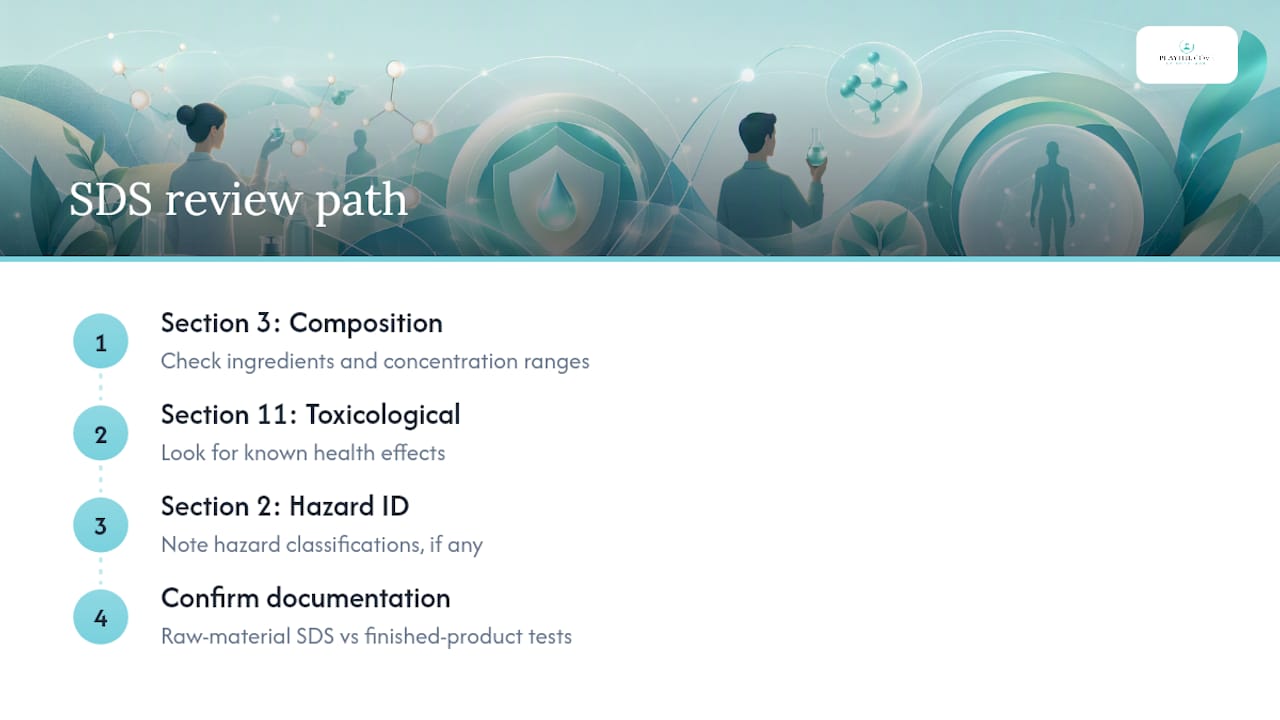
A safety data sheet, or SDS, is a standardized document manufacturers use to disclose a material’s composition and handling hazards. Not every sex toy brand publishes one for finished products, but many silicone and lubricant suppliers do, and knowing how to read one gives you a real edge over marketing copy.
Skip straight to Section 3 (Composition/Information on Ingredients). This lists the actual chemical components and their concentration ranges. If you see phthalate compounds listed here for a product marketed as body-safe, that’s a direct contradiction worth flagging to the seller.
Section 11 (Toxicological Information) covers what’s known about health effects from exposure, and Section 2 (Hazard Identification) flags whether the material carries any hazard classifications at all. A raw silicone SDS for a genuinely inert, medical-grade base material often shows minimal hazard classifications, which is a reassuring sign, though it describes the raw material rather than guaranteeing the finished, molded product.
The practical limit here matters: an SDS describes the raw material a manufacturer starts with, not necessarily the exact finished toy you’re holding. A seller who can produce both the raw material SDS and finished-product testing documentation is showing more transparency than one who offers neither.
When a Body-Safe Material Stops Being Safe
Even the best material degrades eventually, and knowing the warning signs matters as much as picking the right material in the first place. Silicone that develops a slightly sticky or tacky surface, sometimes called “silicone bloom” or “off-gassing” residue, has started to break down and should be retired even though it once tested as pure. Small tears, pitting, or discoloration on any porous material accelerate bacterial buildup, since damage creates new surface area for microbes to colonize.
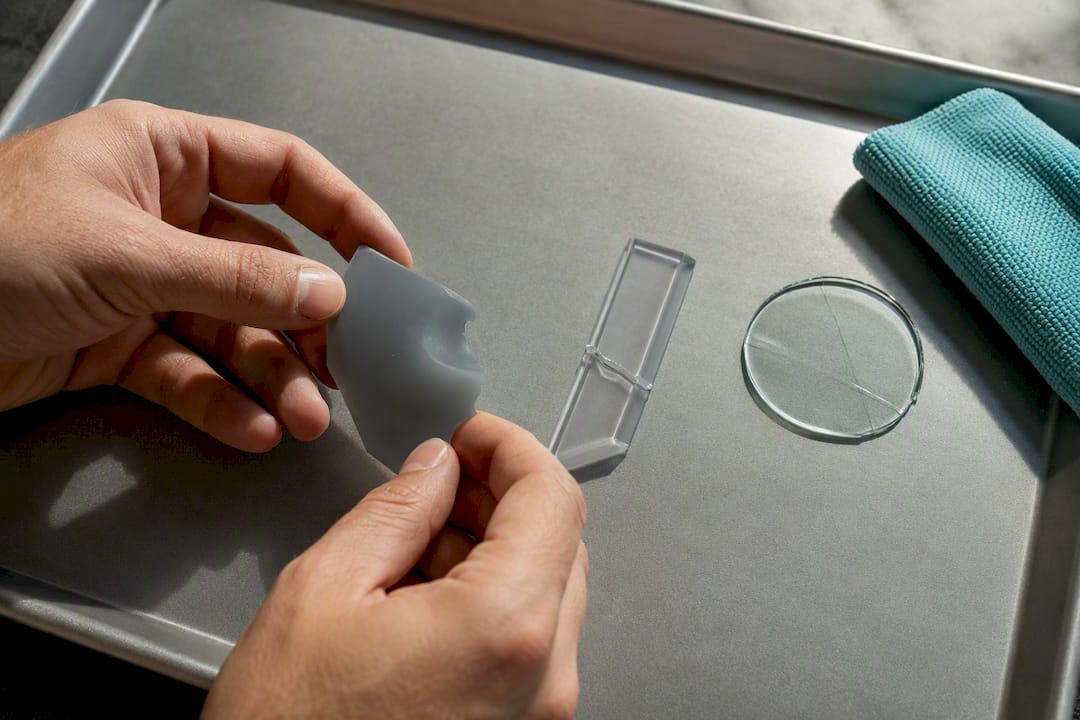
Stainless steel and borosilicate glass age the slowest of the common materials, largely because their hard, non-porous surfaces resist scratching under normal use. Steel can develop surface scratches from being stored against other metal objects, though this doesn’t typically compromise safety the way it would with a softer material. Glass is the outlier: it doesn’t degrade chemically, but a hairline crack from an impact is an immediate retirement signal regardless of how new the toy is, since a compromised surface can no longer be reliably sterilized.
ABS plastic can become brittle over years of repeated flexing near seams or moving parts, which shows up as small cracks around stress points. Once you see a crack in any rigid plastic, non-porous or not, that item has effectively become porous at the damage site.
A simple rule covers most materials: if you can see damage, feel tackiness, or smell anything unusual that wasn’t present when the item was new, retire it. The cost of a replacement is small compared to the cost of an infection.
Choosing Materials That Are Kinder to the Planet, Too
Durability and sustainability turn out to be closely linked in this category. A silicone, glass, or steel toy cared for properly can last for years, which means fewer replacements and less waste over time compared to cheaper porous items that need replacing every few months.
Among non-porous options, materials vary in their environmental footprint. Silicone is derived partly from silica (sand), a relatively abundant resource, and doesn’t break down into microplastics the way porous plastics do under abrasion, based on the polymer degradation research on how mechanical stress fragments plastics over time. Stainless steel is fully recyclable at the end of its life, and glass is as well, though few municipal recycling programs are set up to accept either from a consumer sex toy specifically.
Packaging is the other lever worth considering. Brands that minimize plastic clamshell packaging in favor of simpler boxes reduce waste before the product even reaches your hands. If sustainability matters to your purchase, prioritizing durable, non-porous materials accomplishes two goals at once: it protects your health and cuts down on how often an item ends up in a landfill.
Buy Fewer, Better Pieces
We’d rather you own three toys made from silicone, glass, and steel than a drawer full of cheap porous ones. The upfront cost difference is small compared to what you save in replacements and peace of mind. If you’re ever unsure about a material, ask a retailer for a certificate of analysis before you buy, not after something feels off.
— Playful Cove Editorial Team
Shop-Ready Picks for Non-Porous, Body-Safe Materials
Once you know what to look for, shopping gets a lot simpler. Every silicone product Playful Cove carries lists its material plainly on the product page, along with care instructions, so you’re never guessing what you’re bringing home.
If you want a fully body-safe, non-porous option to start with, the Naked Addiction Silicone Rechargeable Thrusting, Vibrating, and Rotating Dildo is made from platinum-cured silicone and boilable for sterilization between uses. For something smaller and quieter, the Mystique Vibrating Massagers Rechargeable Silicone Vibrator offers the same non-porous safety profile in a more compact shape.
Pair either one with a water-based lubricant to stay compatible with the silicone surface, and keep an antibacterial toy cleaner on hand so cleaning becomes a habit rather than an afterthought. Browse Playful Cove’s full silicone collection to find a shape and size that fits, and check any product page’s care section before your first use.
This article is general information, not a substitute for advice from a qualified doctor. Consult a qualified healthcare professional about your own circumstances before acting on anything here.
Sources
- Bringing sex toys out of the dark: exploring unmitigated risks — Microplastics and Nanoplastics (2023)
- PubMed record discussing regulatory context and concerns about chemicals in consumer products (2023/2024)
- Ask the Sexpert: Sex Toy Materials — University Health Service (2023)
- BPA use in food-contact applications — FDA
