

Wash silicone toys with warm water and a mild, fragrance-free soap after every use, then rinse and air-dry completely. That covers daily care for solo use. Sterilization comes into play the moment you share a toy between partners, move it from anal to vaginal use, or suspect exposure to an STI, since that’s when boiling or a sanitizing wipe-down actually matters. Skip silicone-based lube on silicone toys, and never submerge a motor that isn’t rated waterproof.
TL;DR:
- Boiling and dishwasher sterilization are effective only for 100% silicone toys without bonded plastic, metal, or straps, and should be used before sharing or after exposure to infection.
- Use a damp cloth or disposable wipe for cleaning motorized or waterproof toys, avoiding submersion unless explicitly rated fully waterproof by the manufacturer.
- Silicone, glass, and steel toys can be fully sterilized and safely shared once disinfected, unlike porous toys such as jelly rubber or cyberskin that trap bacteria and fungi.
- Surface cleaning with mild soap and water is sufficient for solo use, but deep disinfection is necessary when switching between anal and vaginal use, sharing, or STI exposure.
- Avoid silicone-based lubricants on silicone toys, and never use abrasive cleaners or solvents to prevent surface damage and infection risk.
Table of Contents
- What You Need Before You Clean Silicone Toys
- Daily Surface-Cleaning Steps For Silicone Toys
- Boiling, Dishwashers, and Chemical Disinfection
- Cleaning Motorized or Battery-Powered Silicone Toys
- Silicone vs. Porous Materials: Why It Matters for Cleaning
- When Sharing Requires Sterilization, Not Just Cleaning
- Drying, Storage, and Regular Inspection
- Mistakes That Damage Silicone or Raise Infection Risk
- What the Research Actually Says About Cleaning vs. Sterilizing
- Our Take on Silicone Toy Care
- Find Silicone Toys and Compatible Care Products at Playful Cove
- Sources
What You Need Before You Clean Silicone Toys
You don’t need a cabinet full of products to keep your collection safe. A gentle, unscented liquid soap does most of the work, and a dedicated toy cleaner is a nice option if you want something formulated for the job. Keep 70% isopropyl alcohol on hand for spot disinfecting hard, nonporous surfaces like a vibrator’s shaft, since CDC guidance recognizes it as effective on many nonporous items when used correctly.
For tools, a soft cloth, a soft-bristled brush for textured seams, a small pot for boiling, and your dishwasher’s top rack cover the rest.
Before you clean anything, check:
- Whether the toy is fully waterproof or only splash-resistant
- Whether batteries are removable or the toy is fully sealed
- Whether plastic parts, straps, or control buttons are bonded to the silicone
- Whether any component would melt or delaminate under heat
If a toy mixes silicone with bonded plastic, metal trim, or straps, skip boiling and the dishwasher. Stick to hand washing instead.
Daily Surface-Cleaning Steps For Silicone Toys
Rinse the toy under warm running water right after use, before anything has a chance to dry onto the surface. Lather a small amount of mild soap into your hands or a soft cloth and work it over the entire toy for about 20 to 30 seconds, paying attention to seams, ridges, and textured details where residue likes to hide.
- Rinse immediately under warm water to remove bulk fluid and lube.
- Apply mild, fragrance-free soap and massage it across every surface for 20 to 30 seconds.
- Scrub seams, grooves, and textured areas with a soft brush if needed.
- Rinse thoroughly until no soap film remains.
- Air-dry completely on a clean towel before storing.
This routine is sufficient when a toy is used by one person and hasn’t been used anally, then reused vaginally without a wash in between. Soap and water lift away bodily fluids and lubricant residue effectively for everyday, single-user situations.
Pro Tip: Keep a small bottle of mild soap and a hand towel on your nightstand. A 30-second bedside rinse right after use is far easier than scrubbing dried residue out of silicone grooves the next morning. If a toy has picked up a stain, a paste of baking soda and water left on for a few minutes usually lifts it before you rinse.
Boiling, Dishwashers, and Chemical Disinfection
Daily soap and water removes surface residue, but it doesn’t sterilize. When you need a deeper clean, silicone gives you real options that other materials simply can’t handle.
- Boiling: Submerge the toy fully in boiling water for 3 to 5 minutes. This works only for 100% silicone pieces with no bonded plastic, batteries, or straps. Let it cool completely and check for micro-cracks before you use it again.
- Dishwasher: Run dishwasher-safe, nonmotorized silicone toys on the top rack, using the sanitize cycle with plain water and no detergent, a practice consistent with how dishwasher sanitize settings are designed to work on nonporous items.
- Diluted bleach: A short soak in a weak bleach solution can disinfect solid silicone, but rinse extensively afterward. Never mix bleach with other cleaners.
- 70% isopropyl alcohol: Fine for wiping down hard, nonporous surfaces, but repeated full-strength alcohol soaks can dry out silicone over time.
Boiling and dishwasher sterilization make sense before sharing a toy, after an infection scare, or when starting fresh with a secondhand item. For a toy one-person uses solo, that level of disinfection is more than daily hygiene calls for. A peer-reviewed review of sexual health device contamination backs up material-specific handling like this, noting that nonporous materials tolerate disinfection methods that porous ones simply can’t survive.
Cleaning Motorized or Battery-Powered Silicone Toys
Motors change the rules. Check the packaging or product page for a waterproof rating before you get anywhere near water, since that single detail determines your entire cleaning method.
- Fully waterproof toys can handle a gentle rinse under running water with mild soap, followed by thorough drying, especially around the charging port.
- Non-waterproof or splash-resistant toys need a damp cloth or unscented wipe instead of running water. Never hold them under a faucet.
- A 70% isopropyl alcohol wipe works well on external silicone surfaces of motorized toys when you want a quick disinfect without moisture risk.
- Never submerge or boil a toy that houses electronics unless the manufacturer explicitly states it’s fully submersible.
If a charging port stays damp, a seal looks cracked, or the toy has taken visible water damage, retire it rather than risk a short circuit or skin irritation from trapped moisture.
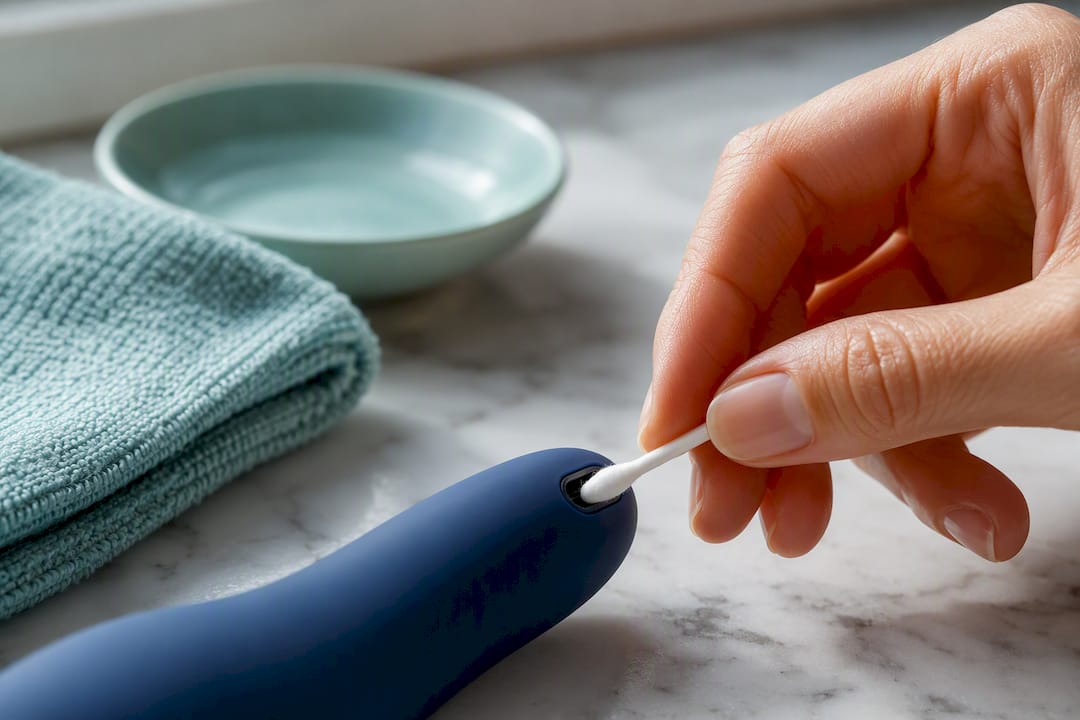
Pro Tip: Wipe the charging port area with a dry cotton swab after every use, even on waterproof toys. Moisture that lingers in a port is one of the most common reasons motorized toys fail early.
Silicone vs. Porous Materials: Why It Matters for Cleaning
Silicone belongs to a small group of nonporous materials, alongside glass, stainless steel, and ABS plastic. Nonporous surfaces have no microscopic gaps for bacteria or fungi to hide in, which is exactly why they can be boiled, dishwasher-sanitized, or wiped with alcohol and come out genuinely clean.
Porous materials tell a different story. Jelly rubber, cyberskin, and certain rubber blends have tiny pores that trap moisture and microorganisms no amount of surface washing reaches.
- Silicone, glass, and steel: fully sterilizable, safe to share once disinfected.
- Jelly rubber, cyberskin, and similar blends: cannot be fully disinfected, even with careful washing.
Consumer health guidance on material differences consistently points to the same conclusion: porous toys should always be used with a condom, and it’s worth replacing them every so often rather than trusting them to stay hygienic long term. If a jelly or rubber toy shows any tackiness, odor, or texture change, that’s your sign to retire it.
When Sharing Requires Sterilization, Not Just Cleaning
Some situations call for more than soap and water, no exceptions. Sterilize or use a fresh condom on the toy when:
- You’re sharing a toy between partners, even briefly.
- You’re switching a toy from anal to vaginal use, or vice versa.
- You know or suspect exposure to an STI.
- Blood or visible bodily fluid remains after use.
A study published in the journal Sexually Transmitted Infections found HPV DNA on vaginally inserted vibrators before cleaning, immediately after cleaning, and in some cases up to 24 hours later, a finding that directly undercuts the assumption that a quick wash always neutralizes viral material on shared toys. That persistence is exactly why sterilization, not just surface cleaning, matters when a toy changes hands.
If boiling or a dishwasher cycle isn’t practical in the moment, a fresh condom over the toy per partner or per act is a legitimate fallback. Swap it out between anal and vaginal use the same way you would switch condoms during partnered sex.
Drying, Storage, and Regular Inspection
Air-dry every toy completely before you put it away. A residual damp surface sealed inside an airtight bag or drawer is an invitation for microbial growth.
- Store toys in individual lint-free pouches or separated compartments, never touching each other in a pile.
- Inspect silicone regularly for tears, cracks, tackiness, or discoloration, and retire anything showing damage.
- Label pouches or bags when traveling so toys with different intended uses don’t get mixed up.
A dedicated drawer with a few soft pouches solves most storage problems, and it takes the guesswork out of which toy is which when you’re in a hurry.
Mistakes That Damage Silicone or Raise Infection Risk
A few habits undo all your good cleaning work fast.
- Don’t use silicone-based lubricant on silicone toys. It degrades the surface over time. Reach for a water-based lubricant instead.
- Don’t use abrasive scrubbers, solvents, or heavily scented cleaners. Stick to mild soap.
- Don’t submerge a non-waterproof motorized toy, ever.
- Don’t share a toy without sterilizing it or using a fresh condom each time.
What the Research Actually Says About Cleaning vs. Sterilizing
Public-health terminology draws a real line between cleaning, sanitizing, and sterilizing, and that distinction matters more than most people realize. Cleaning removes visible debris. Sanitizing reduces microorganisms to a safer level. Sterilizing eliminates essentially all of them. CDC disinfection guidelines built for healthcare settings apply the same logic here: the method has to match the actual risk.
Sampling studies have isolated bacteria and fungi, including Candida and Staphylococcus, from used toys, which is part of why routine cleaning and disinfection protocols exist in the first place rather than being an optional extra step.
The practical takeaway: soap and water is genuinely enough for solo, single-material use. Sterilization becomes necessary the moment risk factors like sharing or switching anatomical use enter the picture, and no amount of wiping substitutes for it.
Our Take on Silicone Toy Care
Most cleaning advice online treats every toy the same way, and that’s where things go wrong. The real skill isn’t memorizing one universal method. It’s matching the method to the material and the situation, because a solo-use silicone toy and a shared one carry genuinely different risks. We think too many guides undersell how good silicone actually is here. Unlike jelly rubber or cyberskin, silicone can be fully sterilized, which means the “just in case” anxiety around sharing or trying something new doesn’t have to follow you. Read the care label on your specific toy, always, since motorized and hybrid-material pieces have exceptions that a general guide can’t cover.
— Playful Cove Editorial Team
Find Silicone Toys and Compatible Care Products at Playful Cove
Cleaning is only half the equation. What you buy in the first place determines how easy that cleaning actually is.
The Naked Addiction Silicone Rechargeable Thrusting, Vibrating, and Rotating Dildo is a solid example of body-safe silicone construction paired with the kind of care instructions that make maintenance simple rather than stressful. Pair any silicone toy with a water-based lubricant instead of a silicone-based one, since that single swap protects the material’s surface for years of use. Browse the full silicone collection, check each product’s specific care notes before boiling or dishwashing, and order with discreet packaging and shipping.
Sources
- PMC review article on sexual health device contamination
- A study of human papillomavirus on vaginally inserted sex toys — STI (BMJ)
- Antibiogram of bacteria and fungi isolated from sex toys — IJMAAS
This article is general information, not a substitute for advice from a qualified doctor. Consult a qualified healthcare professional about your own circumstances before acting on anything here.
