

Choose an anal-safe plug with a wide flared base and body-safe material like medical-grade silicone, then use plenty of compatible lube and insert it slowly while your body is relaxed. Go slow, breathe, and stop immediately if you feel sharp pain or notice bleeding. Retailers like Playful Cove carry starter options built with these safety features already in mind, so the guesswork is mostly done for you.
TL;DR:
- Choosing a small, tapered silicone, glass, or stainless steel plug with a wide flared base significantly reduces risks of migration and injury during initial use.
- Proper preparation includes relaxed positioning, thorough lubrication, and slow, patient insertion techniques to minimize discomfort and avoid tissue damage.
- Beginners should limit wear time to 15-30 minutes, and remove immediately if experiencing numbness, increasing pain, or signs of discoloration.
- Cleaning should involve soap and water or boiling for silicone, stainless steel, or glass toys, with thorough drying and separate storage to prevent degradation.
- Progression over multiple sessions, with patience and gentle practice, is more effective than perfect technique, as experience reduces pain and increases pleasure.
Table of Contents
- How Do You Use a Butt Plug Safely as a Beginner?
- Preparing Your Body and Mind Before Insertion
- What Are the Best Steps for Inserting a Butt Plug?
- How Long Should You Wear a Butt Plug?
- How Do You Remove and Clean a Butt Plug the Right Way?
- What Medical Risks Should You Know About Butt Plug Use?
- Why Progressive Training Matters More Than Perfect Technique
- Where to Start: Beginner-Friendly Plugs and Lube
- Sources
How Do You Use a Butt Plug Safely as a Beginner?
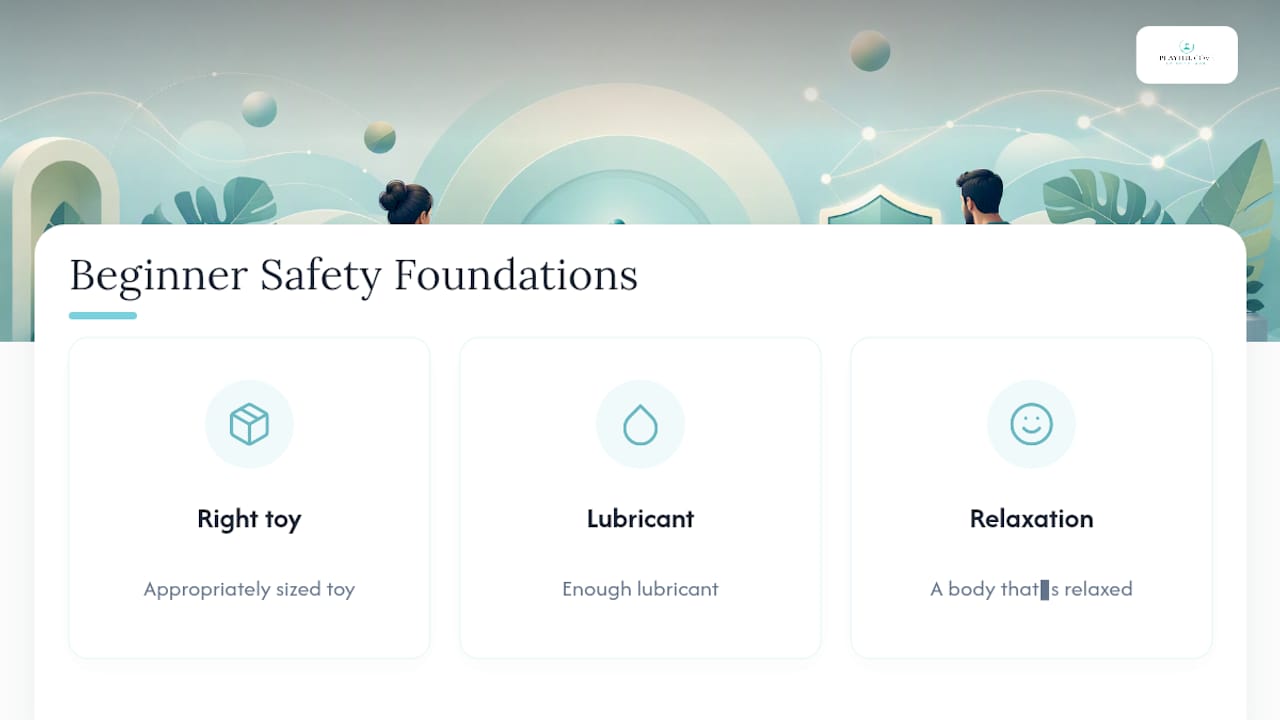
Learning how to use a butt plug comes down to three things working together: the right toy, enough lubricant, and a body that’s actually relaxed. Skip any one of those and the experience turns uncomfortable fast, sometimes painfully so. Get all three right, and most beginners find the process far gentler than they expected.
Choosing a safe butt plug: sizes, shapes, and materials that reduce risk
Size matters less than most people assume, and shape matters more. Start with something close to the width of a finger. That’s small enough to keep the sensation manageable while you learn how your body responds, and it lets you build confidence before moving up. Once that feels easy rather than just tolerable, a medium size is the natural next step. Save anything advanced for well after you’ve had several relaxed, pain-free sessions.
Shape changes the whole experience. A tapered or teardrop design narrows at the tip, which makes initial insertion noticeably easier for anyone new to anal play. Bulbous or curved shapes create more sustained pressure once inserted, and curved designs can target prostate stimulation more directly. Neither shape is “better.” They just do different jobs.
Material is where corners get cut, and where most injuries and infections actually start. Stick with:
- Medical-grade silicone — body-safe, non-porous, easy to clean, and forgiving on sensitive tissue.
- Stainless steel — non-porous, heavier for a fuller feeling, and boil-safe for sterilizing.
- Borosilicate glass — smooth, non-porous, and easy to check visually for cracks or chips.
Avoid anything labeled “jelly” or made from porous rubber. Those materials trap bacteria in tiny surface pores no amount of washing fully removes, and they degrade over time into rough, unsafe surfaces.
The flared base isn’t a design flourish. It’s the single feature that keeps a toy from disappearing past the point you can retrieve it. The rectum doesn’t have a natural stopping point the way the vagina does; without a wide base to catch against the sphincter, a toy can migrate further inward. That’s exactly why household objects, no matter how clean or smooth they look, are never a safe substitute for a purpose-built toy.
Lube compatibility depends entirely on what the toy is made of:
| Material | Compatible Lube | Avoid |
|---|---|---|
| Silicone | Water-based | Silicone-based (degrades the toy) |
| Steel or glass | Water-based, silicone-based, or oil-based | Nothing to avoid; all types are safe |
| ABS plastic | Water-based | Silicone-based (can cloud or weaken plastic) |
Starter options like the Mood Naughty 1 Silicone Anal Plug or the classic, simple Doc Johnson Classic Butt Plug check every box here: flared base, body-safe silicone, and a size built for first attempts.
Pro Tip: If you’re not sure which size fits your comfort level yet, buy the smallest option first. It’s far easier to size up once you know how your body responds than to back off from something that felt like too much on day one.
Preparing Your Body and Mind Before Insertion
Preparation is where most of the discomfort people associate with butt plugs actually gets prevented, long before insertion even starts.
If you’re with a partner, talk first. Agree on a clear way to say “slow down” or “stop” that doesn’t require breaking the mood entirely, and check in with each other once you begin, not just before. Comfort with anal play tends to build with clear communication, not spontaneity.
Hygiene is simpler than most people expect. A regular shower is enough for most sessions. Some people prefer to empty their bowels beforehand for peace of mind, but douching is not something you need to do routinely; overdoing it can irritate the rectal lining and actually raise irritation risk rather than lower it.
- Shower normally, and empty your bowels beforehand if that helps you relax.
- Skip douching unless you have a specific reason, and never do it right before insertion expecting it to “clean things out” further.
- Apply a generous amount of lubricant, more than feels necessary at first, directly to the toy and around the anal opening.
- Reapply if you feel any dragging or resistance rather than pushing through it.
- Clean any toy that moves between people or between body sites before it touches something new.
Lube choice matters here as much as it did during toy selection, because the rectum does not produce its own lubrication the way other tissue does. Water-based lube like Mood Lube Water Based Lubricant works with every toy material and washes off easily. Silicone-based options like JO Premium Silicone Lubricant last longer for extended sessions but shouldn’t touch silicone toys. A hybrid formula like JO Classic Hybrid Personal Lubricant splits the difference for people who want longer glide without worrying about toy compatibility.
One thing to skip entirely: numbing creams. Pain during insertion is your body’s way of telling you something needs to slow down or stop. Masking that signal doesn’t remove the underlying problem, it just removes your ability to notice tissue damage while it’s happening.
What Are the Best Steps for Inserting a Butt Plug?
A good insertion routine isn’t about technique so much as patience. Rushing is the single biggest reason first attempts go badly.
- Set the scene. Pick a time when you’re not rushed, in a private space where you can fully relax rather than tense up out of self-consciousness.
- Lube thoroughly. Coat the toy generously and apply more directly to the anal opening with clean fingers.
- Tease first. Use a lubed finger around and just inside the opening for a minute or two before introducing the toy. This gives your body a chance to acclimate gradually.
- Insert the tip and pause. Let the narrowest part rest at the entrance without pushing further. Breathe normally here rather than holding your breath.
- Use the push-out technique. Gently bear down, the same motion as trying to push out during a bowel movement, while you ease the toy in. This relaxes the sphincter rather than fighting against it, a technique pelvic floor practitioners regularly recommend.
- Advance slowly. Move forward only as your body accepts it, stopping at any point that still feels comfortable rather than pushing toward a specific depth.
Position changes what your muscles are doing during all of this. Lying on your side with knees drawn toward your chest keeps you relaxed and gives you full control with your hand, making it the easiest starting position for most beginners. A low squat opens the area more directly but demands more balance and muscle engagement, better suited once you’re past the first few tries. Lying on your back with knees bent and feet flat works well for partnered play since it keeps you face to face, though it takes a bit more conscious relaxation than the side position.
Relaxation isn’t just physical positioning. A tight jaw and a tight pelvic floor tend to move together, so consciously unclenching your jaw and taking slow, even breaths can ease tension you didn’t realize you were holding. Tension anywhere in the body tends to show up as resistance right where you need it least.
Progress across sessions should feel like pressure and fullness becoming familiar, not like pain becoming tolerable. Those are very different sensations, and only one of them means you’re ready to move forward. Research on receptive anal intercourse shows pleasure tends to increase and pain tends to decrease as experience builds, which is exactly why gradual, repeated practice works better than forcing progress in a single session.
Pro Tip: Never insert on the first try during a stressful or distracted moment. Anxiety tightens the pelvic floor before you even start, working against everything the push-out technique is trying to do.
Stop immediately for sharp, stabbing pain, bright red bleeding, or sudden severe cramping. Discomfort that eases with a pause is normal. Pain that doesn’t ease is not something to push through.
How Long Should You Wear a Butt Plug?
Beginners should aim for 15 to 30 minutes on a first attempt, then judge from there. If that stretch feels genuinely comfortable rather than merely bearable, you can extend gradually over future sessions. There’s no fixed maximum that applies to everyone. Your body’s feedback is the real guide.
Watch for these signs that it’s time to remove the toy regardless of how long it’s been:
- Numbness or tingling anywhere in the pelvic area or legs
- Increasing pain rather than a steady, mild sensation
- Any discoloration you notice when you do remove it
- A feeling of pressure that’s climbing rather than staying level
Wearing a plug during partnered sex is common and generally fine, but if the toy will move between anal and vaginal contact, or between partners, cover it with a fresh condom each time and wash it before switching. That single step meaningfully cuts the risk of bacterial transfer.
Skip plug use entirely if you’re currently dealing with diarrhea, any open wound or fissure in the anal area, an active infection, or recent anorectal surgery. Those conditions all raise the risk of injury or delayed healing, and waiting until you’ve fully recovered isn’t optional caution, it’s necessary.
How Do You Remove and Clean a Butt Plug the Right Way?
Removal deserves the same patience as insertion. Relax first, take a breath, and bear down gently the same way you did going in. Grip the flared base firmly and pull straight out at a slow, steady pace rather than yanking, which can startle already-relaxed muscles into clenching.
If it feels stuck, don’t force it. Try these steps first:
- Add more lube around the base and gently work it in small circular motions.
- Take a warm bath to help your muscles relax involuntarily.
- Breathe slowly and consciously relax your pelvic floor before trying again.
- Never insert anything else to try to help pull it out.
If it still won’t budge after a reasonable, calm attempt, contact a medical provider rather than continuing to struggle with it. That’s a normal reason to seek care, not an embarrassing one.
Cleaning depends on material. Soap and warm water handle daily cleaning for every material type. Solid silicone, stainless steel, and glass toys (with no motor or electronics) can typically be boiled for a deeper clean when the manufacturer confirms it’s safe, like the Glas Glass Butt Plug. Dedicated toy cleaners work well for a quick refresh between uses. Let everything dry completely before storage, and keep silicone toys separate from other silicone items, since contact between two silicone surfaces over time can cause them to degrade.
What Medical Risks Should You Know About Butt Plug Use?
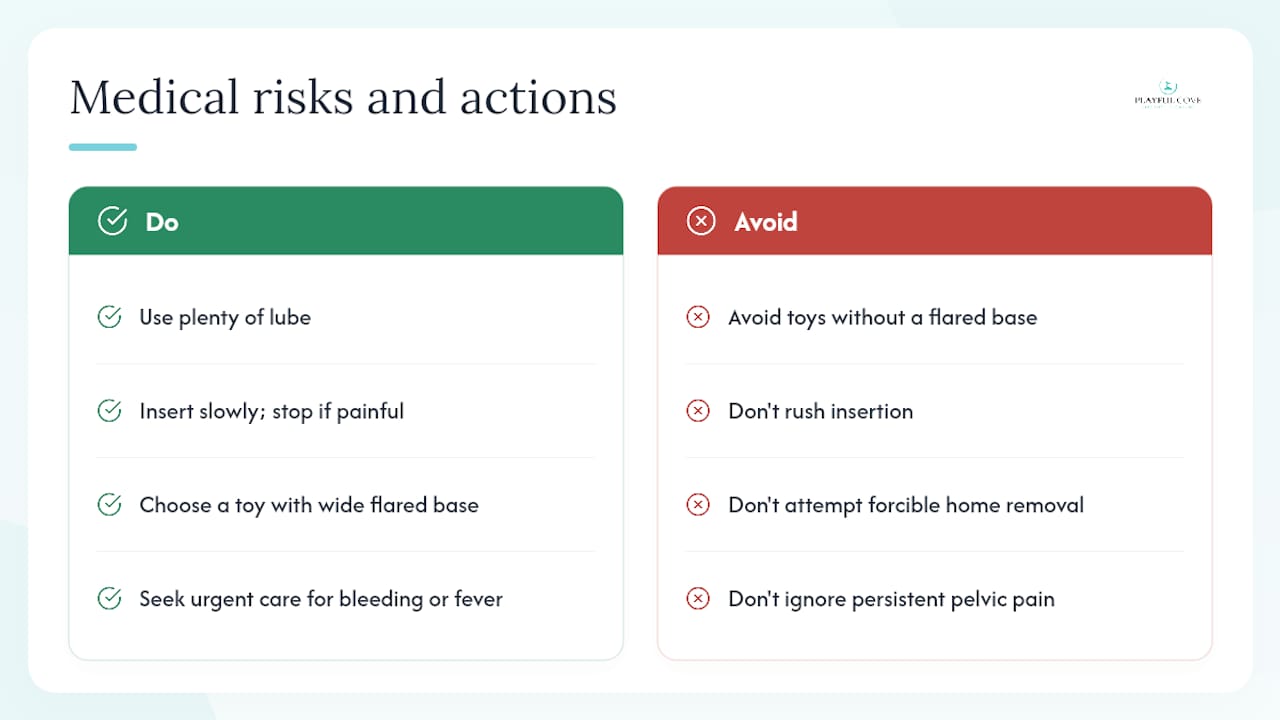
Improper technique, meaning insufficient lube or rushed insertion, is a documented, modifiable risk factor for anodyspareunia and related pelvic floor dysfunction. The encouraging part of that research is the word “modifiable.” These aren’t permanent outcomes; they respond well to slower technique and, when needed, professional treatment.
The flared base requirement isn’t cautious marketing language, it reflects real anatomy. The rectum can create a mild suction effect around an object without a proper base to stop it, which is part of why a toy without one can migrate further than intended. Clinical guidance is direct about this: a wide flared base is the essential safety feature, full stop, and any retained object needs prompt evaluation rather than continued attempts at home removal.
Seek urgent medical care for uncontrolled bleeding, fever following use, pain that doesn’t ease with rest, or a device you genuinely cannot remove after a calm attempt. None of those situations are rare enough to feel embarrassed about, and emergency staff see them regularly.
For people dealing with ongoing discomfort or a pelvic floor that stays tense even outside of play, pelvic floor physical therapy and structured dilator programs are established, evidence-backed treatments. They’re not a last resort. They’re a legitimate first step for anyone whose body needs more support than trial and error alone can offer.
Why Progressive Training Matters More Than Perfect Technique
I think the anal play conversation gets one thing backward constantly: it treats technique as the whole story, when patience is actually doing most of the work. You can follow every step in this guide perfectly and still have an uncomfortable first try, simply because your body hasn’t built familiarity yet. That’s not failure. That’s the process working as intended.
The data on this is genuinely reassuring. Experience correlates with less pain and more pleasure over time, which means the discomfort so many beginners assume is permanent is usually just a starting point, not a ceiling. Destigmatizing that learning curve matters as much as any product recommendation.
Playful Cove exists because good information and well-made products should be easy to find in the same place, without judgment attached to either. We curate for body-safe materials, flared bases, and honest sizing, and we ship everything discreetly because privacy shouldn’t be a luxury. If you have questions specific to a product, our customer support team is there for exactly that.
— Ruben
Where to Start: Beginner-Friendly Plugs and Lube
If you’re shopping with this guide’s checklist in hand, look for exactly what it describes: a flared base, body-safe material, and a size built for a first attempt rather than an ambitious one.
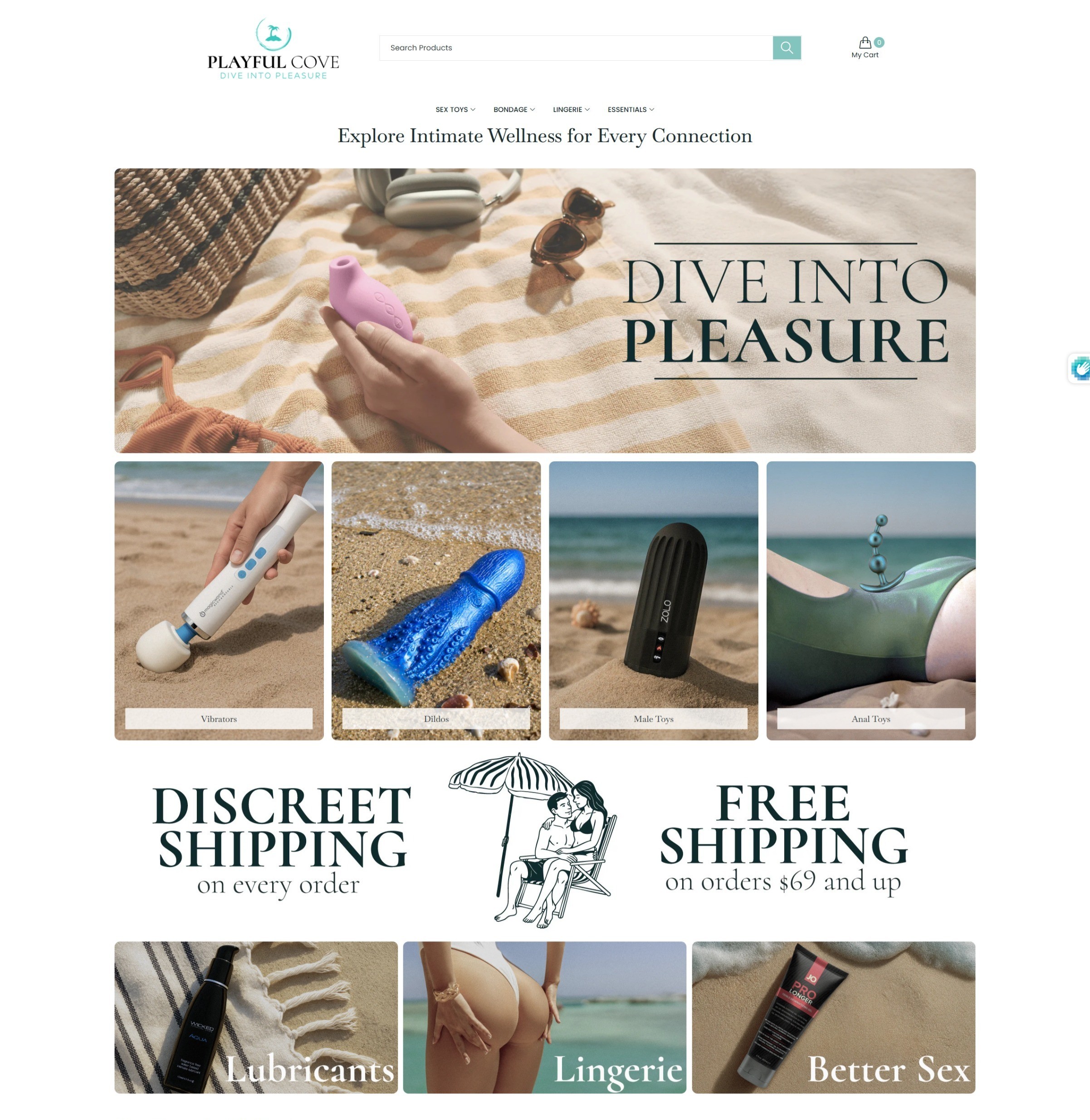
Playful Cove built its starter selection around that checklist specifically. The Mood Naughty 1 Silicone Anal Plug is a straightforward entry point in medical-grade silicone with a proper flared base. For readers who want a structured way to progress, the My 1st Anal Explorer Kit pairs a training plug with a vibrating option, letting you build comfort in stages rather than guessing at the right next size. Once you’ve moved past the beginner range, the Mood Naughty 3 Silicone Anal Plug offers a natural next step.
Pair any toy with a compatible lubricant, since the two decisions aren’t separate. The JO Classic Hybrid Personal Lubricant works across most toy materials and gives longer glide than a standard water-based formula without the silicone compatibility issues.
Every product page lists sizing details and material information upfront, so you can match a toy to this guide’s safety checklist before it ever ships. Browse the starter selection, and reach out to our support team directly if you’re unsure which option fits where you’re starting from.
Sources
- PMCID: PMC11588838
- Lifetime receptive anal intercourse exposure influences pelvic sensations — The Journal of Sexual Medicine
- Ask the Sexpert: Anal Sex Safety — University Health Service (Rochester)
This article is general information, not a substitute for advice from a qualified doctor. Consult a qualified healthcare professional about your own circumstances before acting on anything here.
