

Yes, lubricants can be safe during pregnancy when you choose the right kind. The key is selecting a pH-balanced, glycerin-free formula that won’t disrupt your vaginal environment. And no, lube cannot reach your baby. The cervix stays closed and sealed by the mucus plug throughout pregnancy, creating a protective barrier between the vaginal canal and the uterus.
The safest categories to look for:
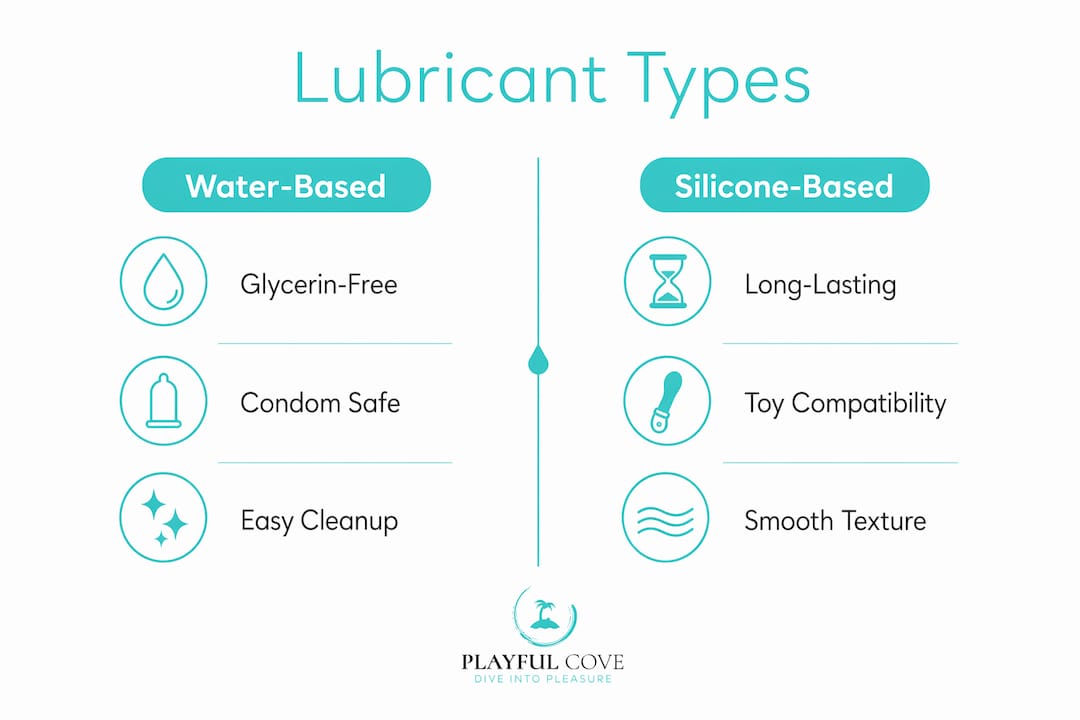
- Water-based, glycerin-free, pH-balanced formulas, which are easiest to clean, condom-safe, and toy-safe
- Medical-grade silicone (long-lasting, good for persistent dryness, not for silicone toys)
- Plant-cellulose water-based options (organic, fewer preservatives, gentle on sensitive tissue)
Table of Contents
- Is sex safe during pregnancy?
- When and why should you use lubricant during pregnancy?
- Which lubricant types are safest for pregnancy?
- Ingredients to avoid in pregnancy lubricants
- Condom and toy compatibility, plus safe application
- How to choose a pregnancy-safe lubricant while shopping
- When should you contact your healthcare provider?
- Why pH and glycerin matter: the science behind the guidance
- Allergic reactions and sensitivities during pregnancy
- How lubricants affect your vaginal microbiome during pregnancy
- Pregnancy-appropriate lubricants available from Playful Cove
- Key Takeaways
- What guides our selection at Playful Cove
- Useful sources and further reading
Is sex safe during pregnancy?
For most people with uncomplicated pregnancies, sex is generally safe throughout all three trimesters. Your baby is cushioned inside the amniotic sac, behind a closed cervix and a thick mucus plug. Topical lubricant applied to the vaginal opening stays well outside that barrier.
That said, certain situations call for a conversation with your OB/GYN or midwife before continuing sexual activity:
- Unexplained vaginal bleeding
- Leaking amniotic fluid
- Placenta previa or a low-lying placenta
- Severe or repeated pelvic pain
- Regular contractions before 37 weeks
Clinicians advise contacting your provider right away if you notice any of these signs, since conditions like placenta previa can make penetrative sex risky regardless of what lubricant you use.
Pro Tip: If intimacy causes pain or you notice spotting afterward, stop and call your OB/GYN or midwife before resuming. Don’t wait to see if it resolves on its own.
When and why should you use lubricant during pregnancy?
Pregnancy hormones affect every body differently. Many pregnant people experience increased natural discharge, yet others notice dryness or heightened sensitivity, especially in the first and third trimesters. Both experiences are normal, and lube can help in either case.
The main benefits of using a pregnancy-appropriate lubricant:
- Reduces friction and protects delicate, more sensitive tissue
- Eases penetration and makes sex more comfortable
- Supports comfort during toy use without added irritation
- Helps when natural lubrication fluctuates throughout the day
If you’ve had skin sensitivities or reactions to products before, apply a small amount to the inner forearm and wait 24 hours before using it internally. Pregnancy can heighten sensitivity to ingredients you previously tolerated without issue.
Which lubricant types are safest for pregnancy?
Not all lubricants are created equal, and the differences matter more when your body’s chemistry is shifting.
Water-based lubricants are the most widely recommended option for pregnant people. They’re easy to clean, safe with latex condoms, and compatible with virtually all toy materials. The catch: many water-based formulas still contain glycerin. Always look for “glycerin-free” on the label rather than assuming any water-based product qualifies.
Medical-grade silicone lubricants are a strong second choice, particularly for persistent dryness. They last longer than water-based options and don’t require reapplication as often. The tradeoff is cleanup: silicone requires soap and water to remove fully. They’re also chemically incompatible with silicone toys.
Plant-cellulose water-based lubricants use natural plant fiber as a thickener instead of synthetic polymers. Intimate Earth Hydra, available at Playful Cove, is one example of this category. These appeal to people seeking organic or non-GMO formulas with minimal preservatives.
Clinician guidance from Stanford Medicine’s Female Sexual Medicine program: Water- and silicone-based lubricants are the safest options because they don’t break down latex condoms and won’t promote vaginal inflammation. If you’re prone to yeast infections, switch to the glycerin-free version of your preferred formula.
| Type | Longevity | Cleanup | Condom-safe | Silicone toy-safe |
|---|---|---|---|---|
| Water-based (glycerin-free) | Moderate | Easy (water) | Yes | Yes |
| Medical-grade silicone | Long | Soap + water | Yes | No |
| Plant-cellulose water-based | Moderate | Easy (water) | Yes | Yes |
| Oil-based | Long | Difficult | No | Varies |
Ingredients to avoid in pregnancy lubricants
Your vaginal tissue is more sensitive during pregnancy, and your microbiome is already under hormonal pressure. Certain ingredients can tip that balance toward irritation or infection.
- Glycerin/glycerine: Acts as a humectant that can feed yeast, increasing the risk of yeast infections. Pregnant bodies are already more prone to yeast overgrowth due to hormonal shifts.
- Parabens: Preservatives that many clinicians and consumers prefer to avoid; look for “paraben-free” labeling.
- Fragrances and flavorings: Irritants that can disrupt vaginal pH and introduce sugar-like compounds that feed yeast. Flavored lubes like those with strawberry or tropical additives are not recommended during pregnancy.
- Oil-based products: Including natural oils like coconut oil. These can trap bacteria, alter the vaginal microbiome, and degrade latex condoms.
- Propylene glycol: A common solvent that can cause irritation in sensitive tissue, especially at higher concentrations.
Warming agents, cooling agents, and numbing compounds are also worth skipping. They’re unnecessary for comfort and may irritate already-sensitive tissue.
Condom and toy compatibility, plus safe application
Getting the pairing right protects both you and your products.
Condom compatibility
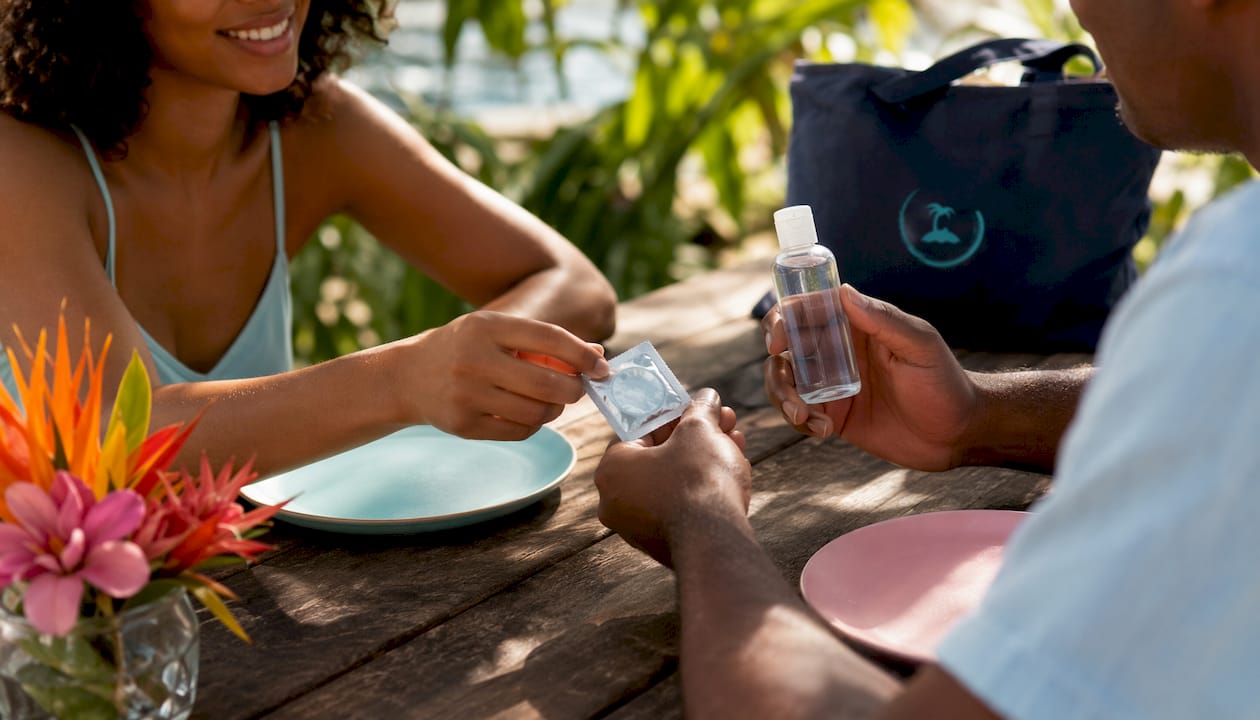
Oil-based lubricants degrade latex and polyisoprene condoms, which can cause them to break. Water-based and silicone-based lubricants are both safe with latex and polyisoprene condoms. Polyurethane condoms are compatible with all lubricant types, but they’re less stretchy and less commonly used.
Toy compatibility
Silicone lubricants can degrade silicone toys over time, leaving surfaces tacky or breaking down the finish. Use water-based lubricant with silicone toys. Silicone lube is fine with glass, metal, and hard plastic toys.
| Surface / Product | Water-based lube | Silicone lube | Oil-based lube |
|---|---|---|---|
| Latex condoms | ✓ Safe | ✓ Safe | ✗ Avoid |
| Polyisoprene condoms | ✓ Safe | ✓ Safe | ✗ Avoid |
| Silicone toys | ✓ Safe | ✗ Avoid | ✗ Avoid |
| Glass / metal toys | ✓ Safe | ✓ Safe | Use caution |
Hygiene and application
Wash hands thoroughly before and after use. Clean toys with warm water and mild soap before and after every session. Store lubricant at room temperature and check the expiration date before each use. Avoid sharing toys without a barrier unless they’ve been thoroughly cleaned.

Pro Tip: In later trimesters, reduced mobility can make application tricky. A pump-top bottle or applicator-free dispenser is much easier to manage than a tube you have to squeeze.
How to choose a pregnancy-safe lubricant while shopping
Use this checklist when reading a label in-store or comparing product pages online:
- Look for “pH-balanced” with a range of 3.8–4.5, matching healthy vaginal pH.
- Confirm “glycerin-free” explicitly on the label. Don’t assume water-based means glycerin-free.
- Check for “paraben-free” to avoid preservatives many clinicians prefer to skip.
- Choose unscented and unflavored formulas to reduce irritation risk.
- Read the full ingredient list. Avoid propylene glycol, fragrances, and warming or cooling agents.
- Consider a sample or travel size first if you have a history of sensitivities.
- Note the difference between “fertility-friendly” and pregnancy-safe. Fertility-friendly lubes are formulated to protect sperm viability, not to support vaginal health during pregnancy. They are not the same thing.
The ID Free Water Based Lubricant at Playful Cove is a good example of what to look for: water-based, free of common irritants, and straightforward in its ingredient list.
When should you contact your healthcare provider?
Most lubricant use during pregnancy is routine and doesn’t require a provider call. But some situations do.
Contact your OB/GYN or midwife promptly if you experience:
- Vaginal bleeding during or after sex
- Regular, painful contractions
- Fluid leaking from the vagina
- Fever combined with pelvic pain
- Severe or persistent pain after using any intimate product
Certain conditions change the guidance entirely. If you have placenta previa, a high-risk pregnancy, or ruptured membranes, your provider may advise against penetrative sex or internal lubricant use altogether. When you call, mention the specific products you’ve been using so your clinician has the full picture.
Pro Tip: When in doubt, a quick call to your provider’s nurse line takes two minutes and gives you real peace of mind. There’s no such thing as an unnecessary question during pregnancy.
Why pH and glycerin matter: the science behind the guidance
The vagina maintains a naturally acidic environment, with a healthy pH of 3.8–4.5. That acidity is what keeps harmful bacteria in check and supports the Lactobacillus-dominant microbiome that protects vaginal health. Lubricants with a higher pH can shift that balance, creating conditions where bacterial vaginosis or yeast infections are more likely to take hold.
Glycerin compounds this risk. As a humectant, it draws moisture but also provides a food source for Candida, the organism behind yeast infections. Pregnancy already raises yeast infection risk due to elevated estrogen levels, so adding a glycerin-containing lubricant can push an already-stressed system further off balance.
From Stanford Medicine’s Female Sexual Medicine program: “Glycerin can cause yeast infections. Therefore, if you are prone to developing yeast infections, switch to the glycerin-free version of your favorite lubricant.”
Iso-osmotic formulas, meaning those with an osmolality close to natural vaginal fluid, cause the least disruption to vaginal tissue. Hyperosmotic products (those with a much higher concentration of dissolved particles) can draw moisture out of vaginal cells, causing micro-damage that increases infection susceptibility. This is the science behind why OB/GYNs consistently recommend pH-balanced, glycerin-free formulas over conventional drugstore options.
Allergic reactions and sensitivities during pregnancy
Pregnancy can change how your body responds to products you’ve used for years. Elevated hormone levels affect skin and mucosal sensitivity, so an ingredient that never bothered you before may suddenly cause redness, itching, or swelling.
The most common triggers in lubricants are fragrances, preservatives like parabens and chlorhexidine, and propylene glycol. If you notice burning, unusual discharge, or persistent itching after using a new product, stop using it and contact your provider. These symptoms can mimic a yeast infection or bacterial vaginosis, so getting a proper diagnosis matters before reaching for an over-the-counter treatment.
Patch testing before internal use is a practical habit during pregnancy. Apply a small amount to the inside of your wrist or forearm, wait 24 hours, and look for any reaction before proceeding.
How lubricants affect your vaginal microbiome during pregnancy
The vaginal microbiome during pregnancy is naturally dominated by Lactobacillus species, which produce lactic acid and keep the environment acidic and protective. This balance is more fragile than it seems, and certain lubricant ingredients can disrupt it.
Oil-based products are particularly problematic. They can coat vaginal tissue, trap microbes, and reduce the oxygen availability that Lactobacillus needs to thrive. Hyperosmotic lubricants draw fluid from mucosal cells, creating micro-abrasions that give opportunistic bacteria an entry point.
To minimize risk, choose iso-osmotic or low-osmolality water-based formulas, avoid glycerin and oil-based products, and don’t use lubricant more frequently than needed. If you’ve had recurring bacterial vaginosis or yeast infections during pregnancy, talk to your provider before introducing any new intimate product.
Pregnancy-appropriate lubricants available from Playful Cove
Playful Cove carries a curated selection of lubricants that align with the guidance above, shipped discreetly to your door anywhere in the United States.
For a water-based option, the ID Free Water Based Lubricant is formulated without common irritants and is a solid starting point for anyone prioritizing ingredient simplicity. If you prefer a plant-cellulose formula, the Intimate Earth Hydra uses organic plant cellulose as its base, making it a gentle choice for sensitive tissue. For persistent dryness where a longer-lasting option helps, the JO Premium Silicone Lubricant is a pure silicone formula. Remember to pair it with glass or metal toys only, not silicone.
Always check the ingredient panel before use, and consult your provider if you’re managing an active infection or have been advised to avoid internal products. If you’d like help choosing, Playful Cove’s customer service team is available and discreet.
Key Takeaways
Pregnancy-safe lubricants are water-based or medical-grade silicone formulas that are glycerin-free, pH-balanced between 3.8 and 4.5, and free of fragrances, parabens, and oil-based ingredients.
| Point | Details |
|---|---|
| Lubricants are safe in pregnancy | Choose pH-balanced, glycerin-free water-based or silicone formulas; lube cannot reach the baby. |
| pH range to look for | A healthy vaginal pH is 3.8–4.5; choose lubricants labeled to match that range. |
| Ingredients to avoid | Skip glycerin, parabens, fragrances, flavorings, and all oil-based products. |
| Hygiene and compatibility | Use water-based lube with silicone toys; avoid oil-based lube with latex condoms. |
| Playful Cove options | ID Free Water Based, Intimate Earth Hydra, and JO Premium Silicone are available with discreet U.S. shipping. |
What guides our selection at Playful Cove
At Playful Cove, we believe that intimacy during pregnancy deserves the same care and respect as any other aspect of your wellness. When we curate lubricants for our store, ingredient transparency is the first filter. We look for products that are glycerin-free, paraben-free, and pH-appropriate, because those are the standards that actually protect your comfort and health.
We also know that shopping for intimate products during pregnancy can feel vulnerable. That’s why every order ships in plain, discreet packaging with no identifying labels. You deserve a safe cove to shop without judgment, whether you’re in your first trimester or your third.
Useful sources and further reading
- Is Lubricant Pregnancy-Safe? | Epicentre Charleston OB/GYN
- What to Look for in a Lubricant While You’re Pregnant | BabyCenter
- Is Using Lube Safe During Pregnancy? | Pregnancy Magazine
- Pregnancy Lube: Safety and How It Can Improve Your Sex Life | Healthline
- Female Sexual Medicine | Stanford Medicine
- Is It Safe to Have Sex in Pregnancy? | Tommy’s
- Playful Cove Lubricant Collection
This article is for general informational purposes only and is not a substitute for professional medical advice. Confirm any guidance with your OB/GYN or midwife for your specific situation.
