

For most beginners, a thick water-based anal gel is the safest, easiest default. If you want longer-lasting slickness and you are not using silicone toys, a quality silicone lube works well too. Whichever you pick, use plenty, reapply often, skip numbing products, and never pair oil with latex condoms. The details below cover exactly how to choose and apply it with confidence.
TL;DR:
- Water-based gels designed specifically for anal play are safest and most compatible with condoms and all toy materials, especially for beginners.
- Silicone lubricants last longer and work well in water, but they can degrade silicone toys, so they are best used with non-silicone materials.
- Oil-based products last long but break down latex and polyisoprene condoms within minutes and are harder to clean, increasing infection risk.
- Applying lube externally and internally with a small applicator minimizes friction and micro-tears, reducing discomfort during first attempts.
- Using numbing or warming products is discouraged, as they can mask pain and increase injury risk, especially if discomfort persists.
Table of Contents
- Types of Anal Lubricant: Water, Silicone, Oil, and Hybrid Explained
- How to Choose Your First Anal Lube
- How to Apply Anal Lube Step by Step
- Safety Rules Every Beginner Needs to Know
- Playful Cove Picks That Match This Checklist
- A Note From the Playful Cove Editorial Team
- Where to Find Lube-Friendly Products That Fit This Guide
- Sources
Types of Anal Lubricant: Water, Silicone, Oil, and Hybrid Explained
The right lubricant depends on what you are doing and what materials are in the room with you. Every type has real trade-offs, and knowing them upfront saves you from an awkward mid-session surprise.
Water-based gels come in two textures: thin, runny formulas made for everyday vaginal use, and thick, cushioning gels made specifically for anal play. For anal, thickness matters more than almost anything else, since a gel that stays put does more work than one that runs off immediately. Water-based lubricant is compatible with every condom material and every toy material, which makes it the safest starting point while you are still learning your own preferences, according to University of Oregon Health & Counseling.
Silicone-based lubricants last considerably longer without reapplication, stay slick through water, and feel silkier to many people. The catch: silicone lube degrades silicone toys over time, breaking down the material’s surface. If your toy is silicone, water-based is the safer pairing. If your toy is glass, stainless steel, or nonporous plastic, silicone lube is fine.
Oil-based products (think baby oil, coconut oil, or petroleum jelly) last a long time and feel rich, but they come with two real problems. They break down latex and polyisoprene condoms within minutes, and they are much harder to fully clean from skin and fabric, which raises infection risk with repeated use, per Healthline.
Hybrid lubes blend water and a touch of silicone for a middle ground on glide and cleanup. Watch the ingredient label on any type for:
- Glycerin in high concentrations, which can irritate sensitive tissue
- Parabens or strong fragrance, common irritants for reactive skin
- Warming, tingling, or “intensify” additives that mask sensation rather than support it
How to Choose Your First Anal Lube
Standing in front of a shelf of lubricants with no context is genuinely confusing. This checklist strips it down to what actually matters for a first purchase.
- Start with a thick, anal-specific water-based gel. It is compatible with condoms and every toy material, so you cannot get this choice wrong.
- Choose silicone only if you know your session will run long or involve water, and you have confirmed no silicone toys are in play.
- Check the label for these exact phrases: “anal,” “gel” or “thick,” “condom safe,” and “fragrance-free.” Skip anything advertising “numbing” or “extra sensation.”
- Consider the bottle, not just the formula. Pump or flip-top bottles stay more hygienic over time than open jars, which invite contamination every time a finger goes in.
- Go glycerin-free or choose a sensitive formula if you have a history of yeast infections, skin reactions, or general irritation.
Pro Tip: Buy a smaller bottle the first time, even if the bulk size looks like a better deal. You will learn more from one honest trial run than from any label copy, and you won’t be stuck with sixteen ounces of a texture you did not enjoy.
How to Apply Anal Lube Step by Step
Application technique matters as much as the product itself. Rushing this part is the single most common reason first attempts feel uncomfortable.
- Prep the space first. Keep a towel within reach, have condoms and any toys already clean and laid out, and wash your hands. Some people find a light, gentle approach to hygiene beforehand helpful, but there is no need for anything aggressive or medically involved.
- Apply lube externally first, covering the outer area generously. Use more than feels necessary. Because the rectum produces no natural lubrication of its own, external application alone will not be enough for comfortable penetration, a point WebMD makes clear when explaining why friction and micro-tears happen so easily without it.
- Apply internally using a small applicator or syringe designed for lube, inserting it a short distance to deposit gel where friction will actually occur. This distributes product more evenly than surface application alone and reduces drag right where you need it most.
- If a partner or toy is involved, apply a fresh layer directly to the toy or condom before insertion, not just to the body. Communicate before adding more. A quick check-in beats guessing.
- Reapply the moment you feel any drag, tugging, or resistance. That sensation is your body’s honest signal, not a problem to push through.
Safety Rules Every Beginner Needs to Know
Comfort and safety overlap almost entirely here, and a few rules cover most of what can go wrong.
Condom compatibility is non-negotiable: water-based and silicone lubricants are safe with every condom material, while oil-based products degrade latex and polyisoprene within minutes, according to University of Oregon Health & Counseling. Toy compatibility runs the same logic in reverse. Silicone lube breaks down silicone toys, so keep water-based gel paired with silicone materials and save silicone lube for glass, metal, or hard plastic.
The biology matters too: receptive anal exposure carries a significantly higher risk of HIV compared to vaginal exposure, largely because the tissue does not self-lubricate and tears more easily without help, per WebMD. Research also links certain lubrication habits, including saliva use, to higher rates of rectal STIs, which is one more reason a dedicated lubricant beats improvising, according to a PMC-published study.
Clinical guidance is consistent on ingredients to skip: spermicides, numbing agents, and heavy glycol content, especially for anyone prone to irritation, per the British Columbia Medical Journal. Numbing products mask pain rather than prevent it, which means you can sustain real injury without realizing it in the moment. Bleeding, sharp pain that does not ease, or discomfort lasting more than a day or two are reasons to check in with a healthcare provider rather than wait it out.
Playful Cove Picks That Match This Checklist
Two products in the Playful Cove catalog map directly onto the guidance above, and knowing where each fits helps you shop with intention rather than guesswork.
- The Anal-Ese Desensitizing Anal Lubricant is a mild formula some returning users prefer, but beginners should approach any desensitizing product with caution and reapply frequently rather than relying on numbness to avoid discomfort.
- The Intimate Earth Ease Relaxing Anal Silicone Glide Lubricant fits the silicone use case well: long-lasting glide for sessions without silicone toys in the mix.
- For the thick water-based default this guide recommends first, the Intimate Earth Bliss Anal Relaxing Water Based Glide covers condom and toy compatibility across the board.
- Readers who want a simple everyday water-based option can start with the Mood Lube water based lubricant for its straightforward sizing and packaging.
For a deeper dive into product-specific selection, The Safest Lube for Anal Sex, and How to Choose Your Own walks through more scenarios than this guide has room for.
A Note From the Playful Cove Editorial Team
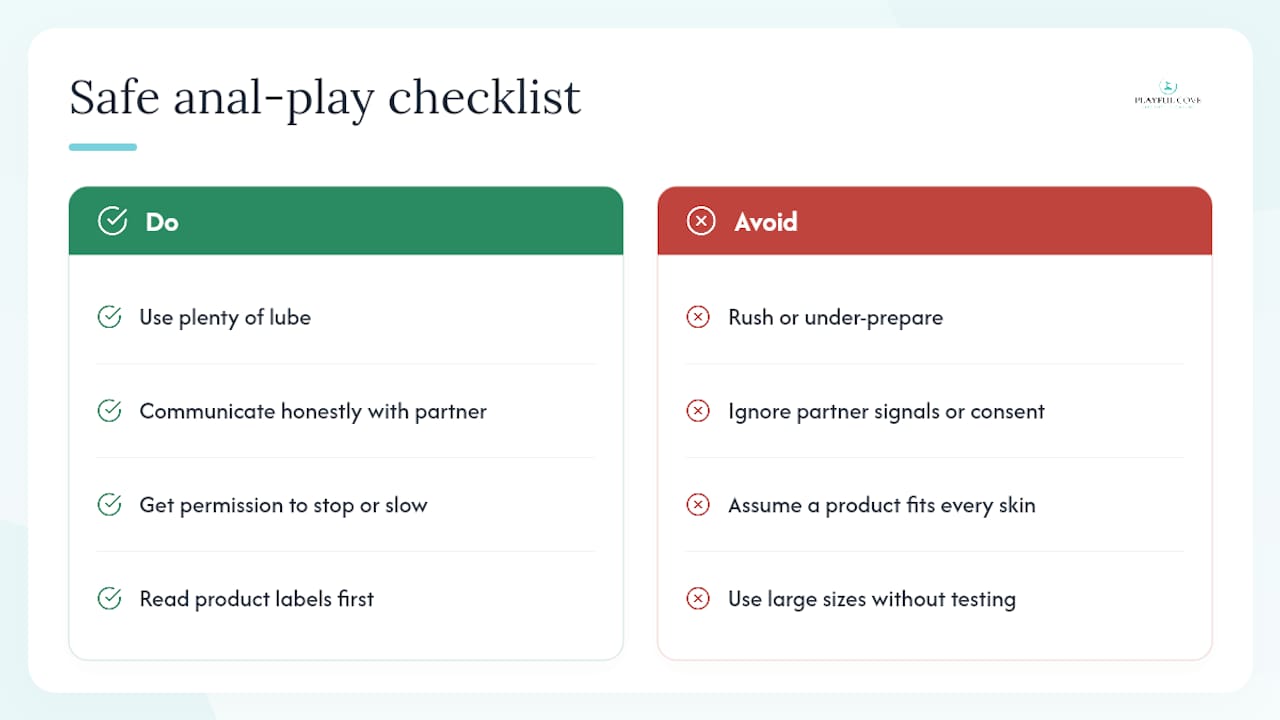
Comfort during anal play comes down to three things: enough lube, honest communication, and permission to stop or slow down at any point. None of that requires special expertise, just attention to your own body and your partner’s.
We built this guide because too many first attempts go wrong from rushing or under-preparing, not from any lack of desire or readiness. If you have questions about whether a specific product suits your skin type, sensitivity level, or the toy material you own, our customer support team can help you sort through the options before you buy. Read labels, buy smaller sizes when trying something new, and treat any lingering pain as a signal worth listening to.
— Playful Cove Editorial Team
Where to Find Lube-Friendly Products That Fit This Guide
Everything in this guide points toward one practical goal: fewer surprises and more comfort the first time you try something new. Some specialty stores stock anal-specific gels, silicone glides, and toys chosen with compatibility rules to help shoppers avoid guesswork about which products actually work together.

If you are ready to build out a starter setup, pair a thick water-based gel with a toy sized for beginners, like the Jelly Mini Rabbit Vibro Wand Silicone Vibrator, which works cleanly with water-based lubricant and ships in discreet packaging. Orders often arrive with discreet packaging that does not indicate the contents on the outside. Browse the current selection and check availability on the Jelly Mini Rabbit Vibro Wand Silicone Vibrator product page to see sizing details and start your first order today.
This article is general information, not a substitute for advice from a qualified doctor. Consult a qualified healthcare professional about your own circumstances before acting on anything here.
Sources
- Anal sex: health concerns | WebMD
- Lubrication Practices and Receptive Anal Sex: Implications for STI Transmission and Prevention | PMC
- Protection & connection: safer sex guide | University of Oregon Health & Counseling
- Sexual lubricants: Practice tips | British Columbia Medical Journal
- Your guide to lube: types, how to use, and more | Healthline
