

For most anal play, a thick, glycerin-free water-based anal gel is the safest default. It stays put, works with condoms and toys, and goes easy on delicate rectal tissue. Silicone lube earns its place for longer sessions or shower play, since it never dries out. Whatever you reach for, skip anything with numbing agents, be cautious pairing oil-based formulas with latex condoms, and apply far more than feels intuitive at first.
The World Health Organization supports making lubricants widely available because they genuinely improve comfort and reduce friction injury. Here’s your quick-start checklist:
- Choose a thick water-based gel labeled for anal use as your everyday go-to
- Reach for silicone when you need a formula that outlasts a long, wet session
- Never use a product with benzocaine or lidocaine internally
- Skip oils entirely if latex condoms are anywhere in the mix
- Reapply generously and often. Running dry is the most common cause of pain
Key Takeaways
Thick, glycerin-free water-based gel is the safest everyday choice for anal sex, with silicone as the better option for longer or wetter sessions.
| Point | Details |
|---|---|
| Default to water-based gel | Choose a thick, glycerin-free water-based formula for condom- and toy-safe anal play. |
| Reach for silicone when needed | Use silicone lube for longer sessions or shower play, but patch-test it on silicone toys first. |
| Read the label closely | Avoid glycerin, parabens, propylene glycol, fragrance, and any numbing ingredient. |
| Apply generously and often | Use noticeably more lube than for vaginal sex, and reapply before it feels necessary. |
| Shop Playful Cove’s anal-safe picks | Playful Cove stocks the Intimate Earth Bliss and Ease glides as beginner- and long-session-friendly options. |
Table of Contents
- Why Anal Lube for Sex Matters More Than You Think
- What Types of Anal Lubricant Should You Use?
- What Ingredients Should You Avoid in Anal Lube?
- How Do You Use Anal Lube Safely?
- What Are the Biggest Mistakes People Make With Anal Lube?
- How Playful Cove Chooses Anal-Safe Lubricants
- Find Anal-Safe Lube and More at Playful Cove
- Frequently Asked Questions
- Sources
Why Anal Lube for Sex Matters More Than You Think
The rectum doesn’t produce its own lubrication the way the vagina does. That single anatomical fact is the whole reason this guide exists. Without added lubricant, anal tissue relies entirely on whatever moisture is already there, which is minimal, and friction against dry tissue creates microtears almost immediately.
Those microtears aren’t just uncomfortable. They’re doorways. Broken skin and mucous membrane are exactly how sexually transmitted infections gain easier access to the bloodstream, which is part of why lubricant use sits at the center of most anal safety guidance rather than being an optional add-on.
A systematic review compiled for WHO guidance found that lubricant use tends to improve sexual well-being and comfort, even though the underlying research base is still thinner than clinicians would like. The evidence gap doesn’t mean lube doesn’t work. It means most of what we know comes from smaller trials and observational data rather than massive controlled studies, so treat strong claims about any single product with a healthy dose of skepticism.
Lube also protects the condom itself. Friction without enough lubrication is a leading contributor to condom breakage during anal sex, and a broken condom defeats the entire point of using one. Generous, consistent lubrication isn’t a luxury add-on. It’s structural to how the whole encounter stays safe.
What Types of Anal Lubricant Should You Use?
Not every lubricant on the shelf belongs in anal play, and matching the formula to the situation matters more here than almost anywhere else in intimate wellness.
Thick water-based gels are the default for good reason. They’re compatible with latex, polyisoprene, and polyurethane condoms, safe with every toy material on the market, and easy to clean off skin and sheets. Health-education guidance consistently points to thick water-based formulas as the most predictable, lowest-risk starting point, especially for anyone newer to anal play.
Silicone-based lube earns its keep when a session runs long or when water is involved, since it doesn’t dry out or wash away the way water-based formulas eventually do. The catch: silicone lube can degrade silicone toys over repeated use, so a quick patch test on the toy’s base is worth the thirty seconds it takes.
Hybrid formulas blend water and a touch of silicone, giving you longer glide than a pure water-based gel without the full toy-compatibility tradeoff of straight silicone. A product like the JO Classic Hybrid Personal Lubricant sits comfortably in that middle ground for people who find water-based alone too short-lived but don’t want to babysit their toy collection.
Oil-based lubes and household oils are where things go wrong fast. Oil degrades latex condoms on contact, and coconut oil or lotion from the kitchen cabinet often carries irritants never meant for internal use. If you want the slip of an oil-based product, save it for massage outside of penetrative play.
Saliva might feel like the most natural option, but it offers almost no lasting glide and carries its own hygiene concerns for anal contact.
Pro Tip: Keep two bottles on hand: a thick water-based gel for anything involving condoms or silicone toys, and a silicone lube reserved for solo or toy-only sessions where compatibility isn’t a factor.
What Ingredients Should You Avoid in Anal Lube?
Reading a lube label is different from reading a lotion label, and the stakes are higher because rectal tissue absorbs and reacts differently than skin.
Look for these on the front or back of the bottle before you buy:
- Glycerin-free formulation. Glycerin can feed yeast and irritate sensitive tissue over repeated use.
- Paraben-free and fragrance-free. Both are common irritants with no functional benefit for lubrication.
- No propylene glycol. This ingredient is frequently flagged in clinical guidance alongside glycerin and parabens as something to avoid for internal anal use.
- No benzocaine or lidocaine. Desensitizing ingredients mask pain rather than prevent it, which is a problem explained in detail below.
- A pH close to neutral, generally in the 5.0 to 7.0 range that clinical sources recommend for rectal tissue.
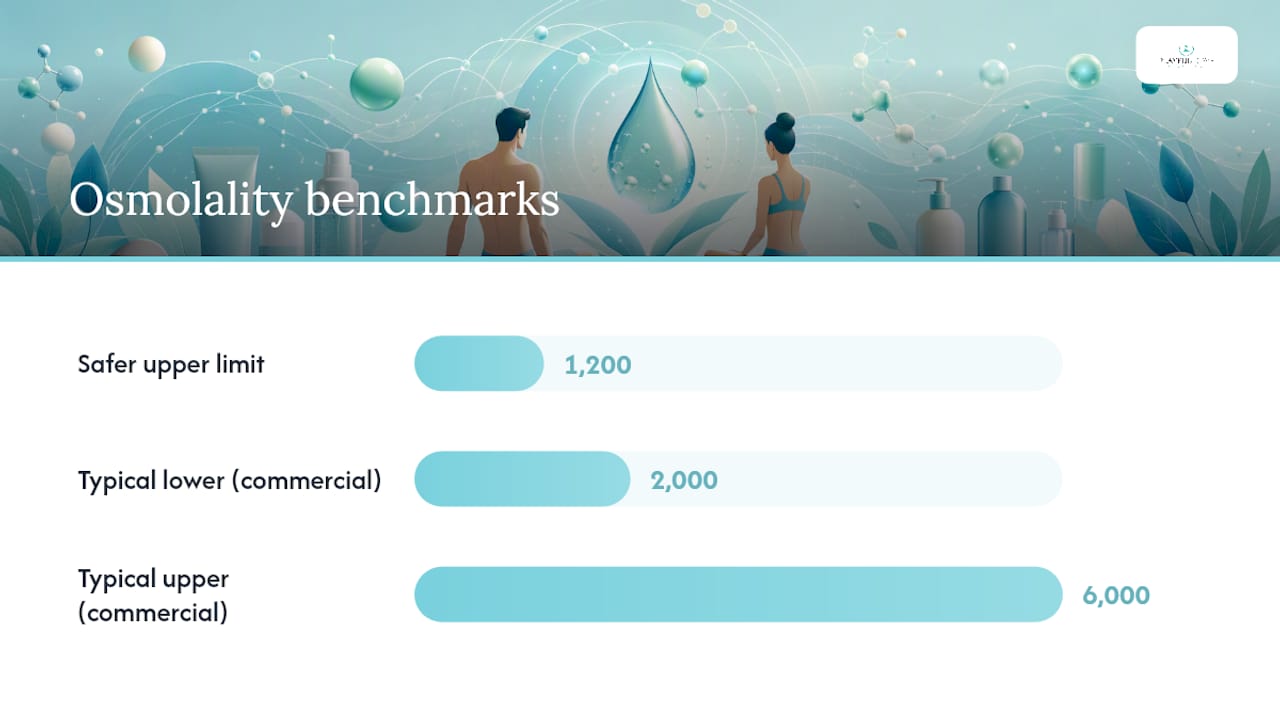
Osmolality is the technical term worth learning, because it explains why some lubes leave you raw the next day even without any obvious irritant listed. It measures how a solution pulls water across a cell membrane. Clinical guidance notes that many mainstream commercial lubricants test between 2,000 and 6,000 mOsm/kg, while the safer upper threshold for rectal tissue sits closer to 1,200 mOsm/kg. A lube far above that range can actually dehydrate and stress the cells lining the rectum, which medical overviews point to as a real contributor to soreness after anal sex.
Most drugstore brands don’t print an osmolality number anywhere on the bottle. When that number isn’t available, favor thicker, glycerin-free formulas explicitly marketed for anal use as a reasonable stand-in, since brands targeting that use case tend to formulate with rectal tissue in mind. Red flags to walk away from: any product promising “anal numbing,” aggressive warming sensations, an ingredient list that’s vague or missing entirely, or a bottle with no batch code or expiration date printed anywhere.
How Do You Use Anal Lube Safely?
Getting the technique right matters as much as picking the right bottle. Here’s the sequence that sexual-health educators recommend from prep through cleanup.
- Prep simply. A quick shower is sufficient for most people. Douching is optional and not something you need to make a habit, since overdoing it can actually irritate the tissue you’re trying to protect.
- Apply more than feels necessary. University sexual-health guidance recommends using noticeably more lubricant for anal sex than you would for vaginal sex, often several times as much, applied both externally and just inside.
- Check compatibility before you combine products. Water-based and silicone lubes both work with latex, polyisoprene, and polyurethane condoms. Oil-based formulas do not pair with latex under any circumstance.
- Match lube to toy material. Silicone toys need a water-based or hybrid lube, not straight silicone, to avoid surface degradation over time.
- Reapply before you think you need to. Lube thins out and absorbs faster during anal play than most people expect.
- Stop immediately for sharp pain, burning, or bleeding. Those are signals to pause, not push through.
- Clean up gently afterward. Warm water and a mild, unscented cleanser are enough for both skin and toys.
Pro Tip: Keep the bottle within arm’s reach the entire time, not across the room. The moment reapplying feels like an interruption, most people skip it, and that’s exactly when discomfort creeps in.
What Are the Biggest Mistakes People Make With Anal Lube?
Numbing agents are the single riskiest shortcut in this entire category. Clinical guidance is direct about why: pain during anal sex is a warning signal, and a lubricant that silences it doesn’t prevent damage, it just hides it until later. Products containing benzocaine or lidocaine may feel like a comfort solution, but they remove your body’s ability to tell you something is wrong.
The evidence on osmolality and infection risk deserves the same careful reading. Observational research has found associations between certain lubrication practices, saliva use in particular, and higher rates of rectal STI detection. But those studies are confounded by partner count and condom use patterns that differ across groups, so the honest takeaway is caution rather than certainty.
The safest approach treats every numbing or “extra sensation” claim on a label as a reason to look closer, not a reason to buy.
Common mistakes worth retiring for good:
- Grabbing coconut oil or lotion from the bathroom cabinet
- Using a flavored lube internally rather than externally
- Choosing a desensitizing gel to push through discomfort instead of slowing down
- Assuming any water-based lube is automatically rectal-safe
How Playful Cove Chooses Anal-Safe Lubricants
Every product Playful Cove features for anal use gets measured against the same checklist covered above: thick consistency, glycerin-free where possible, and clear labeling for anal-specific use. The Intimate Earth Bliss Anal Relaxing Water Based Glide is a solid starting point for beginners who want a predictable, condom-safe gel. For longer sessions, the Intimate Earth Ease Relaxing Anal Silicone Glide Lubricant holds up where water-based formulas thin out.
The Mood Lube Water Based Lubricant works well as an everyday, toy-friendly option outside anal-specific play. One note of caution: Playful Cove also carries the Anal-Ese Desensitizing Anal Lubricant, and given the numbing-agent concerns detailed above, we recommend external-only use and talking to a clinician if pain is a recurring issue rather than relying on it as a comfort fix.
Find Anal-Safe Lube and More at Playful Cove
You’ve got the checklist now: thick, glycerin-free, condom-compatible, and honestly labeled. Playful Cove’s own catalog is built around exactly that standard, so you’re not stuck cross-referencing ingredient lists against a dozen open browser tabs before checkout.

Every order ships in plain, discreet packaging, which matters just as much as the ingredient list when you’re figuring out what actually works for your body. Beyond lubricants, Playful Cove carries toys, couples’ accessories, and sensitive-skin-friendly options for anyone whose skin reacts to standard formulas. If you’re pairing lube with a new toy, browse the Naked Addiction Silicone Rechargeable Vibrating and Rotating Dildo and pick up a water-based gel alongside it in the same order. Start with the Bliss or Ease glide, add the toy you’ve been eyeing, and check out once. That’s the whole process.
Frequently Asked Questions
Is water-based or silicone lube better for anal sex? Water-based gel is the safer everyday default because it’s condom- and toy-compatible across every material. Silicone lasts longer without reapplication, which makes it a strong choice for extended sessions, but it isn’t ideal to use directly with silicone toys.
Can you use regular lube for anal sex? Many standard water-based lubes are too thin for anal play and require constant reapplication. A thicker gel formulated specifically for anal use holds up better and reduces friction more effectively.
Why is oil-based lube risky for anal sex? Oil breaks down latex condoms, which can lead to tearing and condom failure. It’s also harder to clean off skin and sheets and can trap bacteria against sensitive tissue.
How much lube should you use for anal sex? More than intuition suggests. Health-education guidance recommends applying noticeably more lubricant than you would for vaginal sex, both externally and just inside, then reapplying throughout.
Are numbing lubes safe for anal sex? Numbing agents like benzocaine or lidocaine mask pain rather than prevent injury, which means you lose the warning signal your body relies on to stop before real damage happens. Sexual-health guidance generally advises against them for internal use.
This article is general information, not a substitute for advice from a qualified doctor. Consult a qualified healthcare professional about your own circumstances before acting on anything here.
Sources
- Lubricants and sexual health: WHO systematic review (PMC)
- Sexual lubricants: Practice tips (BC Medical Journal)
- Preparing for anal sex is a must — here’s how to do it right (Healthline)
- Does anal sex hurt? (Medical News Today)
