

Sexual wellness is a state of physical, emotional, mental, and social well-being connected to sexuality, not simply the absence of dysfunction or disease. It includes the ability to experience pleasure and safety, free of coercion, throughout every stage of life. This guide breaks down what healthy sexual function looks like, when a change in desire or comfort is worth a clinical conversation, and which self-care steps actually have evidence behind them.
TL;DR:
- Sexual dysfunction symptoms that last for six months or more and cause distress warrant a clinical evaluation, especially if new pain or bleeding occurs.
- Hormonal shifts, medication use, chronic illnesses, mood disorders, and relationship issues are common underlying causes of persistent sexual difficulties.
- Practical, evidence-based self-care steps include pelvic floor exercises, suitable lubricants, open communication, mindfulness, and the use of body-safe sex toys.
- Professionals such as primary care providers, gynecologists, urologists, pelvic floor therapists, and sex therapists are best suited to address different aspects of sexual health concerns.
- A pleasure-focused, inclusive approach and routine health maintenance help protect long-term sexual wellness across all life stages.
Table of Contents
- What Are the Core Components of Sexual Wellness?
- When Should You Seek Clinical Evaluation for Sexual Concerns?
- What Practical Steps Actually Improve Sexual Wellness?
- Which Specialists Treat Sexual Health Concerns?
- How Playful Cove Supports Sexual Wellness Education
- Does Sexual Wellness Change Across Life Stages?
- How Does Sexual Wellness Apply to LGBTQ+ Identities?
- How Do Culture and Society Shape Sexual Wellness?
- What Preventive Steps Protect Long-Term Sexual Wellness?
- Why a Pleasure-Positive Approach Matters
- Explore Discreet Products That Support Your Sexual Wellness
- Sources
- FAQ
What Are the Core Components of Sexual Wellness?
Clinicians typically describe healthy sexual function through four connected domains: desire, arousal, orgasm, and pain-free activity. Understanding each one gives you a shared vocabulary for noticing when something feels off and for talking about it, whether with a partner or a provider.
- Desire is your interest in sexual activity. It can be spontaneous or responsive, meaning it builds once stimulation has already started. Responsive desire is common, especially for women in long-term relationships, and it is not a sign that something is wrong.
- Arousal is the physical and mental readiness for sex, including lubrication, blood flow, and a subjective sense of excitement.
- Orgasm is the release of sexual tension, which varies widely in intensity, frequency, and the stimulation it requires.
- Pain-free activity means sex that does not involve burning, tightness, or aching before, during, or after.
The World Health Organization frames sexual health around a positive, respectful approach to sexuality, one that includes consent, safety, and the possibility of pleasurable experiences as core rights, not extras. That pleasure-inclusive framing matters because it shifts the goal from merely “fixing a problem” to actively building a satisfying intimate life. Healthy function varies for everyone. What matters is whether your current experience causes you distress, not how it compares to others.
When Should You Seek Clinical Evaluation for Sexual Concerns?
A short dry spell or a stressful month rarely signals a medical problem. Clinicians generally define sexual dysfunction as symptoms that persist for six months or longer and cause personal distress. Providers often use validated screening tools like the Female Sexual Function Index and the Female Sexual Distress Scale–Revised to assess whether symptoms cross that clinical threshold and to track how treatment is working over time.
Several factors commonly drive persistent sexual difficulties:
- Hormonal shifts from menopause, postpartum recovery, or thyroid conditions, which can reduce lubrication and desire.
- Medications, particularly certain antidepressants and blood pressure drugs, which can blunt arousal or delay orgasm.
- Chronic illness, including diabetes and cardiovascular disease, which affects blood flow and nerve sensitivity.
- Mood conditions such as depression and anxiety, which often lower desire and interfere with arousal.
- Relationship dynamics, including unresolved conflict or mismatched expectations around frequency and intimacy.
- Pelvic floor dysfunction, which can cause pain during penetration or difficulty reaching orgasm.
Red flags that warrant a prompt call to a provider include new pain during sex, bleeding unrelated to your cycle, or a sudden loss of desire tied to a new medication. Your primary care provider is a reasonable first stop for most concerns; they can refer you onward if needed.
What Practical Steps Actually Improve Sexual Wellness?
Small, consistent changes tend to outperform dramatic overhauls. The strategies below are grounded in clinical recommendations, not wishful thinking.
Pelvic floor exercises strengthen the muscles that support arousal, orgasm intensity, and continence. A practical routine involves five sets of ten Kegel contractions daily, built into moments you already have, like brushing your teeth or waiting for coffee to brew. Consistency matters more than intensity.
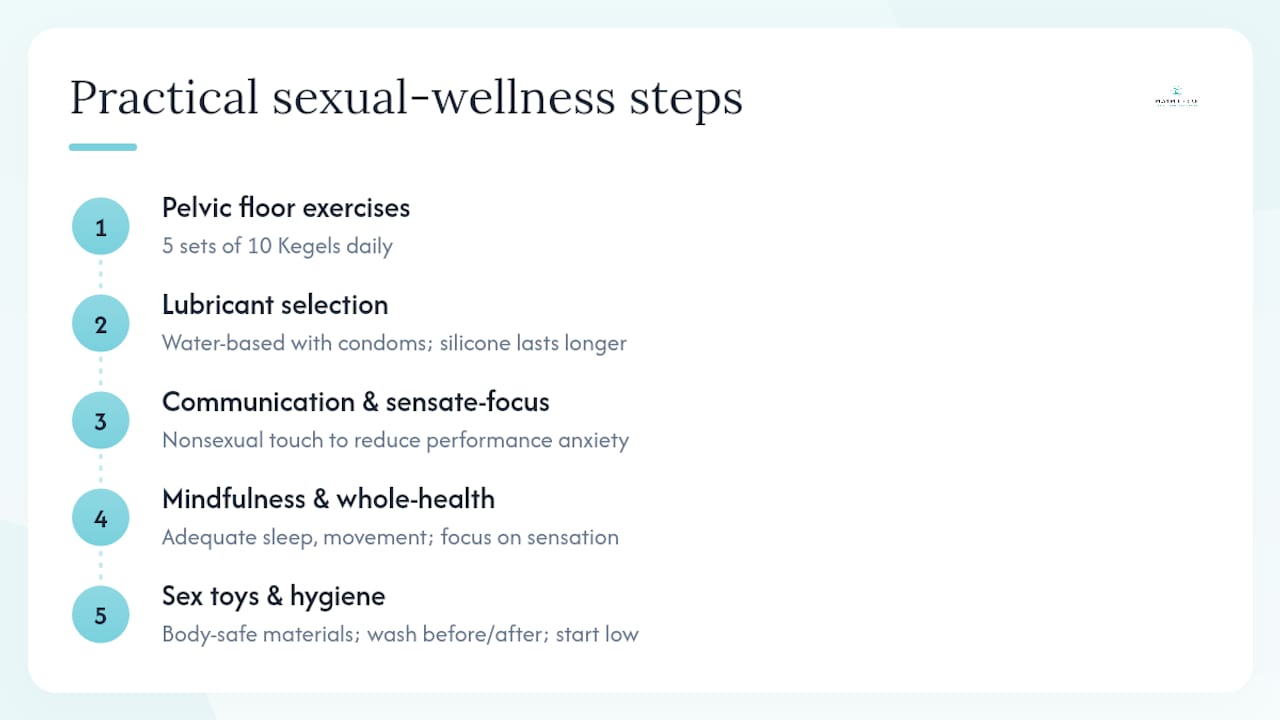
Lubricant choice depends on what you are using it with and what your body tolerates. Water-based formulas are safe with silicone toys and condoms but may need reapplying. Silicone-based lubricants last longer and work well for shower sex, though they should not be used with silicone toys. If you are pregnant or have sensitive skin, look for fragrance-free, pH-balanced options made for sensitive skin, and if dryness is tied to menopause, a dedicated comfort guide can help narrow the choice.
Communication reduces performance anxiety more reliably than almost any other single change. Sensate-focus exercises, where partners take turns giving nonsexual touch without a goal of orgasm, help rebuild comfort and reduce pressure, particularly after a stretch of anxiety-driven avoidance.

Mindfulness and whole-health habits like adequate sleep and regular movement support desire by lowering the background stress that competes with arousal. Bringing attention back to physical sensation, rather than monitoring your own performance, is a skill that improves with practice.
Sex toys can safely support self-knowledge and partnered exploration. Vibrators help many women identify what stimulation works for their body, particularly for clitoral stimulation. Choose body-safe silicone or glass, wash toys before and after each use with a toy-specific cleaner or mild soap, and start with lower intensity settings before working up.
Pro Tip: If you are new to pelvic floor training, a dedicated trainer can help you confirm you are engaging the right muscles instead of guessing. Our guide to beginner-friendly pelvic floor trainers walks through what to look for.
Which Specialists Treat Sexual Health Concerns?
Different providers address different pieces of the puzzle, and knowing who treats what saves time.
- Primary care providers are a solid first stop for general symptoms, medication reviews, and referrals.
- Gynecologists and urologists evaluate hormonal, anatomical, and vascular causes specific to reproductive and urinary systems.
- Pelvic floor physical therapists treat genito-pelvic pain disorders, often the first-line treatment for pain during penetration.
- Sex therapists and psychologists use cognitive behavioral therapy to address desire, arousal, and orgasmic difficulties tied to anxiety, trauma, or relationship stress.
Evidence-backed options a provider might recommend include pelvic floor physical therapy, topical estrogen for menopause-related dryness, cognitive behavioral therapy, and, for some men, prescription treatments for erectile difficulties. A handful of medications are approved specifically for low desire in women, though their effects are modest and require a clinician’s guidance to weigh risks and benefits. Before your visit, jot down when symptoms started, what makes them better or worse, and any medication changes. These conversations are protected by the same confidentiality standards as any other medical visit.
How Playful Cove Supports Sexual Wellness Education
An editorial team builds guides on the topics readers ask about most: how hormones affect intimacy, choosing a lubricant for sensitive skin, and comparing pelvic floor trainers for beginners. The goal is practical, judgment-free information you can actually use.
- Educational guides on lubricants, hormonal changes, and pelvic floor training
- Product categories including lubricants, pelvic floor trainers, vibrators, and massage oils
- Discreet packaging and private shipping
- A shopping experience designed around comfort
Every resource is written to pair with real clinical guidance, never to replace it.
Does Sexual Wellness Change Across Life Stages?
Sexual wellness looks different at every life stage, and expecting one static experience sets you up for unnecessary worry.
Adolescence is when foundational habits form: understanding consent, learning body literacy, and building comfort asking questions instead of relying on unreliable sources. Comprehensive, medically accurate sex education at this stage shapes decision-making for decades.
Adulthood often brings the widest range of pressures on sexual wellness: career stress, childbearing, relationship transitions, and the demands of caregiving all compete for time and mental bandwidth. This is also when responsive desire patterns become more common, particularly for people in established partnerships, and when communication skills matter most.
Older age brings physiological changes, including reduced lubrication and slower arousal, but these shifts do not end satisfying sexual lives. Health-system guidance for midlife adults points to a range of behavioral, pharmacologic, and device-based interventions that keep intimacy accessible well into later decades. Many people report more emotional ease and less performance pressure in this stage, even as their bodies require more deliberate warm-up and communication.
The throughline across all three stages is the same: sexual wellness is a moving target that adapts to your body and circumstances, not a fixed standard you either meet or fail.
How Does Sexual Wellness Apply to LGBTQ+ Identities?
Sexual wellness frameworks built around heterosexual, cisgender experiences often miss what LGBTQ+ adults actually need from care. Pleasure-inclusive, rights-based models close that gap by centering consent, safety, and satisfaction regardless of who is involved or what bodies are present.
Practical gaps show up often. Many standard screening tools and patient intake forms assume a specific gender pairing, which can make LGBTQ+ patients feel invisible or misread during a medical visit. Transgender and nonbinary individuals may also navigate sexual wellness alongside hormone therapy or surgical transition, each of which changes arousal patterns, sensation, and desire in ways that deserve informed, affirming guidance rather than generic advice.
Finding a provider who asks open questions instead of assuming a partner’s gender, a relationship structure, or a specific set of anatomy makes an enormous difference in whether someone seeks care at all. The pleasure-inclusive approach that benefits the general population applies just as directly here: naming pleasure and dignity as legitimate goals, not just symptom relief, makes care more useful for LGBTQ+ patients navigating identities and bodies that mainstream medicine has historically underserved.
How Do Culture and Society Shape Sexual Wellness?
Cultural attitudes toward sex shape whether people feel safe seeking help, and often more powerfully than any medical fact does. Communities that treat sexuality as shameful or purely functional tend to produce adults who delay care, hide symptoms, or never learn accurate information in the first place.
Religious upbringing, family messaging, and media portrayals all set an early baseline for what feels “normal” to want or ask for. Someone raised to associate sex strictly with reproduction may struggle to recognize pleasure as a legitimate, health-supporting goal. Someone exposed mainly to unrealistic media portrayals may measure their own body or responses against a standard that was never realistic to begin with.
Socioeconomic factors add another layer. Access to accurate sex education, affordable healthcare, and providers who take sexual concerns seriously varies widely, and that access gap often tracks with income, geography, and insurance status. Stigma around adult products compounds the problem: many people who would benefit from a lubricant or a vibrator never buy one because the shopping experience itself feels exposing.
None of this is fixed. Attitudes shift generationally, and a growing body of pleasure-inclusive public health guidance is actively working to reframe sexual wellness as a normal, worthwhile part of overall health rather than a taboo subject reserved for private shame.
What Preventive Steps Protect Long-Term Sexual Wellness?
Prevention beats crisis management, and most of it is unglamorous consistency rather than dramatic intervention.
Routine healthcare visits that include sexual health questions, not just reproductive screening, catch hormonal shifts and medication side effects before they become entrenched problems. Comprehensive sex education, whether in school or through trustworthy adult resources, builds the vocabulary and confidence to recognize a concern early instead of assuming it is unfixable or embarrassing.
Regular STI testing based on your risk profile, open conversations with partners before problems escalate, and consistent pelvic floor maintenance all function as low-cost insurance against bigger issues down the road. Limiting alcohol, managing chronic stress, and treating sleep as a nonnegotiable part of health also protect desire and arousal more than most people realize.
Education works best when it treats pleasure as a legitimate outcome worth planning for, not an afterthought to disease prevention. A person who understands their own body, feels comfortable asking questions, and has accurate information about what is normal is far more likely to catch a problem early and seek help without shame.
Why a Pleasure-Positive Approach Matters
Treating pleasure as a legitimate health goal, not an afterthought, makes people more likely to seek care early and stick with treatment. Self-care and clinical support work best together, not as a last resort. Curiosity and self-compassion, not judgment, are the starting point for real progress.
— Playful Cove Editorial Team
Explore Discreet Products That Support Your Sexual Wellness
Playful Cove is the alternative to guessing your way through a drugstore aisle or an intimidating adult shop: a private, judgment-free online store where you can shop lubricants, pelvic floor trainers, vibrators, and massage oils on your own time, with plain packaging and no one looking over your shoulder.

If comfort is your priority, start with a sensitive-skin lubricant or explore our menopause comfort guide for targeted picks. If you are building pelvic floor strength, our beginner pelvic floor trainer guide breaks down what actually helps versus what is just marketing. For exploration and arousal, a well-designed vibrator like the Mystique Vibrating Massager or a couples-friendly option like the Naked Addiction Rechargeable Vibrating and Rotating Dildo gives you a body-safe way to learn what works. Browse the full Playful Cove catalog to find the starting point that matches where you are right now.
This article is general information, not a substitute for advice from a qualified doctor. Consult a qualified healthcare professional about your own circumstances before acting on anything here.
Sources
- WHO — Redefining sexual health for benefits throughout life
- Promoting sexual well-being (PMC review)
- Harvard Health — Pelvic floor exercises help for incontinence, sexual health, and more
- American Academy of Family Physicians — Female sexual dysfunction (review)
FAQ
What Are Some Examples of Sexual Wellness?
Examples include feeling comfortable communicating desires with a partner, experiencing pain-free sex, having reliable access to accurate sexual health information, and using tools like lubricants or vibrators to explore what feels good without shame.
What Is Meant by Sexual Wellness?
Sexual wellness refers to a state of physical, emotional, mental, and social well-being connected to sexuality, including the capacity for pleasurable, safe, and coercion-free experiences.
How Do I Know If I Have a Sexual Dysfunction or Just a Rough Patch?
Clinicians generally consider it a diagnosable dysfunction when symptoms last six months or longer and cause distress; shorter, situational changes tied to stress or a specific event usually resolve on their own.
Can Lubricants and Toys Really Improve Sexual Wellness?
Yes. Lubricants reduce friction-related pain, and body-safe vibrators can help people learn what stimulation works best for their own body, particularly for clitoral stimulation.
When Should I See a Doctor About Sexual Concerns?
See a provider if pain, low desire, or arousal difficulties persist for several months and cause distress, or sooner if you notice new pain, bleeding, or symptoms tied to a medication change.
