

For most people just starting out, a medical-grade silicone weighted trainer is the right first choice. It builds muscle awareness without the learning curve of an app, and the habit forms faster when the device is simple to use.
The single biggest predictor of results is consistency, not the device you choose. NICE guidance recommends supervised pelvic floor muscle training (PFMT) for stress urinary incontinence, and encourages lifetime continuation to prevent symptoms from returning.
Quick picks by goal:
- Beginners and general strengthening: Start with a silicone weighted set or a non-app manual trainer. Low friction, easy to clean, easy to stick with.
- Postpartum recovery: Wait for clinical clearance, then consider a supervised program or a simple weighted trainer. App-enabled biofeedback can help confirm correct technique.
- Sexual function improvement: A weighted trainer builds the foundation. Once you have muscle awareness, a biofeedback device or complementary pleasure products can add motivation and variety.
If you have pelvic pain, recent surgery, active infection, or are pregnant, speak with a clinician before using any pelvic floor device.
Table of Contents
- How do you choose the right pelvic floor trainer?
- What are the main types of pelvic floor trainers?
- How do you start a beginner pelvic floor routine?
- Safety, cleaning, and when to see a clinician
- What do pelvic floor trainers cost, and where should you buy them?
- Key Takeaways
- Pelvic floor training and pleasure: a note on realistic expectations
- Playful Cove’s curated picks for pelvic floor beginners
- Useful sources and further reading
How do you choose the right pelvic floor trainer?
The most important question is not “which device has the most features?” It is “which device will I actually use every day?”

Material and hygiene come first. Medical-grade, non-porous silicone is the gold standard for insertable trainers. It does not harbor bacteria, cleans easily with mild soap and water, and is body-safe for regular use. Avoid porous materials like rubber, jelly, or TPE for anything insertable.
Fit and size matter more than weight. A trainer that feels uncomfortable will sit in a drawer. Look for:
- A smooth, tapered shape that is easy to insert and remove
- A retrieval loop or cord made from the same non-porous material as the trainer
- A size appropriate for beginners (smaller, lighter options first)
- Single-piece construction with no seams that trap bacteria
Features to prioritize (and what to skip at first):
- For beginners: a simple weighted set with no app, no charging, no setup
- For those who struggle to feel a contraction: a biofeedback trainer with real-time app guidance
- For passive stimulation when voluntary contraction is difficult: electrical stimulation, usually under clinical supervision
- Skip: complex multi-mode apps, subscription programs, or devices with many accessories until you have a consistent habit
Practical buying questions to ask before you purchase:
- Does the product include a warranty, and how long is it?
- Is the device waterproof for safe cleaning?
- What is the return policy if the fit is wrong?
- Does the retailer offer discreet packaging and billing?
Pro Tip: A removable retrieval loop made from the same silicone as the trainer body is one of the clearest signals of a well-designed device. It means the manufacturer thought about real-world use, not just the product photo.
What are the main types of pelvic floor trainers?
Pelvic floor trainers, also called Kegel trainers or pelvic floor muscle devices, fall into four practical categories. Each solves a different problem.
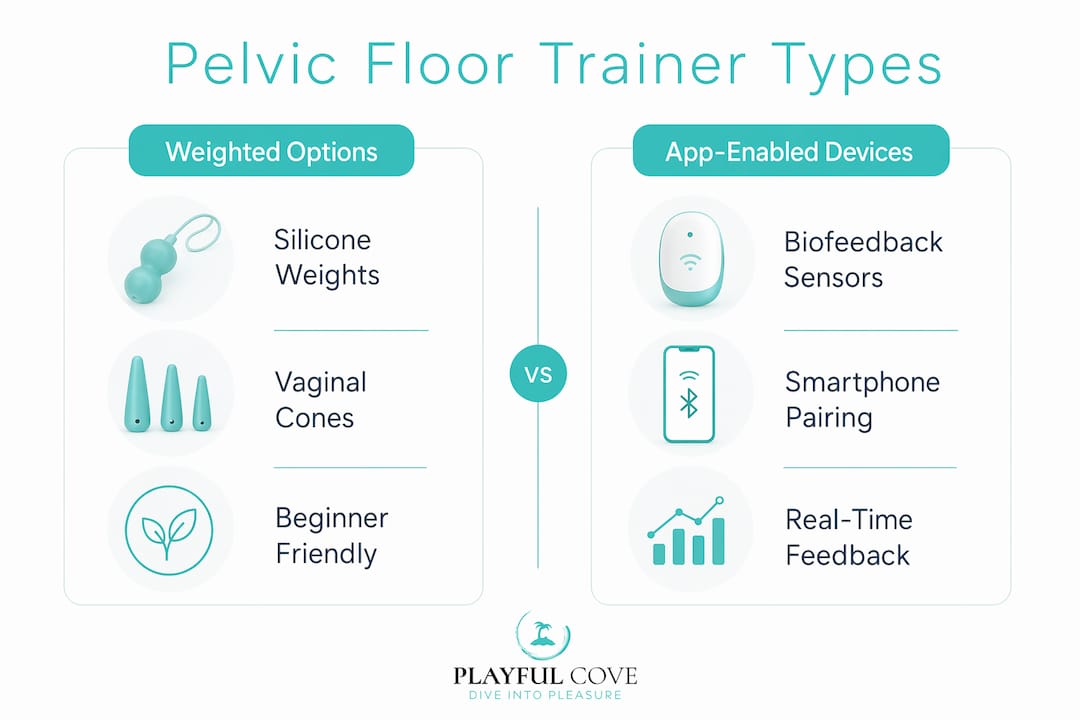
Weighted vaginal cones and silicone weights are the most beginner-friendly option. You insert the weight, and your pelvic floor muscles contract naturally to hold it in place. Most sets include two or three weights of increasing resistance so you can progress gradually. Sessions are typically short (15–20 minutes or per device instructions), and the low-tech format makes habit formation straightforward.
App-enabled biofeedback trainers pair an insertable sensor with a smartphone app that shows real-time muscle activity. Biofeedback can improve correct contraction technique and adds a motivation layer through progress tracking and guided sessions. These work well for people who are unsure whether they are contracting correctly, or who want data to stay motivated. The trade-off is cost and setup complexity.
Manual trainers and non-app options include simple resistance devices and basic weighted sets without digital components. These are the most affordable category and suit people who prefer a low-tech, private routine.
Electrical stimulation devices deliver gentle electrical pulses to trigger muscle contractions passively. Electrical stimulation is typically reserved for cases where voluntary contraction is difficult or impaired, and in-clinic versions (like chair-based electromagnetic devices) require professional supervision. For most beginners, this is a second-line option.
- Postpartum recovery: weighted sets after clinical clearance, or supervised biofeedback
- Mild stress leakage: weighted trainers or biofeedback, paired with a consistent routine
- Sexual function: weighted training builds baseline strength; biofeedback adds technique refinement
- Pelvic pain: consult a pelvic floor physiotherapist before using any device
How do you start a beginner pelvic floor routine?
Consistency beats device complexity every time. Consistent pelvic floor training is necessary, with visible results usually emerging after 3–6 months of daily practice. Clinical guidance and specialty practices indicate that most people notice measurable improvement with consistent, regular training in this timeframe.
Safety, cleaning, and when to see a clinician
One rule covers everything: if you have pain, bleeding, active infection, or have had surgery in the past six weeks, consult a clinician before using any pelvic floor device.
Cleaning checklist:
- Wash silicone trainers with mild, fragrance-free soap and warm water after every use
- Rinse thoroughly and air-dry completely before storing
- Store in a clean, breathable pouch, not a sealed plastic bag
- Never use silicone-based lubricants on silicone devices. A water-based lubricant is the safe choice for insertion comfort
- Check that your device is fully waterproof before submerging it to clean
Contraindications and red flags:
- Active vaginal or urinary tract infection: stop and seek treatment first
- Pelvic pain during or after use: stop immediately and consult a clinician
- Recent childbirth: wait for your postpartum clearance appointment before starting
- Pregnancy: get explicit guidance from your midwife or OB before using any insertable device
- Unexplained bleeding: see a clinician before resuming
Pelvic floor muscle training should feel like effort, not pain. Any sharp, burning, or worsening discomfort is a signal to stop, rest, and get a professional assessment before continuing.
What do pelvic floor trainers cost, and where should you buy them?
Price varies significantly by device type. Here is a realistic breakdown for the North American market.
| Device category | Typical price range | Warranty | Return policy ease |
|---|---|---|---|
| Weighted silicone sets | Lower cost range typical | Varies by product | Usually straightforward |
| App-enabled biofeedback trainers | Mid to higher cost range typical | 1–2 years typical | Varies by brand |
| Electrical stimulation (home) | Higher cost range typical | 1–2 years | Often restricted |
| In-clinic electrical stimulation | Billed per session | N/A | N/A |
Health technology assessments note that cost and access barriers affect how many people complete recommended program lengths. A weighted silicone set in the $20–$60 range removes most of those barriers for beginners.
Buying tips for North American shoppers:
- Confirm the retailer ships in discreet, unmarked packaging with neutral billing descriptions
- Check that the return window covers at least 30 days and applies to unused, sealed products
- Prefer retailers with a real customer support contact (email or chat), not just a FAQ page
- For clinician-recommended devices, ask your physiotherapist whether they have a preferred supplier or brand
Key Takeaways
Adherence is the single most important factor in pelvic floor training success. Start simple, stay consistent, and escalate to a clinician or a more advanced device only when the basics are solid.
| Point | Details |
|---|---|
| Best device for most beginners | A medical-grade silicone weighted trainer builds muscle awareness with minimal setup. |
| Material and hygiene rule | Non-porous, medical-grade silicone is the only safe choice for insertable trainers. |
| Starter routine headline | Three sets of 10 contractions daily, progressing to a weighted trainer by week 3. |
| Realistic timeline | Visible results usually emerge after 3–6 months of consistent daily sessions. |
| Playful Cove | Offers curated silicone insertables, water-based lubricants, and discreet U.S. shipping for beginners. |
Pelvic floor training and pleasure: a note on realistic expectations
The conversation around pelvic floor training tends to split into two camps: clinical and wellness. The clinical side talks about incontinence and prolapse. The wellness side talks about better orgasms and heightened sensation. Both are real outcomes, but neither happens without the thing nobody wants to talk about: months of unglamorous, repetitive daily effort.
What gets left out of most buying guides is that the device itself is almost irrelevant to whether you succeed. Systematic reviews confirm that supervision and consistent follow-up improve outcomes more than any specific technology. A $30 silicone weight used every day for six months will outperform a $200 biofeedback device used twice a week.
There is also a tendency to over-engineer the starting point. First-time shoppers often gravitate toward the most feature-rich option because it feels like a commitment. It usually has the opposite effect. Complexity creates friction, friction kills habits, and abandoned devices do nothing for your pelvic floor.
My honest advice: buy the simplest, highest-quality silicone option you can find, pair it with a water-based lubricant, and commit to three months before you evaluate whether you need anything more. Most people find that is enough.
Playful Cove’s curated picks for pelvic floor beginners
Pelvic floor training and intimate wellness belong together, and Playful Cove makes it easy to shop for both in one place, with discreet U.S. shipping and no judgment.

For beginners, the most practical starting point is a quality silicone insertable paired with a water-based lubricant for comfortable, safe use. Playful Cove carries a range of body-safe silicone options, including the Wild Rose and Thruster Rechargeable Silicone Clitoral Stimulator for those exploring the sexual-function side of pelvic wellness, and the Wild Rose Classic Rechargeable Silicone Clitoral Stimulator as a comfort-focused complement to your training routine. Every order ships in plain, unmarked packaging with a discreet billing description.
Browse Playful Cove’s full selection at playfulcove.com and check product pages for material details, return policies, and customer support. For complex symptoms, please consult a pelvic floor physiotherapist alongside any device purchase.
Useful sources and further reading
These are the strongest clinical and evidence-based sources behind this guide. Each is worth bookmarking if you want to go deeper or share guidance with a clinician.
- NICE Guideline NG210: Pelvic Floor Dysfunction — The UK’s primary clinical guidance on prevention and non-surgical management, including supervised PFMT program lengths and lifetime adherence recommendations.
- NCBI Bookshelf: PFMT for the Management of Symptoms — Systematic review evidence on PFMT effectiveness, the role of supervision, and adherence factors.
- HQOntario Health Technology Assessment: Pelvic Floor Muscle Training — Canadian HTA covering clinical efficacy, cost, and access barriers for PFMT across stress urinary incontinence, fecal incontinence, and pelvic organ prolapse.
- Michigan Institute of Urology: Is a Pelvic Floor Exerciser Right for You? — Practical clinical guidance on realistic timelines, session duration limits, and when to seek professional assessment.
For personalized assessment, a pelvic floor physiotherapist is the most valuable resource you can access. No device or article replaces a hands-on evaluation of your specific muscle function and symptoms.
