

Yes, sex toys can cause allergic reactions, and the discomfort you’re feeling is worth taking seriously. Most reactions are localized contact allergies triggered by materials like latex, phthalate-laden PVC, or fragrance additives in lubricants. Serious systemic reactions, like anaphylaxis, are less common but do happen, particularly with latex exposure. The moment you notice unusual redness, itching, or swelling after using a toy or lube, stop using it right away, rinse the area gently with lukewarm water, and switch to a nonporous alternative made from platinum-cured (medical-grade) silicone, borosilicate glass, or surgical stainless steel.
Here’s what to do first:
- Stop use immediately and set the suspected toy or product aside.
- Rinse the affected area with lukewarm water; avoid soap if the skin feels raw.
- Clean the toy according to its material before storing or discarding it.
- Switch to a nonporous material for your next purchase, such as medical-grade silicone or glass.
- Book a patch or prick test with a dermatologist or allergist if symptoms persist or recur.
Genital skin is among the most sensitive tissue on the body. A reaction that seems minor can escalate, and many cases of persistent genital discomfort go undiagnosed for months simply because people don’t connect their symptoms to a product. You deserve clear answers, and getting them starts with knowing what to look for.
Key Takeaways
Most sex toy reactions are contact allergies triggered by porous materials, latex, or lubricant additives, and switching to nonporous, platinum-cured silicone, glass, or stainless steel resolves the majority of cases.
| Point | Details |
|---|---|
| Stop use and rinse first | Remove the product from contact immediately and rinse with lukewarm water before doing anything else. |
| Choose nonporous materials | Medical-grade silicone, borosilicate glass, and surgical stainless steel are the safest choices for sensitive users. |
| Patch-test new lubes on your forearm | Apply a small amount to your inner forearm for 24–48 hours before genital use to screen for irritants. |
| Bring product details to your clinician | A symptom log, product labels, and the toy itself help dermatologists or allergists diagnose faster and more accurately. |
| Playful Cove for body-safe options | Playful Cove curates and clearly labels nonporous, medical-grade silicone and glass or steel toys with full material disclosure. |
Table of Contents
- What sex toy allergies are really caused by
- How do you know if it’s an allergy, irritation, or infection?
- How clinicians diagnose a toy-related allergy
- How to prevent reactions: safer materials, cleaning, and lube choices
- How to narrow down whether you’re having an allergic reaction at home
- Immediate first aid and when to get medical care
- Why “hypoallergenic” labels don’t protect you, and what actually does
- A note on safety and pleasure from Playful Cove
- Body-safe silicone picks for sensitive shoppers
- Sources
What sex toy allergies are really caused by
The culprits behind sex toy allergies fall into two broad categories: the toy’s base material and the additives layered on top of it. Understanding both helps you shop smarter and troubleshoot faster.
Materials that commonly trigger reactions
- Latex (natural rubber proteins): Found in some toy coatings, condoms, and harness components. Latex can trigger both Type IV delayed contact dermatitis and, in sensitized individuals, a Type I immediate reaction with potential for anaphylaxis. If you have a known latex sensitivity, polyurethane or polyisoprene barriers are the safer swap.
- Phthalate-containing PVC and jelly rubber: Phthalates are plasticizers added to soften PVC. They leach from the material during use and have been associated with skin sensitization. Jelly toys are almost always porous, which compounds the problem.
- Low-grade TPE and TPR: These thermoplastic elastomers vary wildly in quality. Many formulations are porous and contain undisclosed additives that can irritate sensitive skin.
- Fragrances and dyes: Added for scent or color, these are among the most common contact allergens in personal care products generally, and intimate products are no exception.
- Lubricant ingredients: Glycerin, warming agents, and preservatives like methylisothiazolinone can all trigger genital irritation or contact allergy. Fragrance-free, glycerin-free formulas are the starting point for sensitive users.
Why porous materials make it worse
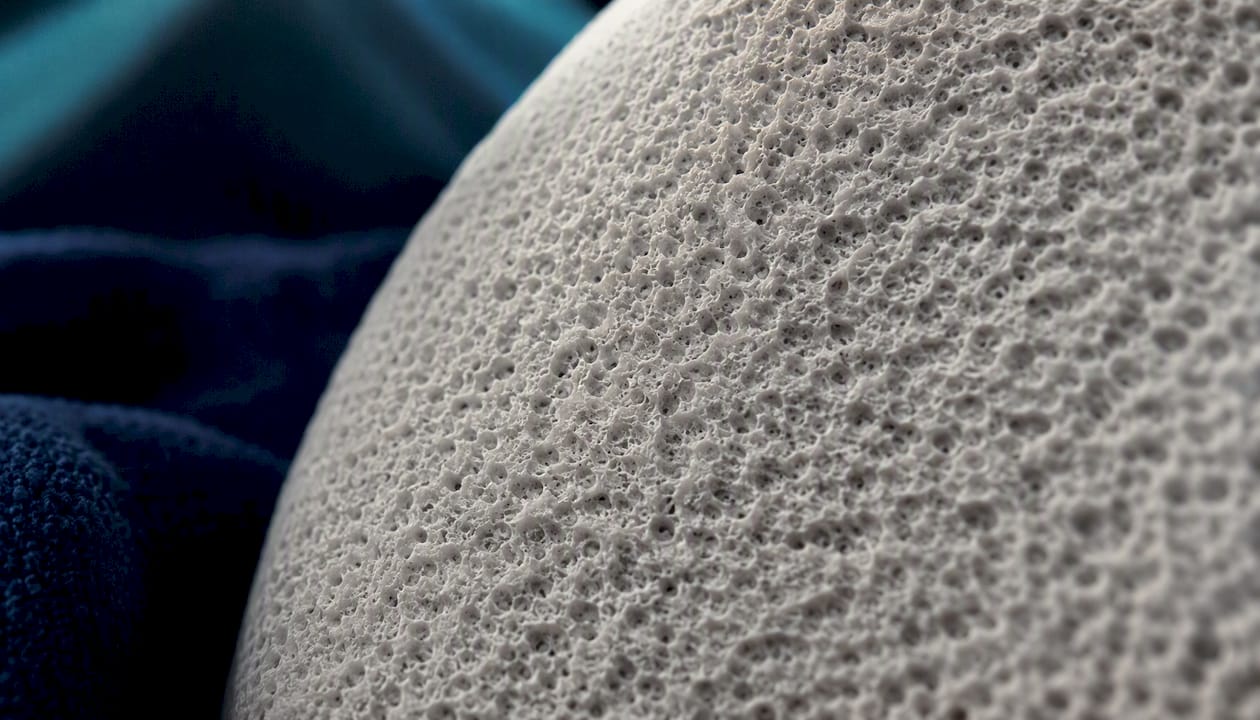
Porous materials trap fluids, bacteria, and chemical residues in microscopic channels that cleaning can’t fully reach. Every subsequent use re-exposes your skin to those trapped allergens, which means sensitization can build gradually even if the first few uses felt fine. Only a handful of materials are reliably nonporous: medical-grade or platinum-cured silicone, ABS plastic, surgical stainless steel, and borosilicate glass. Everything else requires extra caution.
One more thing worth knowing: partner exposures matter too. If your partner uses a fragranced product, a medicated cream, or a lubricant that transfers during contact, you can develop what clinicians call consort allergic contact dermatitis, a reaction to an allergen you never directly applied yourself.
Pro Tip: A strong chemical smell, a sticky or cloudy surface, or a vague label like “silicone blend” or “novelty material” are practical red flags. If a toy smells like a new shower curtain, treat it as porous until proven otherwise.
How do you know if it’s an allergy, irritation, or infection?
The symptoms overlap enough to cause real confusion, but the pattern and timing usually point toward the right answer.
Allergic contact dermatitis (Type IV, delayed)
This is the most common type of sex toy allergy. Symptoms appear hours to a couple of days after exposure, not immediately during use. You’ll typically see:
- Well-defined redness, itching, or a rash confined to the exact area of contact
- Small blisters or weeping in more pronounced cases
- Swelling that mirrors the shape of the toy or the area where lube was applied
Type IV contact dermatitis is more common in the genital area than most people realize and is frequently underdiagnosed. Many people assume they have a recurring infection when the real culprit is a product they use regularly.
Type I immediate allergy (less common, more urgent)
This reaction starts within minutes of exposure. Signs that go beyond the contact area, such as hives spreading across the body, facial swelling, throat tightness, wheezing, or dizziness, signal a systemic response. This is a medical emergency.
Irritant dermatitis vs. infection
Irritant dermatitis tends to feel like burning or rawness rather than itching, often from friction, residue buildup, or insufficient lubrication. It usually improves with rest and a lube change. Vibrators and other devices can cause irritation through friction, retained residues, or microbial transfer, which is why cleaning and barrier use matter even when you’re not dealing with an allergy.
Infections, including yeast overgrowth and bacterial vaginosis, typically come with discharge, odor, or a burning sensation that persists regardless of what product you use. They need different treatment entirely.
Red flag: If symptoms worsen after you’ve stopped using the product, or if you experience any difficulty breathing, throat swelling, or facial swelling, seek emergency care immediately. Don’t wait to see if it resolves on its own.
How clinicians diagnose a toy-related allergy
Getting a clear diagnosis starts with a focused conversation, not a lab test. Here’s what to expect when you see a dermatologist or allergist.
What the clinical process looks like
- History-taking: Your clinician will ask about the timing of symptoms relative to product use, which products were involved (toy, lube, condom, cleaner), and whether a partner’s products could be a factor.
- Physical exam: The distribution and appearance of the rash often point toward contact dermatitis versus infection versus irritation.
- Patch testing: Small amounts of suspected allergens are applied to the skin under occlusive patches for 48 hours, then read at 48 and 96 hours. This is the standard method for identifying Type IV delayed allergens. Patch testing and repeated open application testing are the recommended investigative tools for protracted genital symptoms.
- Prick testing: Used when a Type I immediate reaction (like latex allergy) is suspected. A small amount of allergen is introduced to the skin surface and results appear within 15–20 minutes.
What to bring to your appointment
- The suspect toy, or its exact product name, brand, and material description
- The lubricant label (photograph it if you’ve already discarded the packaging)
- Any condoms, cleaners, or massage products used around the same time
- A short symptom log noting when symptoms started, how long they lasted, and what made them better or worse
Testing has real limitations. Standard patch test panels may not include every additive found in intimate products, so clinicians sometimes recommend a repeated open application test, where you apply a small amount of the product to the same skin spot daily for several days to observe a cumulative response. This is particularly useful for lubricants and personal care items.
Persistent or unexplained genital symptoms are best evaluated by a dermatologist or allergist with experience in genital contact dermatitis, not just a general practitioner. The specialty matters here.
How to prevent reactions: safer materials, cleaning, and lube choices
Prevention is mostly about what you buy and how you care for it. These two things together reduce your risk more than any single product claim.
Materials to prefer
- 100% medical-grade or platinum-cured silicone: Nonporous, body-safe, and easy to sterilize. The “platinum-cured” designation refers to the catalyst used in the curing process and is widely regarded as a quality signal.
- Surgical-grade stainless steel: Nonporous and completely sterilizable. If you have a nickel sensitivity, confirm the alloy is nickel-free before purchasing.
- Borosilicate glass: Hard, nonporous, and compatible with all lubricant types. Inspect for chips or cracks before each use.
- ABS plastic: A hard, nonporous plastic used in many vibrator housings. Safe for external use; avoid if the surface is scratched or degraded.
Materials to approach with caution
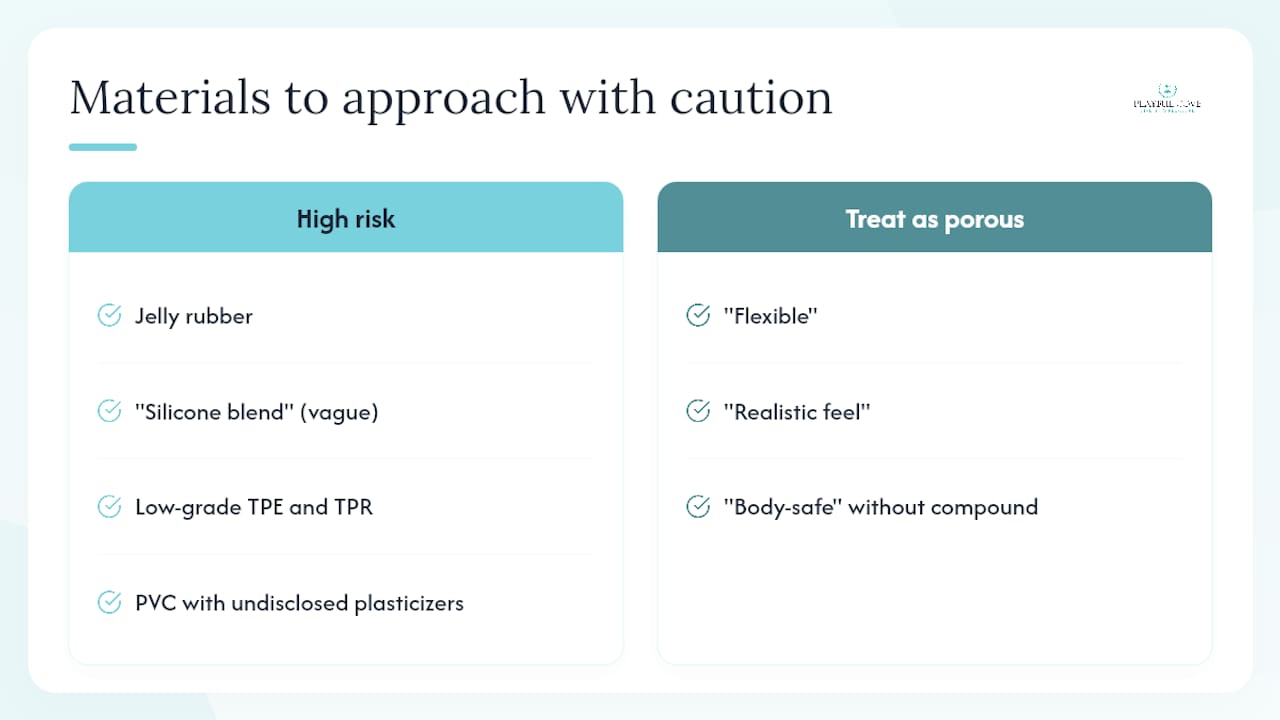
Jelly rubber, vague “silicone blend” formulations, low-grade TPE and TPR, and PVC with undisclosed plasticizers all carry elevated risk. If a product lists its material as “flexible,” “realistic feel,” or “body-safe” without specifying the actual compound, treat it as porous.
Lube compatibility at a glance
For sensitive users, a lube formulated for sensitive skin is the most practical starting point. Look for fragrance-free, glycerin-free, and paraben-free on the label.
Cleaning by material
- Nonporous silicone, glass, stainless steel: Boil for 3–5 minutes or run through a dishwasher (top rack, no soap) to sterilize between uses. Mild soap and water work for routine cleaning.
- ABS plastic (with electronics): Wipe with a toy cleaner or mild soap and water; never submerge.
- Porous TPE/TPR: Soap and water only, and use a condom over the toy every time. Replace these toys regularly since they cannot be fully sanitized.
Pro Tip: Store toys separately in individual pouches to prevent cross-contamination between materials. Check monthly for any stickiness, discoloration, or new odor. Any of those signs means it’s time to retire the toy.
How to narrow down whether you’re having an allergic reaction at home
Before you see a clinician, a few careful steps at home can help you identify the likely trigger and make your appointment far more productive.
-
Stop and isolate. Stop using the suspect toy and any new lube or cleaner you introduced around the same time. Note exactly when symptoms started relative to use.
-
Do a basic forearm patch test for new lubes. Apply a pea-sized amount of the lubricant to your inner forearm or behind your ear and leave it uncovered for 24–48 hours. Watch for redness, itching, or a raised patch. This is not a substitute for clinical patch testing, but it can flag obvious irritants before you use them genitally. Patch-testing a small amount on the forearm is a practical first screen for lubricant sensitivity.
-
Change one variable at a time. Swap the toy material first, keeping the same lube. If symptoms clear, the toy material was likely the issue. If they persist, change the lube next. A stepwise elimination of variables, toy, lube, condom, cleaners, is the most practical way to identify culprits before specialist testing.
-
Document with photos and a short log. Take dated photos of the reaction and keep a brief note of the product used, how you cleaned it, how long you used it, and how long symptoms lasted. This information is genuinely useful to a clinician and often shortens the diagnostic process considerably.
Pro Tip: If you use a condom over a toy and symptoms improve, the toy material is the more likely culprit than the lube. If symptoms persist even with a condom barrier, shift your focus to the lube or cleaner.
Immediate first aid and when to get medical care
First-aid steps right after a reaction
- Stop exposure and remove the product from contact with your skin.
- Rinse the area gently with lukewarm water for several minutes; pat dry with a soft cloth.
- Apply a cool, damp compress to reduce swelling and calm irritation.
- Consider an oral antihistamine (such as cetirizine or loratadine) for mild itching. These are available over the counter at most US pharmacies.
- Avoid applying anything new to the area, including scented lotions or topical antiseptics, until the reaction settles.
Topical treatments
A short course of a mid-potency topical corticosteroid can help resolve localized contact dermatitis, but genital skin is thinner and more absorptive than skin elsewhere on the body. Use topical steroids in this area only under clinician guidance, and never as a long-term solution without medical supervision.
When to call 911 or go to an emergency room
Any sign of difficulty breathing, throat or facial swelling, chest tightness, fainting, or rapidly spreading hives is a potential anaphylactic reaction. Call 911 immediately. If you carry an epinephrine auto-injector (EpiPen), use it and still call for emergency care.
When to see a dermatologist or allergist
Book an outpatient appointment if symptoms persist beyond a few days after stopping the product, if reactions keep recurring with different products, if your diagnosis is unclear, or if you want formal patch or prick testing to identify your specific allergens. Specialist evaluation is also the right path if you’re considering desensitization therapy for latex allergy.
Why “hypoallergenic” labels don’t protect you, and what actually does
The word “hypoallergenic” on a sex toy or lubricant label carries no regulatory weight in the United States. No federal standard defines it for intimate products, and no agency requires proof before a brand uses it. Relying on that label alone is one of the most common mistakes sensitive shoppers make.
The term “hypoallergenic” is not a regulated standard for sex toys; verifying specific material claims like “platinum-cured” or “medical-grade” silicone is the more reliable approach. The distinction matters because two products can both carry the “hypoallergenic” label while being made from entirely different materials, one nonporous and body-safe, the other a porous blend with undisclosed additives.
What to look for instead
- “Platinum-cured silicone” or “100% medical-grade silicone”: These are specific, meaningful claims. “Silicone blend” or “silicone feel” are not.
- ISO or FDA conformity statements where applicable, particularly for products marketed as medical devices or body-safe materials.
- Third-party lab reports or material certifications: Some manufacturers publish these on request or on their product pages.
- Transparent material disclosure: A brand that lists the exact compound, not just a category name, is a brand worth trusting.
A practical shopper checklist
- Ask for the exact material name before purchasing, not just the category.
- Request lab or certification details if the brand claims medical-grade status.
- Prefer nonporous materials with clear, specific care instructions.
- Avoid products with vague descriptors like “body-safe,” “flexible,” or “realistic” as the sole material description.
- Check whether the brand discloses its supply chain or manufacturing standards.
Playful Cove curates its selection with these standards in mind, labeling nonporous, medical-grade silicone and glass or steel items clearly and linking to product care guidance on every product page. When you’re shopping for body-safe options, that kind of transparency is the signal worth trusting, not a marketing word with no definition behind it.
A note on safety and pleasure from Playful Cove
At Playful Cove, we believe that feeling safe and feeling good are not competing priorities. We curate our selection with body-safe materials at the center, because comfort and confidence start with knowing exactly what you’re bringing into your most intimate moments. Every product we feature comes with clear material information, and our team is always available to answer questions about compatibility, care, and what might work best for your needs. We ship discreetly across the United States, and we’re here to be your trusted cove for wellness, pleasure, and peace of mind.
Body-safe silicone picks for sensitive shoppers
If you’ve been dealing with reactions and you’re ready to make a confident switch to nonporous materials, Playful Cove’s silicone collection is a natural place to start. Medical-grade silicone is nonporous, easy to clean, and free from the phthalates and mystery additives that cause most toy-related reactions.

The Naked Addiction Silicone Rechargeable Thrusting, Vibrating, and Rotating Dildo is one of our most popular silicone options, built from body-safe silicone with no porous surfaces to trap residue. For a compact option, the Mystique Vibrating Massagers Rechargeable Silicone Vibrator offers a nonporous silicone surface that’s straightforward to clean and gentle on sensitive skin. If you have questions about which material is right for your situation, reach out to our customer support team before you buy. We’re here to help you find something that feels good and keeps you comfortable. Browse our full silicone collection at Playful Cove and shop with the confidence that every product listing tells you exactly what it’s made of.
Sources
These clinical and consumer-facing references informed this article and are worth bookmarking if you want to read further or share with a clinician.
- PMCID: Genital contact dermatitis review (PMC4857673)
- Womens-Health: Body-safe sex toy materials explainer
- Sex Toys Australia blog: Allergic reactions during sex
- TheToy: Can vibrators cause irritation, rashes, or infections?
- PubMed: Relevance of patch testing in genital dermatitis (pubmed/27040422)
This article is for general informational purposes only and is not a substitute for professional medical advice. If you are experiencing persistent, worsening, or severe symptoms, consult a qualified healthcare provider or seek emergency care as appropriate.
