

Small, incidental tastes of a product genuinely labeled “edible” are usually low risk. But most massage oils, even flavored ones, are regulated as cosmetics, not food, which means they were never tested for swallowing in real quantity. Skip anything with medicated ingredients like methyl salicylate, keep oils away from condoms, and never use oil internally unless the label says it is gynecologist approved. The steps below show you how to check a bottle before it ever touches skin.
TL;DR:
- Look for clear indications of food-grade or GRAS status on labels, and avoid products with medicated ingredients like methyl salicylate.
- Ingredients such as wintergreen, camphor, eucalyptus, cinnamon bark, and citrus oils pose toxicity or skin irritation risks if ingested or applied improperly.
- Keep essential oils diluted at low concentrations and always perform patch tests 24 hours before full use, especially for sensitive or pregnancy-related applications.
- Oil-based lubricants break down latex condoms and should be avoided during protected sex, with water- or silicone-based lubricants preferred.
- Store homemade or commercial flavored oils in cool, dark places, and discard if oils change color or smell, to prevent bacterial growth and botulism risk.
Table of Contents
- Edible Massage Oil Safety: What “Edible” Actually Means on the Label
- Ingredients That Turn a Fun Night Risky
- How to Use Edible Massage Oil Safely, Step by Step
- Do Massage Oils Play Well With Condoms and Intimate Health?
- Storage, DIY Blends, and the Homemade-Infusion Trap
- Playful Cove’s Take on Safer Sensual Products
- Find a Massage Oil Built for This Exact Checklist
- Sources
Edible Massage Oil Safety: What “Edible” Actually Means on the Label
Here is the part most shoppers skip past: the word “edible” on a massage oil bottle is a marketing choice, not a government-certified category. The FDA generally treats massage oils intended for topical use as cosmetics, and cosmetics are never tested or approved the way food is. That distinction matters more in the bedroom than almost anywhere else, because these products get used near mouths, genitals, and broken skin all at once.
A truly food-grade flavoring has undergone GRAS review (Generally Recognized As Safe), the standard the FDA applies to ingredients meant for ingestion. An essential oil marketed for aromatherapy or cosmetic use has not, even when the scent is identical. The FDA’s own aromatherapy guidance draws this line clearly: natural does not automatically mean edible, and concentrated does not mean safe in the mouth.
Before you buy, scan the label for a few specific signals:
- Language that says “food-grade flavoring” or “culinary flavoring,” not just “natural flavor”
- Any mention of GRAS status on the ingredient list or product page
- Explicit instructions for oral or ingestion use, rather than silence on the topic
- A short, recognizable ingredient list you could pronounce out loud
If the bottle only says “edible” with no further detail, treat it as a topical product that happens to taste pleasant, not a food.
Ingredients That Turn a Fun Night Risky
Some ingredients belong nowhere near an edible massage oil, and knowing their names is the fastest way to shop safely. Methyl salicylate, the compound behind wintergreen-scented pain relief rubs, is the biggest one. Documented case reports on methyl salicylate poisoning describe seizures and vomiting after people swallowed medicated topical oils, sometimes in amounts as small as a teaspoon in children. If an oil smells like a muscle rub, it likely has no business anywhere near an intimate massage.
Essential oils deserve caution too, since they arrive at concentrations far above what any recipe would call for. Common offenders to watch for:
- Wintergreen and camphor, both linked to toxicity when ingested
- Eucalyptus, which can irritate mucous membranes at low doses
- Cinnamon bark, a frequent cause of skin burning and sensitization
- Cold-pressed citrus oils, which can trigger phototoxic reactions on skin later exposed to sunlight
Sugar-based sweeteners and heavy glycerin also deserve a second look. Vaginal tissue is sensitive to shifts in pH, and research on vaginal microbiome balance links sugary residues to a higher chance of yeast infection or bacterial vaginosis. Finally, check carrier oils for nut bases such as almond or walnut oil. They’re wonderful for skin, but a hidden allergen in a moment of intimacy is the last surprise anyone wants.
How to Use Edible Massage Oil Safely, Step by Step
Getting the ratio right matters more than most people assume. If a blend uses essential oils at all, keep the concentration in a low range, roughly a few drops per ounce of carrier oil, and choose only oils explicitly marked food-grade or GRAS. Anything stronger raises irritation risk without adding to the experience.
Run through this checklist before first use:
- Read the full label, not just the front, and confirm the product states food-grade or edible-safe status somewhere specific.
- Patch test 24 hours ahead. Apply a dime-sized amount to your inner forearm, leave it uncovered, and check back in a day for redness, itching, or bumps.
- Start with a lower dose than the bottle suggests if you have sensitive skin, and apply to a small area first even after a clean patch test.
- Pick a gentle carrier oil. Fractionated coconut, grapeseed, and apricot kernel oils tend to sit well on skin and carry lower allergy rates than nut oils.
- Skip essential oils entirely during pregnancy or breastfeeding. A plain carrier oil, or a quick conversation with your clinician, is the safer route.
Pro Tip: If you or your partner has reactive or eczema-prone skin, cut the standard dilution in half and patch test on two separate days before trusting it for a full-body massage.
Do Massage Oils Play Well With Condoms and Intimate Health?
Oil and latex are a bad match, full stop. Oil-based products break down latex and polyisoprene condoms within minutes, which means an edible massage oil that drifts toward genital contact can quietly compromise protection you’re counting on. Water-based or silicone-based lubricants are the safer partner for any protected sex that follows a massage.
Internal use is where things get trickier. Most edible oils are formulated for skin contact and incidental oral tasting, not as vaginal lubricants. Sugars and glycerin can throw off natural pH balance, and that disruption is a documented driver of yeast infections and bacterial vaginosis, per the same vaginal microbiome research cited above. Practitioners in intimate wellness commonly recommend keeping these oils external, saving internal use for products explicitly labeled and approved for that purpose.
A few practical rules to keep the night both fun and uneventful:
- Treat every edible massage oil as external-only unless the label says otherwise
- Switch to water- or silicone-based lubricant before any condom-protected contact
- Watch for burning, itching, or unusual discharge in the days after use, and see a clinician if symptoms don’t clear quickly
Storage, DIY Blends, and the Homemade-Infusion Trap
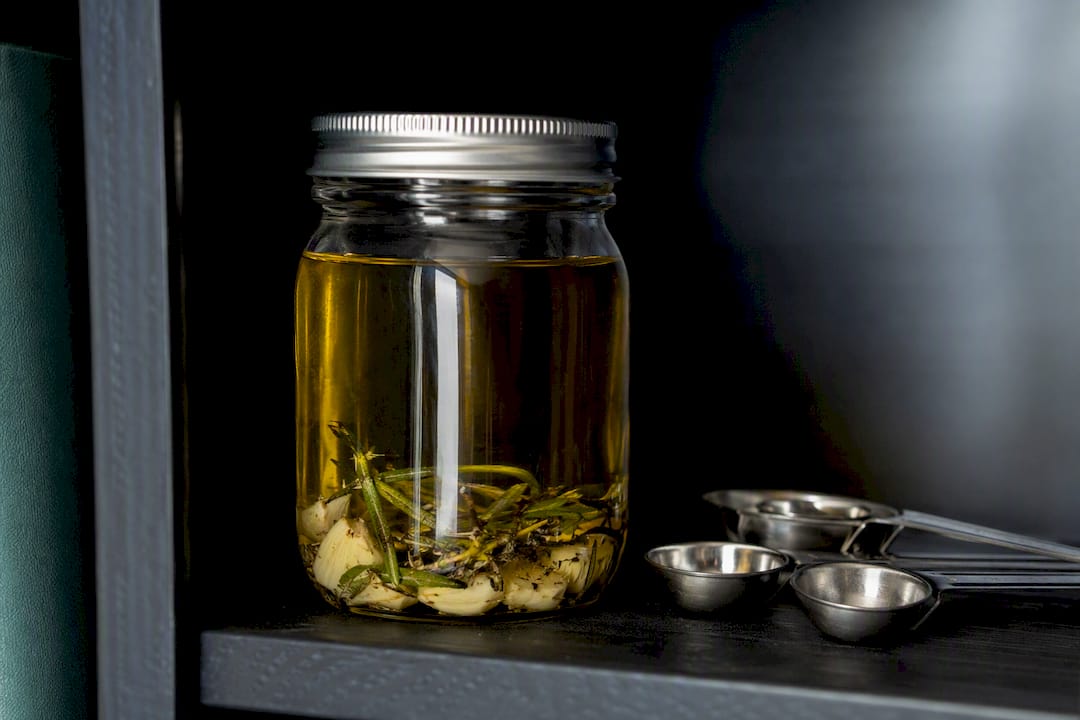
Making your own flavored massage oil sounds romantic until you consider what can grow in improperly stored garlic or herb infusions. Oil creates a low-oxygen environment that certain bacteria, including the one responsible for botulism, actually favor, which is why commercial garlic-in-oil products follow strict food-safety protocols before they ever reach a shelf.
Sourcing mistakes happen even at the commercial level. One widely cited recall involving a flavored olive oil traced back to a producer using a non-culinary garlic essential oil instead of a proper food-grade flavoring. No illnesses were reported, but the product still got pulled, proof that even well-meaning small producers can blur the line between essential oil and food ingredient.
Keep any oil you do buy or make in a cool, dark spot, use clean utensils every time you dip in, and toss it the moment the smell or color shifts. Unless you’re trained in tested food-safety infusion methods, a commercially formulated oil with a short, transparent ingredient list beats a DIY batch nearly every time.
Playful Cove’s Take on Safer Sensual Products
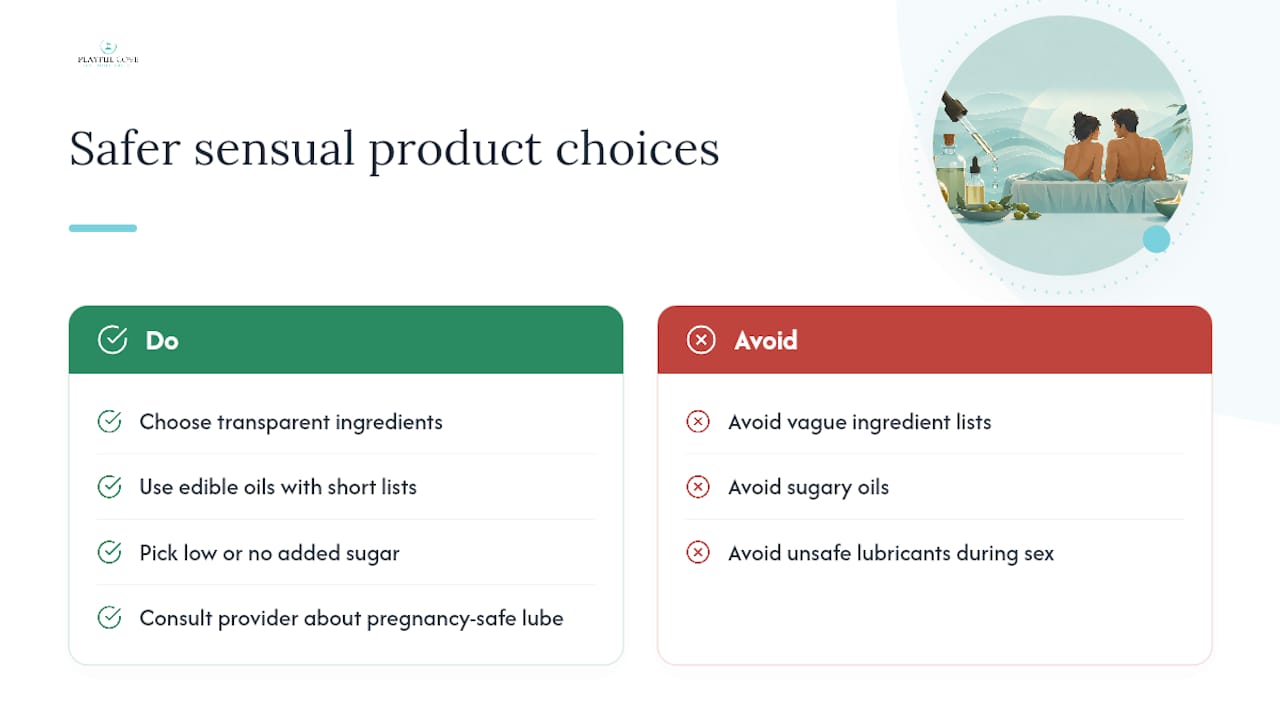
An editorial team leans hard on ingredient transparency, because a beautiful bottle means nothing if you can’t tell what’s inside it. Our take: skip anything vague about its ingredients, and favor products that state plainly what they contain and how they’re meant to be used.
For external play, look toward edible massage oils with short, readable ingredient lists and low or no added sugar. Pair that with clear-ingredient lotions for everyday touch, and reach for safer lubricant picks for sensitive skin whenever protected sex is on the table. If pregnancy is part of the picture, our guide to pregnancy-safe lubricants walks through gentler, clinician-friendly options worth discussing with your provider.
— Playful Cove Editorial Team
Find a Massage Oil Built for This Exact Checklist
Every rule in this guide points toward one kind of product: short ingredient list, external-use focus, and no confusing marketing language. Our Me and You Pheromone Infused Luxury Massage Oil fits that description, built on a gentle carrier oil base with a clear ingredient list and formulated for external massage, with tasting in mind rather than internal use.

It skips the medicated compounds and heavy sugar syrups that raise irritation or infection risk, so you’re not left guessing what you rubbed on your skin an hour ago. Before your next date night, run a quick patch test, confirm it pairs with whichever protection you’re using, and check our best massage oils for sensual couples guide for a few more body-safe options if you want to compare scents and bases side by side. Add it to your cart, keep the checklist above nearby, and enjoy a massage that feels as good the morning after as it did the night before.
This article is general information, not a substitute for advice from a qualified doctor. Consult a qualified healthcare professional about your own circumstances before acting on anything here.
Sources
- Fragrances and cosmetics | FDA
- Poisoning from methyl salicylate and salicylates — PubMed Central
- Garlic essential oil recall example — Medical Daily
