

Temperature play with toys means using warmth and coolness against the skin to create sensual contrast, and it’s a genuinely beginner-friendly practice when you stick to safe ranges and non-porous materials. Before anything touches sensitive skin, do the wrist test: hold the warmed or cooled item against your inner wrist for a few seconds first. Then start slow, keep the toy moving, and let short passes tell you how your body responds.
TL;DR:
- Use non-porous materials like glass, steel, or medical-grade silicone for effective temperature contrast and easy sanitation between uses.
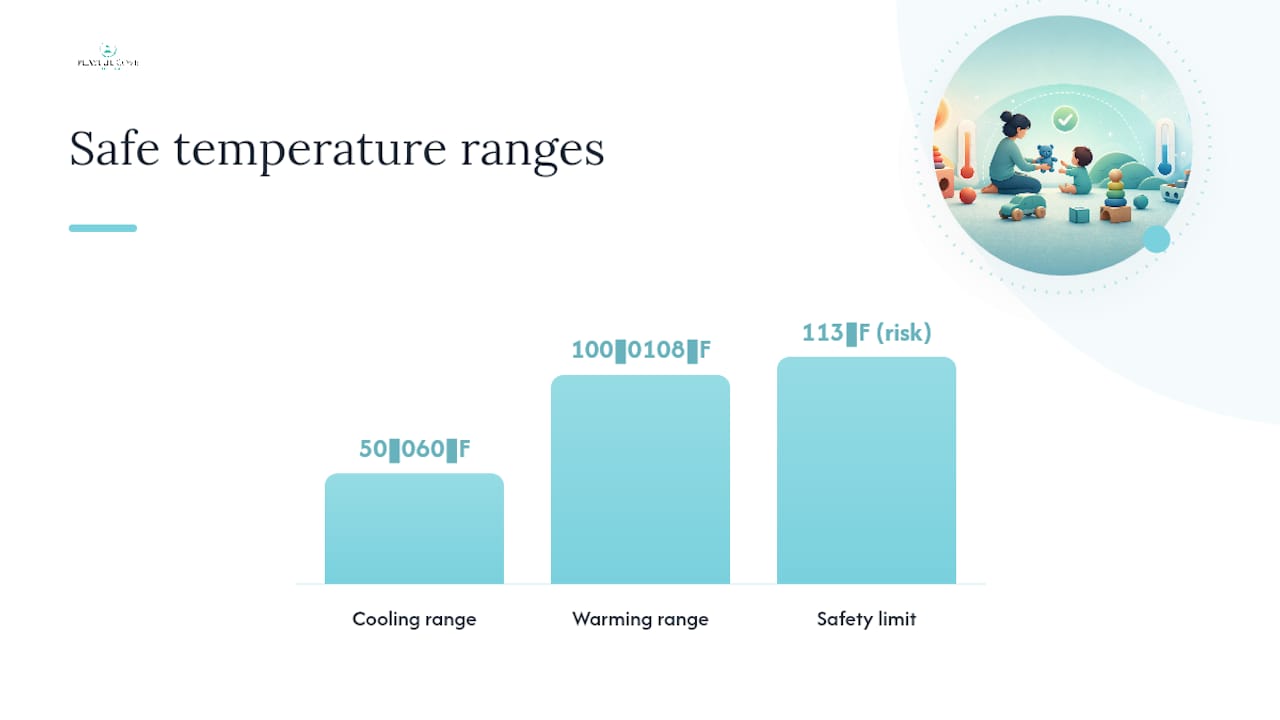
- Keep temperature ranges between 100 to 108°F for warmth and 50 to 60°F for cold sensations, testing each toy on the wrist before skin contact.
- Move toys gently with brief passes of three to ten seconds, avoiding abrupt extremes to prevent tissue damage and maintain pleasurable sensation.
- Neglecting to monitor skin response or ignoring existing health conditions like diabetes can increase risk and may require medical consultation before play.
- Starting with a simple, curated set of one warming toy, one cooling product, and one non-porous option simplifies safe exploration of temperature play.
Table of Contents
- What Do You Need to Get Started with Temperature Play?
- Why Does Temperature Contrast Feel More Intense Than Heat or Cold Alone?
- Which Materials Are Actually Safe for Temperature Play?
- What Are Safe Warming and Cooling Methods for Toys?
- How Do You Know When to Stop a Temperature Play Session?
- What Are Some Beginner-Friendly Temperature Play Techniques?
- How Should You Clean and Store Temperature Play Toys?
- How Does Playful Cove Support Safe Temperature Play?
- A Note on Curiosity, Care, and Taking It Slow
- Ready to Try Temperature Play? Here’s a Simple Starter Set
- Sources
What Do You Need to Get Started with Temperature Play?
You don’t need a drawer full of gear to try temperature play with toys. A handful of well-chosen items, prepped correctly, will get you through your first several sessions with room to explore.
Start with what’s genuinely body-safe:
- A borosilicate glass toy or wand (holds temperature well, non-porous)
- A stainless steel toy or smooth household implement (a chilled spoon works for testing)
- A low-temp massage candle made specifically for skin contact, not a regular household candle
- Ice cubes in a bowl, plus a clean cloth barrier if you want a gentler cold sensation
- A rechargeable warming vibrator if you’re using a device with a built in warming feature
Beyond the toys, prep is what actually keeps a session safe. Keep two towels nearby, one for cleanup and one warmed to room temperature for a neutral reset between hot and cold. Have room-temperature water on hand, a timer or phone with a stopwatch, and, if you’re new to this, a burn gel or aloe within reach just in case. None of this signals distrust. It’s the same logic as keeping a first-aid kit near a kitchen knife block.
Before you touch anything to skin, agree on one safeword and one nonverbal signal (a tap, a raised hand) in case words aren’t available in the moment. Then run the wrist-test protocol: three seconds against your own inner wrist. If it feels uncomfortably hot or cold there, it’s too extreme for anywhere more sensitive.
Pro Tip: Test every single toy, oil, or candle drip on your wrist before your partner’s skin ever touches it. Your wrist calibrates faster than you’d think, and it takes ten seconds.
Why Does Temperature Contrast Feel More Intense Than Heat or Cold Alone?
Your skin is lined with thermoreceptors, nerve endings that fire in response to both the absolute temperature of what’s touching you and how quickly that temperature is changing. That second part is the key to why temperature play with toys feels so different from, say, a warm bath or an ice pack.
A steady temperature, held in one place, gets less attention from your nervous system over time. Your brain adapts. But alternating warm and cool keeps those thermoreceptors firing fresh signals, and that contrast amplifies sensation well beyond what either temperature delivers on its own. This is the same basic mechanism behind why a cold shower after a sauna feels more intense than either temperature alone.
The practical takeaway matters more than the biology lesson: gentle cycling beats abrupt extremes. Move from warm to cool and back in a slow rhythm rather than shocking the skin with one dramatic swing. Your goal is sustained attention, not a jolt.
Which Materials Are Actually Safe for Temperature Play?
Material choice determines almost everything about how safe and how effective your session will be. Some materials hold and transfer temperature beautifully. Others trap bacteria, crack under thermal stress, or simply don’t get cold or warm enough to matter.
Borosilicate glass and stainless steel are the gold standard for dramatic contrast, and for good reason. Both have high thermal mass and strong conductivity, meaning they hold a temperature for a long time and transfer it efficiently to skin. Practitioner guides on temperature play consistently point to these two materials because they’re non-porous and hold temperature reliably, which also makes them easy to sanitize between uses.
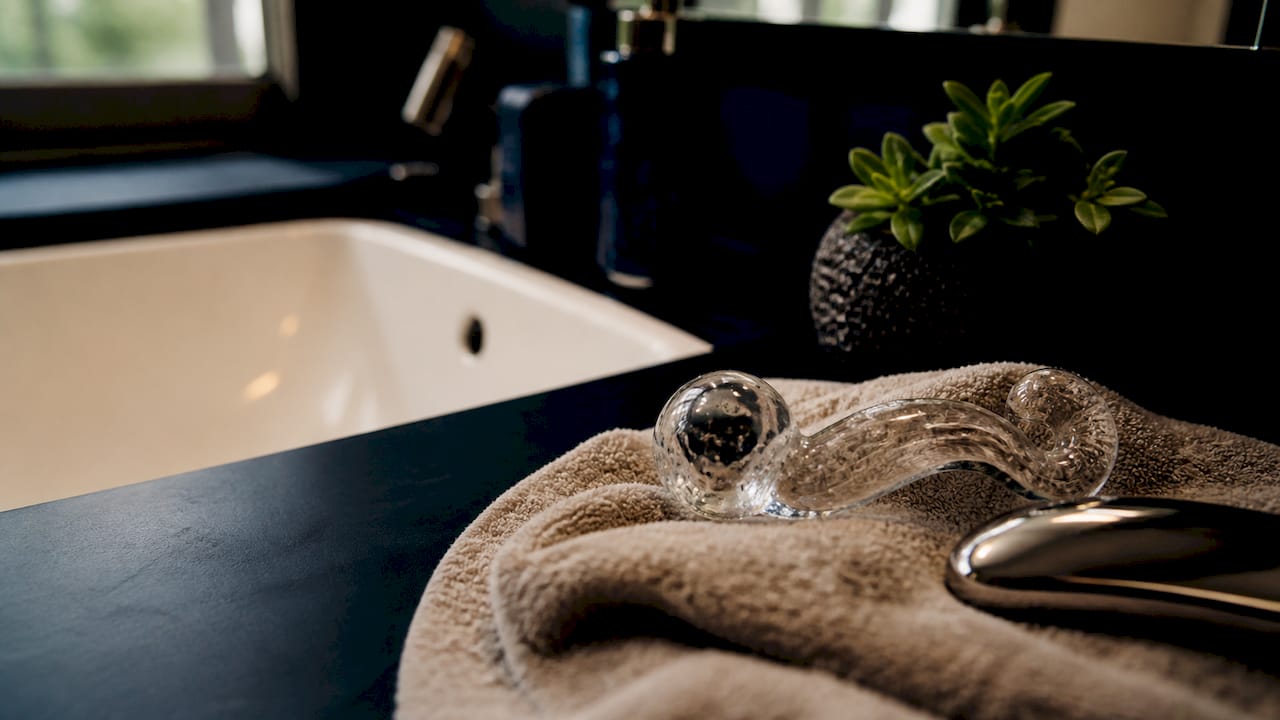
Medical-grade silicone behaves differently. It warms more slowly and holds heat gently rather than delivering sharp contrast, which makes it a better match for sustained, low warmth rather than the dramatic hot-cold swings glass and steel deliver. A rechargeable warming vibrator built from silicone shines here: steady, moderate warmth rather than an intense thermal jolt.
What to avoid entirely:
- Porous materials (jelly rubber, certain plastics) that trap bacteria and can’t be fully sanitized
- Household items never designed for body contact, like frozen metal tools straight from a freezer
- Anything improperly heated in a microwave or on a stovetop
- Cracked, chipped, or scratched toys, which compromise both hygiene and structural safety
Inspect every toy before each session. Run a finger along glass edges, check steel for pitting, and retire anything with visible damage.
What Are Safe Warming and Cooling Methods for Toys?
Getting temperature right is less about intensity and more about control. The goal is a noticeable sensation, never a burn or frostbite risk.
Warming methods that work:
- Run the toy under warm tap water for one to two minutes.
- Wrap it in a towel that’s been warmed in the dryer or with hot water.
- Use a manufacturer’s built-in warming feature if your toy has one, which regulates temperature automatically.
Cooling methods that work:
- Place the toy in the refrigerator for 15 to 20 minutes.
- Submerge it in an ice bath for a faster, deeper chill.
- Dry it thoroughly before contact, since condensation changes both the sensation and the feel against skin.
Never microwave a toy, heat it on a stovetop, or take anything straight from the freezer to skin. Those methods create hot spots or cause the kind of extreme cold that damages tissue before you even register discomfort.
Safe target ranges to aim for: warm sensations sit around 100 to 108°F (38 to 42°C), and cool sensations sit around 50 to 60°F (10 to 16°C). Research on somatosensory response suggests sustained contact above roughly 113°F (45°C) starts approaching burn territory for many people, which is exactly why the wrist test matters every single time, not just the first time.
Once you’ve confirmed a safe temperature, keep contact brief. Three to ten seconds per pass is typical, then move the toy rather than holding it stationary. Movement is what keeps the sensation pleasurable instead of risky.
How Do You Know When to Stop a Temperature Play Session?
Consent and communication aren’t a formality here. They’re the actual safety mechanism, alongside temperature control.
Before you start, negotiate what’s on and off the table, agree on a safeword, and establish a nonverbal backup signal for moments when speaking feels hard. Keep the space private, and skip recordings unless every person involved has explicitly agreed, separately from consenting to the play itself.
Watch for these red flags, and stop immediately if you see any of them:
- Burning pain that doesn’t ease when you remove the toy
- Numbness that persists after contact ends
- Blistering or skin that looks shiny and tight
- Discoloration that lingers rather than fading within a minute or two
Certain conditions call for extra caution or avoiding temperature play altogether. Diabetes and neuropathy can both dull sensation in ways that make it hard to notice a problem before it becomes serious. Recent hair removal, whether waxing or shaving, leaves skin more reactive and more vulnerable to both heat and cold. If any of these apply to you or a partner, talk to a doctor before experimenting, and start far more conservatively than you otherwise would.
If something goes wrong, treat it like any minor burn: cool (not ice-cold) water on the area, aloe vera afterward, and a call to a doctor if you see blistering or the pain doesn’t ease.
Pro Tip: Start in low-stakes areas first, outer thighs, shoulders, the flank, before you bring temperature anywhere near more sensitive zones. It gives your nervous system, and your confidence, time to calibrate.
What Are Some Beginner-Friendly Temperature Play Techniques?
You don’t need an elaborate routine for your first session. A few simple sequences will teach you more about your own response than any amount of reading.
- Warm towel, then chilled spoon. Lay a warmed towel across the skin for thirty seconds, remove it, then trace a chilled stainless steel spoon lightly across the same area. The contrast alone is often the whole point.
- Ice cube tracing. Wrap an ice cube in a thin cloth or hold it directly if your skin tolerates it, and keep it moving in slow circles. Never let it rest in one spot, and stay well clear of eyes, mouth, and other mucous membranes.
- Low-temp massage candle. Test a drip on your wrist first. Once confirmed safe, tilt the candle from six to eight inches above skin and let the melted wax fall in a thin stream, then use it as massage oil as it cools.
- Contrast with your toy of choice. Warm or chill a non-porous toy using the methods above, apply it for a short pass, then switch to the opposite temperature after a neutral touch in between.
Each of these builds on the same principle: brief contact, constant movement, and a pause to check in before you continue.
How Should You Clean and Store Temperature Play Toys?
Aftercare starts the moment the session ends, not after cleanup. Offer neutral, gentle touch as skin returns to its normal temperature, hydrate, and follow up with an unscented moisturizer once skin has fully cooled or warmed back to baseline.
Cleaning depends entirely on material:
- Glass and stainless steel: wash with soap and warm water, then boil for a few minutes or run through a dishwasher cycle for full sanitization.
- Silicone: wash with hot water and a mild, fragrance-free soap; avoid harsh solvents that can degrade the material over time.
- Massage candles: wipe the container clean and reseal tightly to keep wax free of dust and debris between uses.
Store glass toys in a padded pouch to prevent chips, keep metal toys somewhere dry to avoid corrosion, and always reseal candles after use. A little storage discipline now saves you from replacing a favorite toy sooner than you should.
How Does Playful Cove Support Safe Temperature Play?
Playful Cove carries several product categories built with temperature play in mind, and picking the right one comes down to matching material and features to how you actually plan to use it.
- Rechargeable warming vibrators, including the Natural Realskin Hot Cock line, deliver steady, built-in warmth without any prep work on your end.
- Low-temp massage candles and massage oils give you the ritual of warmth with a hydrating finish that doubles as aftercare.
- Non-porous toys like the Mood Frisky G-Spot Massager are easy to chill or warm at home using the methods above.
When you’re choosing, check the material first, glass, steel, or medical-grade silicone, then look for manufacturer warming features if you want convenience over manual prep, and always read the cleaning instructions on the product page. If a device has warming or cooling specifications you’re unsure about, Playful Cove’s customer support team can walk you through device-specific guidance so you’re never guessing.
A Note on Curiosity, Care, and Taking It Slow
Temperature play rewards patience more than any other kind of sensation exploration I’ve looked into. The instinct is to chase the most dramatic contrast right away, and that’s exactly backward. Your nervous system needs a few sessions to learn what a safe warm feels like against your particular skin, and what a safe cool feels like, before contrast becomes the main event.
Start with the wrist test every time, even after you’ve done it fifty times. Build slowly from outer thighs to more sensitive territory. Read the material section on this page twice if you have to, because material is the variable most beginners skip past, and it’s the one with the most real consequence.
For anything specific to a device you own or are considering, the product page and support team are worth a message before you improvise.
— Ruben
Ready to Try Temperature Play? Here’s a Simple Starter Set
If you’d rather skip the DIY prep and start with gear built for this, a compact starter set covers everything the checklist above calls for. Pair one rechargeable warming toy, one low-temp sensation product, and one non-porous option, and you have a full session’s worth of contrast without guesswork.

Consider starting with the Natural Realskin Hot Cock 3 for built-in warmth with no prep required, a bottle of Me and You Pheromone Infused Luxury Massage Oil for the warm, ritual side of a session, and the Naked Addiction Silicone Rechargeable Vibrating and Rotating Dildo as your non-porous, easy-to-chill-or-warm option. Every order ships in plain, unmarked packaging, and Playful Cove’s customer support team is available if you have questions about warming settings, cleaning, or storage for anything you pick. Browse the full Playful Cove collection to build a set that matches how you actually want to explore, then check out whenever you’re ready.
Sources
- Hot, Cold, and Everything In Between: A Safer Guide to Temperature Play Toys
- Temperature play with safe materials: a gentle starter guide
- Journal source on somatosensory / sexual response (DOI reference)
