

Yes — most adults with a prostate can safely explore prostate stimulation when they follow a few simple rules. The prostate sits roughly a few inches inside the rectum, aimed toward the belly button, and responds best to gentle, well-lubricated touch. This prostate stimulation guide walks you through everything: anatomy, safety, technique, toys, and aftercare, in a calm, judgment-free space.
Before your first session, run through this quick checklist:
- Stop immediately and see a doctor if you have fever, pelvic pain, rectal bleeding, or any sign of infection.
- Gather your supplies: water-based lubricant, a purpose-built toy with a flared base (or a clean, trimmed finger in a nitrile glove), and a private, comfortable space.
- Relax your pelvic floor before insertion, breathe slowly, and insert only a few inches aimed toward the belly button.
- Stop if you feel sharp pain or notice bleeding.
Prostate play is sexual wellness, not a medical treatment. Curiosity is healthy, and starting slow is always the right call.
Key Takeaways
Safe, pleasurable prostate stimulation for beginners depends on three things: the right preparation, gentle technique at the correct depth, and knowing when to stop.
| Point | Details |
|---|---|
| Correct insertion depth | Aim 2–3 inches inside the rectum toward the belly button to reach the prostate. |
| Lube is non-negotiable | Use water-based lube with silicone toys; silicone lube only with non-silicone devices. |
| Stop-now red flags | Fever, chills, rectal bleeding, or severe pelvic pain require medical attention, not more play. |
| Flared base only | Always use a purpose-built toy with a flared base to prevent retention. |
| Playful Cove starter pick | Mood Lube Water Based Lubricant paired with the Love to Love Kisscool Finger Vibrator is a safe, beginner-friendly starting point. |
Table of Contents
- What is the prostate and how do you find it?
- When is prostate play unsafe? Medical red flags to know
- How to prepare your body and mind for your first session
- Step-by-step solo technique for beginners
- How to bring a partner into prostate play safely
- Which toys and supplies do you actually need?
- Aftercare, troubleshooting, and when to call a doctor
- Playful Cove’s beginner starter picks
- Common myths about prostate stimulation, corrected
- A note from Ruben on starting with confidence
- Ready to shop? Playful Cove makes it simple and discreet
- Sources
What is the prostate and how do you find it?
The prostate is a walnut-sized gland that sits below the bladder and directly in front of the rectum. It produces fluid that mixes with sperm to form semen, and its muscles help push semen through the urethra during ejaculation. The gland commonly enlarges with age, which is why changes in urination, pelvic pressure, or any bleeding always warrant a medical check.
Finding it internally is straightforward once you know what to feel for. According to NCI anatomy data, the prostate is typically located about 2–3 inches inside the rectum when you angle your finger toward the belly button. The texture is noticeably different from the surrounding rectal wall: softer, slightly raised, and rounded, like a small firm cushion. Many people describe it as a walnut-shaped bump that swells slightly when aroused, making it easier to locate during or after arousal.
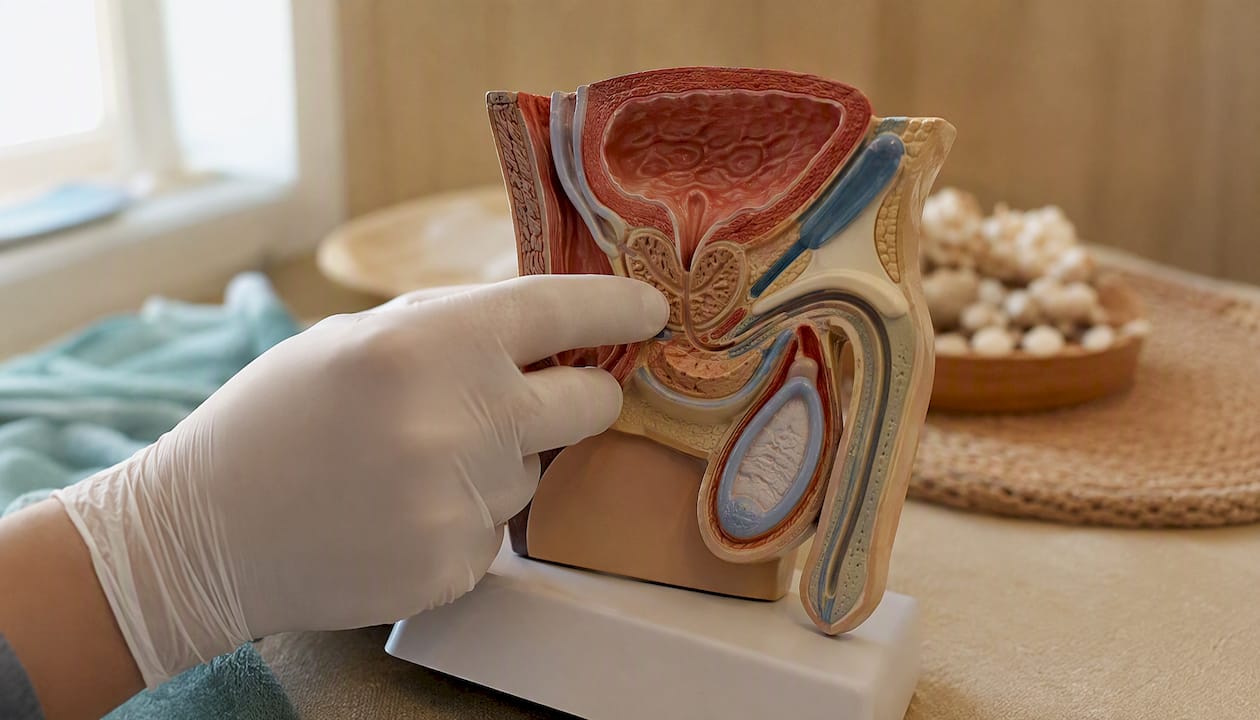
You can also feel the prostate externally through the perineum, the area of skin between the scrotum and the anus. Firm, steady pressure on the perineum with two fingers can stimulate the gland indirectly, with no insertion required. This is a great starting point if you want to get familiar with the sensation before trying internal exploration.
Pro Tip: Arousal increases blood flow to the prostate, making it slightly firmer and easier to locate. Try some solo stimulation before insertion to make the gland more distinct.
When is prostate play unsafe? Medical red flags to know
Safety comes first, and there are specific situations where prostate stimulation should not happen at all.
Do not attempt prostate massage if you have any signs of acute prostatitis or a suspected prostate infection. Pressing the gland when bacteria are present can force those bacteria into the bloodstream, raising the risk of sepsis. Watch for fever, chills, severe pelvic pain, and painful or difficult urination — these are stop-now signals that require a doctor, not a massage. Source: Urology & Men’s Health
Beyond active infection, several other conditions call for caution or a conversation with your doctor first:
- Recent pelvic or rectal surgery: Tissue needs time to heal before any internal stimulation.
- Rectal bleeding, anal fissures, or severe hemorrhoids: Insertion can worsen these conditions.
- Recent prostate biopsy: The gland is already irritated and vulnerable.
- Blood thinners: Even gentle stimulation carries a higher bleeding risk.
One practical note that many people miss: avoid prostate stimulation and ejaculation for at least 48 hours before a PSA blood test. Manipulation can temporarily raise PSA levels and produce a false-positive result, which leads to unnecessary follow-up procedures.
A short clinical note worth keeping in mind: current urology guidance does not recommend prostate massage as a standard treatment for prostatitis or any other prostate condition. Its role today is sexual pleasure. Treating it as a medical cure is both inaccurate and potentially risky.
How to prepare your body and mind for your first session
Good preparation makes the difference between a tense, uncomfortable attempt and a genuinely relaxing experience. Start with your mental setup.
Privacy matters more than most guides admit. Knowing you will not be interrupted lets your nervous system settle, and a relaxed nervous system means a relaxed pelvic floor. Dim lighting, familiar music, or even a warm shower beforehand can shift your body out of a guarded state. Breathe slowly and deliberately: inhale for four counts, exhale for six. That extended exhale activates the parasympathetic nervous system and softens the pelvic floor, which is exactly what you need for comfortable insertion.
On the hygiene side, keep things simple. A normal bowel movement within the past day is usually sufficient cleanliness for casual prostate play. WebMD notes that excessive douching can irritate rectal tissue and actually increases discomfort, so skip the deep prep unless you personally prefer it.
Your pre-session checklist:
- Private, comfortable space with no interruptions
- Trimmed fingernails (or a nitrile glove if using a finger)
- Water-based lubricant — generous amount ready to use
- Purpose-built toy with a flared base, or a clean gloved finger
- Towel or wipe nearby
- Condoms if sharing a toy with a partner
- Soap and water for cleanup
Pro Tip: Do a few slow pelvic floor releases before insertion: squeeze gently for three seconds, then fully release. Repeat five times. This teaches your body the difference between holding tension and letting go, which makes insertion noticeably more comfortable.
Step-by-step solo technique for beginners
Follow these steps in order. Rushing any stage is the most common reason first-timers feel discomfort rather than pleasure.
- Arouse yourself first. Spend several minutes on whatever feels good externally. Arousal increases blood flow to the prostate, making it easier to locate and more responsive to touch.
- Apply lubricant generously. Coat your finger or toy thoroughly, and apply a small amount to the anal opening as well. The rectum produces no natural lubrication, so more is always better here.
- Start at the perineum. Press two fingers firmly against the perineum and hold steady pressure. This gives you a preview of prostate sensation with zero insertion risk.
- Insert slowly, 2–3 inches, aimed toward the belly button. Breathe out as you insert. If you feel resistance, pause, breathe, and wait for the pelvic floor to release before continuing. Never push through sharp resistance.
- Locate the prostate. Feel for the softer, raised bump on the front wall of the rectum. It may feel slightly ridged or rounded compared to the smoother surrounding tissue.
- Apply gentle pressure and motion. Try a “come-hither” curl of the finger, or small circular motions. Vary pressure from light to moderate. Many people find steady, rhythmic pressure more pleasurable than rapid movement.
- Coordinate with breathing. Exhale as you apply pressure, inhale as you ease off. This rhythm amplifies sensation and keeps the pelvic floor relaxed.
- Adjust intensity gradually. Over multiple sessions, not within one, increase pressure or add vibration. Pushing for intensity too fast is the main cause of soreness.
Positions that work well for solo play:
- On your back, knees drawn to chest: Opens the pelvis and gives your hand easy access. Best for beginners because you can see and control what you are doing.
- On your side with the top knee pulled up: Less strain on the wrist and arm. Good for longer sessions.
- On all fours: Gravity helps, and the angle can make the prostate easier to reach, but it requires more core stability.
Pro Tip: Use the padded fingertip, not the very tip of the nail side, and keep your wrist relaxed. A tense wrist means uneven pressure and faster fatigue. Slow, deliberate strokes with a soft touch outperform fast, forceful ones every time.
How to bring a partner into prostate play safely
Partner play adds communication as a core skill alongside technique. Before anything physical happens, have a direct conversation about boundaries, pace, and a safe word or signal to pause immediately.
Consent and communication checklist:
- Agree on a clear stop signal before you begin (a word, a tap, or squeezing their hand twice).
- Discuss preferred depth, pressure, and pace in advance.
- Check in verbally during insertion: “Does this feel okay?” “Should I go slower?”
- Agree on hygiene rules: gloves, condom on any shared toy, and who cleans what afterward.
Partner technique steps:
- Have the receiving partner choose their position and get comfortable before the giving partner touches anything.
- The giving partner applies lubricant to their gloved finger or toy before any contact.
- Insert slowly, following the receiving partner’s breathing cues. Pause whenever they inhale sharply or tense.
- Ask about pressure at each stage: “More?” “Less?” “Hold here?” Short, specific questions work better than open-ended ones during play.
- The giving partner controls depth by watching the receiving partner’s body language and listening to verbal feedback, not by guessing.
Positions that work well for partner play:
- Spooning: The giving partner reaches from behind while the receiving partner lies on their side with the top knee forward. Intimate and low-pressure.
- Receiving partner on all fours, giving partner kneeling behind: Gives the giving partner good angle and control over depth.
- Receiving partner on their back with hips elevated on a pillow, giving partner kneeling: Face-to-face contact makes verbal communication easy and keeps both partners relaxed.
Hygiene between partners is non-negotiable. Change gloves or condoms before switching roles, and clean any shared toy with mild soap or a dedicated toy cleaner before it touches a second person.
Which toys and supplies do you actually need?
Choosing the right gear removes most of the risk from beginner prostate play. Here is what to look for and what to avoid.
Toy types worth considering:
- Curved ergonomic prostate massagers: Designed specifically to reach the prostate at the correct angle. The curve does the work your wrist would otherwise struggle with.
- Small anal plugs with a flared base: Good for getting comfortable with the sensation of fullness before adding motion.
- Finger vibrators: Slip over one finger and add gentle vibration to manual stimulation. Low-commitment and easy to control.
- External perineum vibrators: No insertion required. Useful for beginners who want to feel prostate sensation before trying internal play.
Material safety matters. Non-porous materials, specifically medical-grade silicone, stainless steel, and ABS plastic, do not harbor bacteria and are easy to clean thoroughly. Porous materials (jelly rubber, PVC, latex) trap bacteria even after washing and should not be used internally.
A critical safety rule: always use a purpose-built toy with a flared base or retrieval feature. Household objects and toys without a flared base can become retained inside the rectum, which is a genuine medical emergency. No exceptions.
Lubricant compatibility:
Silicone lubricants last longer and provide a smoother glide for extended sessions, but they will degrade silicone toys over time. Use a water-based lubricant like Mood Lube with any silicone toy. For non-silicone devices (stainless steel, ABS plastic), a silicone lubricant such as Gun Oil silicone lubricant or JO Premium Silicone Lubricant gives longer-lasting glide.
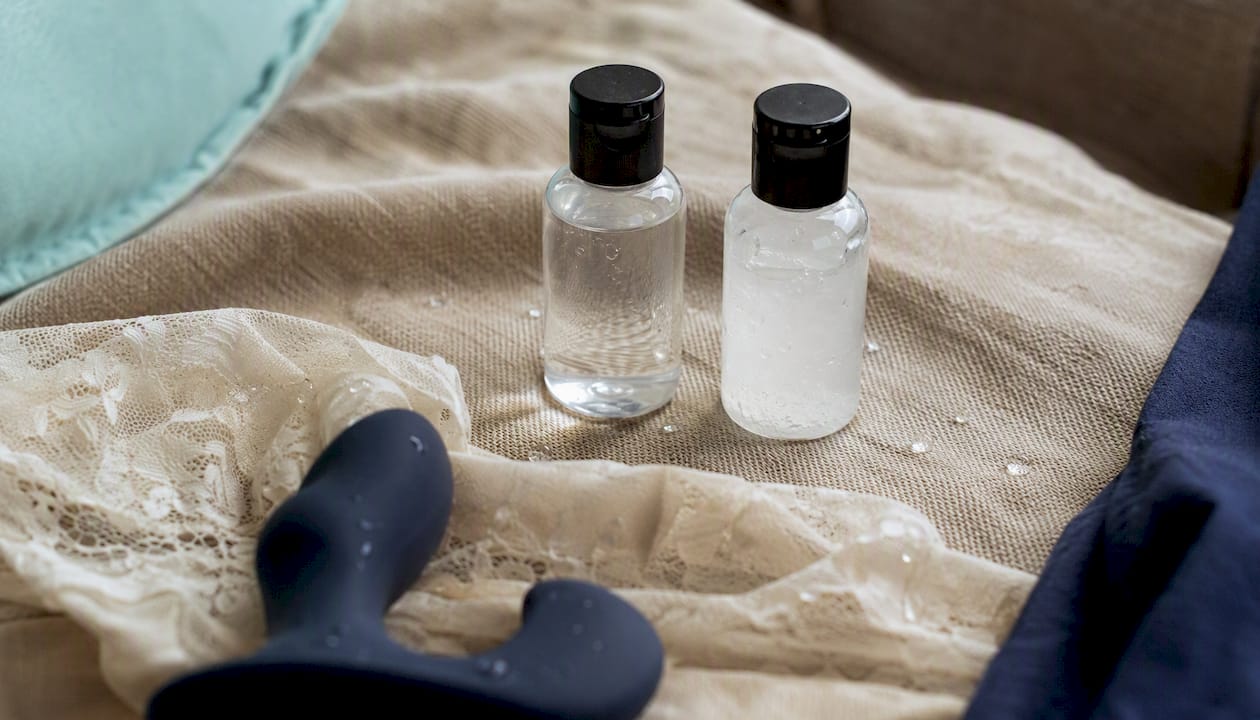
Clean every toy after each use with mild soap or a dedicated toy cleaner, dry completely, and store in a breathable pouch. Never share a toy between partners without barrier cleaning or a fresh condom.
Aftercare, troubleshooting, and when to call a doctor
A session ending well is part of the experience. Give yourself a few minutes to rest, clean up gently with warm water, and rehydrate. Monitor how you feel over the next 24–48 hours.
Common issues and practical fixes:
- Soreness: Usually means too much pressure or too little lube. Add more lubricant next time and slow down the pace.
- Brief, light spotting: A small amount of blood on a wipe after a first session can happen from minor surface irritation. It should stop quickly and not recur.
- Difficulty finding pleasure: The prostate often takes several sessions to respond noticeably. Relaxation and arousal before insertion matter more than technique at this stage.
- Urinary urgency after play: The prostate sits near the urethra, so some temporary urgency is normal. It should resolve within an hour.
See a doctor if you notice any of the following:
- Persistent or heavy bleeding that does not stop
- Worsening pelvic pain or pressure after 24 hours
- Fever or chills following a session
- Difficulty urinating that lasts more than a few hours
- Any combination of pain, fever, and urinary changes together
Frequency guidance: start with one session per week and space them out until you feel confident and comfortable. Daily intense sessions before your tissue has adapted are the fastest route to soreness and irritation. Slow, consistent practice builds both comfort and awareness far better than pushing for intensity early.
Playful Cove’s beginner starter picks
A simple, well-chosen starter kit removes the guesswork from your first few sessions. Here is what we recommend at Playful Cove for anyone beginning prostate play:
- Finger vibrator: The Love to Love Kisscool Rechargeable Silicone Finger Vibrator slips over one finger, adds gentle vibration, and keeps you in full control of depth and pressure. Made from body-safe silicone and rechargeable.
- Nitrile gloves: Available at any pharmacy. Use one for finger play to keep hygiene simple and cleanup fast.
- Condoms: Keep a few on hand for any shared toy.
- Toy cleaner or mild soap: Clean every item before and after use.
All Playful Cove orders ship in plain, discreet packaging with no identifying labels. If you have questions about sizing, materials, or which product fits your comfort level, our customer support team is happy to help privately. These are publisher recommendations — alternatives exist, and the safety rules in this guide apply regardless of where you shop.
Common myths about prostate stimulation, corrected
A few persistent misconceptions make people either avoid prostate play unnecessarily or approach it with unrealistic expectations.
- Myth: Prostate massage prevents or cures prostate cancer. There is no credible clinical evidence supporting this. Peer-reviewed reviews show mixed and limited evidence for any therapeutic benefit from prostatic massage. Prostate cancer screening involves PSA testing and clinical exams, not self-massage.
- Myth: Prostate play cures prostatitis. Current urology guidelines do not recommend prostate massage as a standard treatment for prostatitis. The evidence is weak, and in cases of acute infection, massage is actively dangerous.
- Myth: Prostate stimulation is only for gay men. The prostate is an anatomical structure present in all people assigned male at birth. Stimulating it is a physical experience, not a statement about sexual orientation. Straight, gay, bisexual, and queer men all explore prostate play.
- Myth: Pain during insertion is normal and should be pushed through. Pain is a signal to stop, not to persist. Discomfort from insufficient lube or tension is common and fixable. Sharp pain is not.
- Myth: You need elaborate bowel prep before every session. A normal bowel movement within the past day is generally sufficient for casual play.
A note from Ruben on starting with confidence
Curiosity about your own body is something to welcome, not second-guess. This guide exists because we believe everyone deserves clear, honest, and judgment-free information about sexual wellness. At Playful Cove, our goal is to be a safe cove for that kind of learning — a place where you can ask real questions and get real answers without shame or pressure.
If your first session feels awkward or uneventful, that is completely normal. Comfort builds with practice, and relaxation is a skill. Go slowly, listen to your body, and give yourself permission to stop, rest, and try again another day. The most important thing is that you feel safe and in control throughout.
Ready to shop? Playful Cove makes it simple and discreet
Getting the right gear should feel as comfortable as the guide itself. At Playful Cove, every order ships in plain, unmarked packaging with no indication of what is inside. Our beginner-friendly selection is curated specifically for people who want quality, body-safe products without having to sort through confusing options.

The Mood Lube Water Based Lubricant is the single most important item for any first session, and it is a great place to start. Pair it with the Love to Love Kisscool Finger Vibrator for a gentle, controlled introduction to prostate play. Playful Cove is the publisher of this guide and sells the products mentioned here. Browse the full selection at Playfulcove or reach out to our support team with any questions about materials, sizing, or compatibility. We are here to help, privately and without judgment.
Sources
These are the primary sources used throughout this guide. Consult a urologist for any personal medical concerns, and check with your doctor before prostate play if you have a history of prostate conditions, recent surgery, or are on blood thinners.
- Prostate massage: medical facts (Urology & Men’s Health)
- Prostate massager: an evidence-based guide for patients (Acibadem Hospitals Group)
- Prostate orgasm: prostate massage and the male G-spot (WebMD)
- Prostate overview (Cleveland Clinic)
This article is for general informational purposes only and is not a substitute for professional medical advice. Consult a qualified healthcare provider for any personal health concerns related to prostate health.
