

Discreet packaging means shipping a product in a plain, unbranded outer box or mailer that reveals nothing about what’s inside. No logos. No product names. No hint of the retailer. Just a neutral parcel that looks like any other delivery on your doorstep. According to Shopify, this approach protects customer privacy and relies on plain, unbranded materials such as brown boxes or mailers to avoid revealing contents.
- Privacy first: The exterior gives away nothing about the product, the seller, or the category.
- Theft reduction: A plain box attracts far less attention than one stamped with a recognizable brand or product type.
- Three layers matter: True discretion covers the outer packaging, the packing slip inside, and the billing descriptor on the customer’s bank statement. Miss any one of them and the whole effort falls apart.
If you’re a shopper, this article explains exactly what to look for when choosing a retailer. If you run an ecommerce store, it walks you through every step of setting up a discreet shipping workflow that actually holds up.
Key Takeaways
Discreet packaging works only when it covers all three layers: the outer box, the packing slip, and the billing descriptor.
| Point | Details |
|---|---|
| Plain outer packaging | Use unbranded boxes or poly mailers with no logos, product names, or store branding on the exterior. |
| Suppress the packing slip | Show only an order number and a generic business name; remove all product descriptions from the slip. |
| Neutral billing descriptor | Register a DBA name with your payment processor so the credit card statement reveals nothing about the product category. |
| Offer opt-in at checkout | Add a clear discreet shipping checkbox with a one-sentence explanation of what it means for the customer. |
| Playful Cove ships discreetly | Every Playful Cove order ships in plain, unmarked packaging with a neutral return address and billing descriptor throughout the United States. |
Table of Contents
- What does discreet packaging look like in practice?
- Why do customers and businesses choose discreet shipping?
- What materials and visual cues define discreet outer packaging?
- How does the discreet shipping process work from order to delivery?
- How do you set up your store to support discreet shipping?
- What are the real benefits and trade-offs of discreet packaging?
- How do you create a discreet unboxing experience that still feels special?
- Where can you source discreet packaging materials and fulfillment partners?
- What legal and carrier rules apply to discreet packaging in North America?
- How Playful Cove implements discreet packaging from checkout to delivery
- Why discretion is the highest form of customer service in intimate retail
- Privacy-first shopping at Playful Cove
- Sources
What does discreet packaging look like in practice?
Picture a plain brown cardboard box with a simple shipping label. No colorful branding. No product photography. No tagline. That’s the essence of discreet packaging. Pitney Bowes describes discreet shipping as sending products in plain, non-branded packaging to maintain recipient privacy and reduce visibility of valuable contents.
The outer packaging typically takes one of these forms:
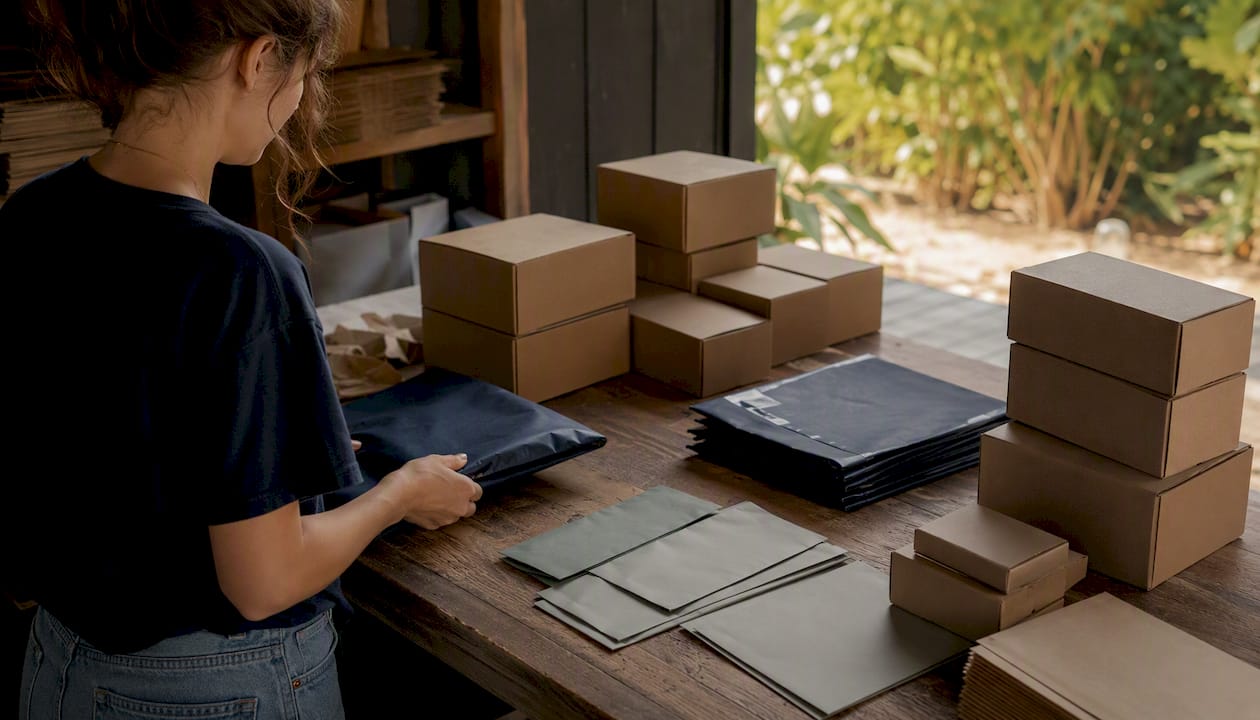
- Plain corrugated cardboard boxes in standard sizes, no printing on the outside beyond the shipping label
- Unmarked poly mailers in white, gray, or black with no logos or text
- Padded envelopes in neutral colors, sealed with plain tape
- Opaque inner bags or liners when the outer box is clear or semi-transparent
What the exterior shows: a shipping label with the recipient’s address, a return address using a neutral business name (not the store’s consumer-facing brand), and standard carrier barcodes.
What the interior can contain: the product itself, a packing slip that lists only an order number and a generic business name, and any welcome card or insert printed without product imagery. The key distinction is that nothing on the outside connects the parcel to its contents. A neighbor, a family member, or a porch pirate sees only a box.
Why do customers and businesses choose discreet shipping?
Privacy is the obvious answer, but the reasons go deeper than that. EasyPost identifies theft protection and customer privacy as the two primary benefits, with plain unbranded packaging and non-descriptive labels as the core tactics.
For shoppers, the appeal is straightforward. Buying intimate wellness products, medical supplies, or personal care items online shouldn’t require explaining a package to a roommate or a family member. Discreet shipping removes that anxiety entirely.
For merchants, the business case is just as clear:
- Trust and repeat purchases: Retailers who protect customer privacy signal that they understand their audience. Pitney Bowes notes that discreet shipping builds loyalty and can increase repeat purchases.
- Reduced cart abandonment: Shoppers who worry about recognizable packaging may abandon their cart before checkout. Offering a clear discreet shipping option removes that barrier.
- Broader gifting market: A discreet parcel makes surprise gifts genuinely possible. The recipient sees a neutral box, not a spoiler.
- Theft deterrence: High-value items shipped in plain packaging are less likely to be targeted on a doorstep or in a building lobby.
Common product categories where discreet shipping is standard practice include adult toys and intimate wellness products, prescription and over-the-counter medical supplies, luxury goods and high-value electronics, personal care and sensitive health items, and surprise gifts of any kind. You can see why buying sex toys anonymously has become a baseline expectation in the adult retail space: shoppers simply won’t buy from a store that doesn’t offer it.
What materials and visual cues define discreet outer packaging?
ShipBob confirms that discreet packaging typically uses plain cardboard boxes, unmarked poly mailers, padded envelopes, and neutral tape, all chosen to hide brand cues without sacrificing protection. Here’s how to think about each material choice and the visual rules that apply.
Materials that work well:
- Plain corrugated cardboard (single or double wall depending on product weight)
- White, gray, or black poly mailers without printed branding
- Padded bubble mailers in neutral colors
- Opaque inner liners or black poly bags for products in clear or windowed packaging
- Plain kraft paper void fill or air pillows (not branded tissue or printed wrap)
Visual dos:
- Use a plain white or brown shipping label with no store logo
- Apply neutral, unprinted tape (clear or brown kraft)
- Use a return address that shows only a business name or initials, not the store’s consumer brand
- Keep the label clean: carrier barcode, address, and nothing else
Visual don’ts:
- No store logo or wordmark on the outside of the box
- No product images, category names, or descriptive text
- No promotional tape with slogans or brand colors
- No itemized packing slip visible through a window envelope attached to the outside
One detail merchants often overlook: the sound and feel of the package. A product that rattles loudly or has an unusual shape can hint at contents even through a plain box. Choosing the right box size and using adequate void fill keeps the package both discreet and protected.
How does the discreet shipping process work from order to delivery?
GoShippo lays out the three layers that true discreet shipping must cover: exterior packaging, packing slip and billing, and carrier or fulfillment choices. Here’s how those layers translate into an operational workflow.
Step-by-step fulfillment process:
- Order flagged as discreet at checkout (via a customer opt-in checkbox or automatic store setting for all orders)
- Pick the product from inventory as normal
- Pack into a plain outer box or mailer with no branded materials on the exterior; use opaque inner liner if the product packaging is printed
- Prepare a suppressed or simplified packing slip showing only the order number and a generic business name, with no product names or descriptions
- Apply a plain shipping label using the store’s neutral DBA (doing-business-as) name as the return address, not the consumer-facing brand name
- Seal with plain tape and verify the exterior has no logos, product text, or branded elements
- Hand off to carrier with standard tracking
Carrier options that strengthen privacy:
- Hold for pickup / USPS PO Box: The customer collects from a post office or locker, removing doorstep exposure entirely
- Signature required: Reduces the chance of a package sitting on a porch where others can see it
- Amazon Hub Lockers or carrier access points: Neutral pickup locations that add another layer of separation
Fulfillment partner note: Whether you use a 3PL or pack in-house, the discreet workflow needs to be documented in a written standard operating procedure (SOP). Without it, a single team member using branded tape or the wrong packing slip template can undo the whole system. Many 3PLs that serve sensitive categories already have discreet packing protocols; confirm this before signing a contract.
A common misconception is that a plain box is enough. GoShippo points out that billing descriptors and packing slips are frequent privacy leaks: a neutral exterior means nothing if the customer’s bank statement reads “Adult Toy Emporium” or the packing slip lists every product by name.
How do you set up your store to support discreet shipping?
Shiprocket recommends offering discreet shipping as a selectable opt-in at checkout, standardizing fulfillment steps for those orders, and clearly explaining any limits around customs and legally required labels. Here’s a practical checklist.
Checkout setup:
- Add a discreet shipping checkbox at checkout with a short, clear explanation: “Your order will arrive in a plain, unmarked box with no indication of the contents or our store name.”
- Decide whether discreet shipping is the default for all orders or an opt-in. For sensitive product categories, making it the default reduces friction and signals that you understand your customers.
- If discreet shipping carries a small surcharge (for upgraded packaging materials), display it clearly before the customer completes the order.
- Update your order confirmation email to reassure customers: “Your order will ship in plain, unmarked packaging. The charge on your statement will appear as [neutral DBA name].”
Packing slip and billing:
- Suppress itemized product names on packing slips for discreet orders. Many fulfillment platforms and Shopify apps allow custom packing slip templates per order tag or SKU.
- Register a neutral DBA name with your payment processor so the billing descriptor on the customer’s credit card statement reflects that name, not your store’s consumer-facing brand. This is what “discreet billing” means in practice.
- Test the full flow yourself: place a test order, check the packing slip, and check what appears on the bank statement.
Fulfillment documentation:
- Write a one-page discreet packing SOP and post it at the packing station. Include: which box sizes to use, which tape to use, how to suppress the packing slip, and which return address to apply.
- Tag discreet orders in your order management system so they route to the correct packing workflow automatically.
- Audit a sample of outgoing discreet orders monthly to catch any process drift.
Pro Tip: Test your discreet shipping setup by ordering from your own store and checking every touchpoint: the outer box, the packing slip, the email, and the bank statement. Most gaps show up in the billing descriptor or the packing slip, not the box itself.
What are the real benefits and trade-offs of discreet packaging?
Plain box shipping solves real problems, but it also creates some operational friction. Here’s an honest look at both sides.
| Benefit | Trade-off / Barrier | Mitigation |
|---|---|---|
| Protects customer privacy | No brand visibility on the exterior | Use branded inserts inside the box |
| Reduces porch theft | Higher packaging material cost | Buy plain materials in bulk to reduce per-unit cost |
| Enables surprise gifting | Returns handling is more complex | Use a neutral return address and a clear returns policy |
| Builds trust and loyalty | Billing descriptor setup takes time | Register a DBA name with your payment processor once |
| Reduces cart abandonment | Customs declarations still required | Declare accurately; place detail inside the parcel |
FreightAmigo notes that plain packaging can reduce theft risk and supports privacy compliance for sensitive categories, though some regulated items still require labeled documentation inside the box or on customs forms.
When to make discreet shipping the default vs. an opt-in:
- Default for all orders: Best for stores where every product is sensitive (adult wellness, medical supplies, personal care). Removes friction and signals respect for privacy.
- Opt-in at checkout: Better for general retailers who carry a mix of sensitive and non-sensitive products. Gives customers control without assuming everyone wants it.
Returns handling: Returns are the trickiest part of discreet shipping. The return label should use the same neutral DBA name and return address as the outbound shipment. Include a simple return slip inside the package (not on the outside) with instructions that don’t reference the product category. A clear, easy returns process actually reinforces trust rather than undermining it.
How do you create a discreet unboxing experience that still feels special?
The outside of the package is intentionally forgettable. The inside doesn’t have to be. The best discreet unboxing experiences are low-key on the exterior and genuinely thoughtful on the interior, showing respect for the recipient’s privacy while still delivering a moment of delight.
Here’s how to balance the two:
- Sealed inner bag or pouch: Place the product in an opaque black or white poly bag inside the plain outer box. This adds a second layer of privacy and creates a small reveal moment when the customer opens the parcel.
- Branded tissue paper or ribbon inside: Tissue paper in your brand colors, placed inside the sealed inner bag, adds warmth without leaking any information externally.
- A discreet welcome card: A small card with your brand name, a warm message, and care instructions. Keep the wording generic enough that it doesn’t describe the product if someone else happens to see it. Something like “Thank you for your order. We hope you love it” works perfectly.
- Suppressed or simplified packing slip: Include only the order number and your business name. No product names, no prices, no SKU descriptions.
When to omit inserts entirely: If the customer has specifically requested maximum discretion, or if the product is a gift being shipped directly to a recipient, consider skipping all inserts except a plain packing slip. A brief note in the order confirmation email can replace the in-box card.
When to include discreet welcome materials: For orders shipped to the buyer’s own address, a small branded card inside the sealed inner bag adds a personal touch without any external exposure. It signals care and attention without compromising privacy.
Pro Tip: Word your in-box card so it reads warmly but generically. Avoid product-specific language like “your vibrator” or “your toy.” A phrase like “We’re so glad you chose us” works for every product in your catalog and stays private if the package is opened by someone other than the intended recipient.
Where can you source discreet packaging materials and fulfillment partners?
Sourcing plain packaging in North America is straightforward once you know what to look for. The goal is materials that are neutral, protective, and available in a range of sizes.
Packaging material categories to source:
- Plain corrugated boxes: Available from packaging distributors like Uline, Staples Business Advantage, or regional box manufacturers. Order in bulk for cost efficiency and request samples before committing to a size run.
- Unmarked poly mailers: White or gray mailers without printing are widely available from packaging wholesalers. Avoid mailers with any pre-printed text, even generic phrases like “Thank you for your order.”
- Padded bubble mailers: Neutral-colored options from packaging suppliers. Confirm the exterior has no branding before ordering.
- Opaque inner liners: Black poly bags in various sizes work well as inner packaging for products with printed retail packaging. These are available from most packaging distributors.
- Plain tape: Clear packing tape or plain brown kraft tape. Never use branded or printed tape on a discreet shipment.
Buying tips:
- Order samples of every box size before a full run to confirm fit and sound dampening (a product that rattles in an oversized box is a subtle but real privacy issue).
- Choose box sizes that fit your most common products snugly. Excess space requires more void fill and can cause movement that hints at contents.
- For fulfillment partners, ask specifically whether they have experience with sensitive product categories and whether their systems support custom packing slip templates and suppression by order tag.
Fulfillment partner selection criteria:
- Experience packing for adult wellness, medical, or other sensitive categories
- Ability to suppress or customize packing slips at the SKU or order level
- Willingness to use your neutral DBA name on return labels
- Documented discreet packing SOP or willingness to follow yours
What legal and carrier rules apply to discreet packaging in North America?
Discretion on the outside of a package is entirely legal. Falsifying what’s inside on a customs form is not. That distinction is the most important compliance boundary in discreet shipping.
Mandatory rules for domestic U.S. shipments:
- Carrier labeling requirements (UPS, FedEx, USPS) must be followed: the shipping label must include accurate sender and recipient addresses, weight, and any required hazardous material markings.
- Restricted and prohibited items (lithium batteries, aerosols, certain liquids) must be declared and labeled per carrier rules regardless of outer packaging style.
- No carrier prohibits plain or unbranded outer packaging. Discretion is a packaging choice, not a compliance issue, for domestic shipments.
Mandatory rules for international shipments:
- U.S. Customs and Border Protection (CBP) requires accurate customs declarations on all outbound international parcels. The description of contents must be truthful.
- You may use a generic but accurate description (e.g., “personal massager” or “wellness device”) rather than a brand-specific product name, as long as the description is truthful and the declared value is accurate.
- Falsifying customs forms is a federal offense. GoShippo is direct on this point: always provide truthful customs descriptions for international shipments and place necessary detail inside the parcel when permitted.
- Some destination countries restrict or prohibit adult products entirely. Research the import rules for each destination market before shipping internationally.
Practical compliance checklist:
- Domestic: confirm no hazmat labeling is required; apply plain outer packaging; use neutral return address
- International: complete customs form accurately; use a generic but truthful product description; check destination country import restrictions; place detailed product documentation inside the parcel if required
Pro Tip: Register a neutral DBA name for your business and use it consistently as both the return address on shipping labels and the billing descriptor with your payment processor. This single step covers two of the three most common privacy leaks: the return address and the credit card statement. The third is the packing slip, which you handle through your fulfillment system.
| Shipment type | Customs declaration required? | Plain outer packaging allowed? | Key compliance note |
|---|---|---|---|
| Domestic (U.S.) | No | Yes | Follow carrier labeling and hazmat rules |
| International | Yes | Yes | Accurate description required; falsification is illegal |
How Playful Cove implements discreet packaging from checkout to delivery
Playful Cove ships every order in plain, unmarked packaging. No logos on the box. No product names on the label. No hint of what’s inside. This isn’t an add-on feature; it’s how every order ships by default, because the products Playful Cove carries, from rechargeable vibrators to intimate lubricants and sensual accessories, are exactly the kind of purchase customers want to receive privately.
Here’s what that looks like in practice:
- At checkout: Customers see a clear note confirming that their order will arrive in plain, unmarked packaging with no indication of contents or store name.
- Outer packaging: Plain corrugated box or neutral poly mailer with no Playful Cove branding on the exterior.
- Return address: A neutral business name, not “Playful Cove,” so the package is unidentifiable to anyone who sees it before the customer does.
- Packing slip: Suppressed or simplified to show only the order number and a generic business name. No product names, no descriptions.
- Billing descriptor: The charge on the customer’s bank statement reflects a neutral business name, not a description that reveals the product category. This is what discreet billing means in practice.
- Returns: Return labels use the same neutral return address and business name as the outbound shipment, keeping the process private from start to finish.
This approach reflects a straightforward belief: customers shopping for intimate wellness products deserve the same comfort and confidence online that they’d expect from any trusted retailer. Privacy isn’t a perk. It’s the baseline.
Why discretion is the highest form of customer service in intimate retail
There’s a tendency in ecommerce to treat discreet packaging as a niche accommodation, something you offer because a small segment of customers asks for it. That framing misses the point entirely.
For anyone shopping in a sensitive category, whether that’s intimate wellness, personal health, or anything they’d prefer to keep private, the packaging decision is the trust decision. A shopper who worries about a recognizable box on their doorstep won’t complete the purchase. A shopper who receives a plain, unremarkable parcel and sees a neutral name on their bank statement will come back. The discretion is the product, in a very real sense.
What I find underappreciated is the billing descriptor. Merchants spend real effort on plain boxes and neutral labels, then leave the payment processor’s default descriptor unchanged. The customer gets a perfectly discreet box and a bank statement that reads like a category announcement. That single oversight undoes everything else.
The other overlooked dimension is the returns experience. A customer who needs to return a sensitive product and receives a return label with a recognizable brand name faces the same exposure they were trying to avoid in the first place. Discreet shipping that doesn’t extend to returns is only half a system.
For merchants in intimate categories, the standard should be simple: if you wouldn’t want your neighbor to know what’s in the box, your customer probably doesn’t either. Build the whole workflow around that principle, not just the outer packaging.
Privacy-first shopping at Playful Cove
Every product at Playful Cove ships in plain, unmarked packaging with a neutral billing descriptor, so your order stays completely private from checkout to delivery. Whether you’re choosing a rechargeable silicone vibrator for yourself or a thoughtful intimate gift for a partner, you can shop with full confidence that what arrives at your door reveals nothing about what’s inside.
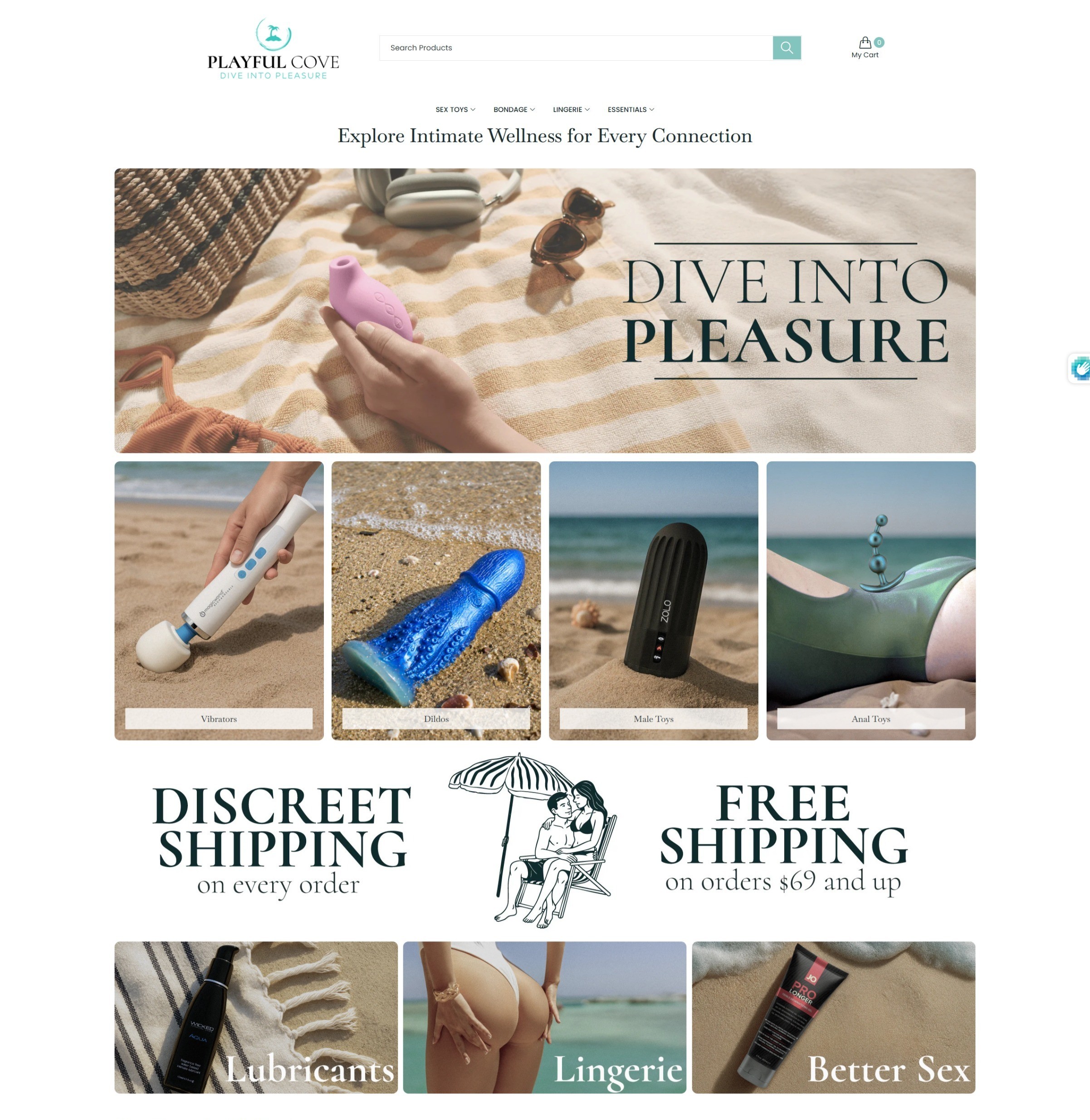
Playful Cove carries a curated selection of adult toys, lubricants, couples’ products, lingerie, and sensual accessories, all shipped discreetly throughout the United States. No judgment. No recognizable packaging. No surprises on your bank statement. Browse the full collection and shop knowing your privacy is protected every step of the way.
Sources
These resources are worth bookmarking if you’re implementing discreet shipping for your store or want to understand carrier and customs requirements in more depth.
- Discreet packaging and shipping | Shopify
- Discreet Shipping & Packaging Explained | Pitney Bowes
- What Is Discreet Shipping? When and How to Use It (2026 Guide) | GoShippo
- What is discreet shipping? | EasyPost blog
- Discreet Shipping | ShipBob blog
- Discreet shipping for sellers: benefits, setup & best practices | Shiprocket
Always consult your carrier’s official documentation (USPS, UPS, FedEx) for the latest labeling requirements and restricted item lists, as these rules update periodically.
